
by Ruth Kettle-Frisby.
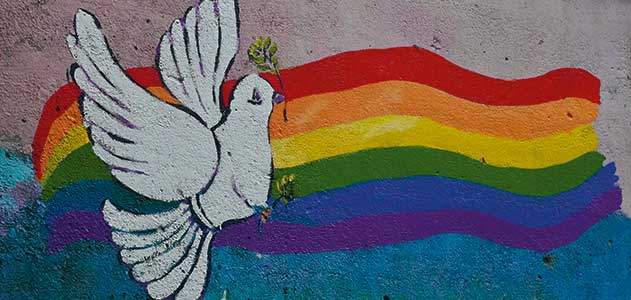
Photo: by Paul Moody on Unsplash
[This article is taken from the Quaker weekly magazine, the Friend (15.03.24), which reports all topical debates within British Quakers. You can read, and subscribe, at: thefriend.org]
Back in 2016, The Guardian commissioned a short thought piece from the rapper Akala. He talked eloquently about how ‘The propaganda of “British values” is a distortion of history’. I showed the piece to my coaching group – I was teaching Philosophy A Level, and ‘British Values’ had been recently introduced to the curriculum.
Traditionally, actions of witness taken by Friends – such as holding someone in the Light during Meeting for Worship, gathering in a silent vigil for peace, or sharing ministry – have been understood as peaceful. These are valuable, and may even contribute to positive change and healing. But it is Britain’s worst-kept secret that our basic human rights and freedoms – such as the abolition of slavery and a woman’s right to vote – were achieved through intense political struggle, revolt and a high cost to human life. The truth is not very nice, not very calming, and not very peaceful – and, ironically, not very ‘British’.

What even is peace? Our lives can often appear to be peaceful. In East London, I do not have to worry about a bomb dropping on my children’s heads. There is a useful British veil of landscape, postcards, family days out, and cultural institutions like art galleries, schools, universities, and places of worship, including Quaker Meeting houses. But this veil is itself the result of bitter, bloody conflict, and underneath it lies a sobering truth: our historically-embedded political, social, economic and cultural inheritance is anything but peaceful. Our lives, lifestyles and privileges, our thought processes and instincts, are dripping in unjust conflicts and the blood of our brothers and sisters who we continue to colonise. Our history of empire and colonialism continues into our complicity in war. Homeless friends continue to suffer on the streets. Our friends from the global majority die as a result of climate breakdown. Meanwhile, billions of pounds are spent on funding nuclear weapons, and we continue to invest in fossil fuels.
We are free to talk about peace until the cows come home. But the truth is that even if we as individuals oppose, say, war in the Middle East, we have already been collectively dragged into it. We live and breathe conflict. When a person or group of people (including women and people who make up the global majority) are powerless in the face of gross, supremacist injustice, what springs to the western mind when we think of ‘peace’ just hasn’t ever cut it.
Peace is much more complicated than it first appears. If you could go back in history to stop the direct activism that led to the partial emancipation we have today, would you do so? Not an easy question to answer, is it? Do we not all, at some level, condone the consequentialism by which peaceful ends are arrived at by violent means? Do we not embody that very maxim as an imperialist nation?
I do not doubt that there is a difficult variety of perspectives on the ground among Palestinian and Israeli civilians. Lack of education, constant suffering and fear will likely lead to all sorts of views that we in the west deem to be unacceptable. I invite Friends to empathise, not condone.
In ‘Hold your peace’ (21 February), Keith Braithwaite expressed a suspicion of the word ‘but’. This little word, however, can be a powerful one, capable of holding space for nuance, empathy and understanding. Rarely is anything clear-cut. Antisemitism and Islamophobia are on the rise, and both of these evils should be condemned. Alongside this, I believe we should extend our empathy to Palestinian civilians, without conflating them with Hamas. We should condemn violence by Hamas, while also trying to understand where it came from. This will allow us to visualise an achievable peace. We should also condemn violence by the state of Israel, but listen open-heartedly to our Jewish friends who feel terrified, and who are being subject to an increase in abuse.
We should do whatever is in our power to uphold all of our friends peacefully. But it is disingenuous to insist on ‘peace’ as the western psyche understands it. It’s OK to be mistaken, it’s OK to be wrong, and it’s OK not to know.
I recently went on a march for Palestine with a friend and her young daughters. I wanted to join others in a desperate plea for a ceasefire, but doubts began to creep into my thoughts: Is it right for me to get involved in something I don’t fully understand, and which doesn’t directly impact me? Am I legitimising the lexicon and culture of conflict by participating in a protest that is explicitly couched in the language of ‘sides’? Am I contributing to increased racist abuse of our Jewish friends?
Different answers to these questions have prompted a number of cultural civil wars here in the west. For me, I am proud of the marches for Palestine by people of all faiths and none, and my heart goes out to Jews, Muslims, and anyone else who suffers as a result of violence, oppression, injustice and war.
It’s worth being mindful that peace never exists in a vacuum. This truth is understood in our Quaker values by the fact that peace is not sufficient alone; it must always coexist with truth and justice.
It seems to me that there is a powerful way for Friends to collectively put our Peace Testimony into action. It starts with our being mindful of the distinctly unpeaceful origins of the relative ‘peace’ that many of us enjoy in the UK. From there we must keep up the pressure on our government by supporting organisations like CND, War on Want, Extinction Rebellion, Just Stop Oil and Tax Justice UK. Together we should unequivocally oppose the UK’s investment in neocolonialism, climate injustice, occupation and nuclear arms. In the spirit of early Friends and activists throughout history, we are called to challenge the UK’s complicity in global acts of violent injustice. If these policies are said to be undertaken on our behalf, we should tell the world that they are not made in our name.
Ruth Kettle-Frisby
 Quaker Socialist Society
Leave a Reply