
by Graham Taylor.
Here are three great books that have come to my attention this summer.
Daniel Smith-Christopher is an America Quaker who studies Christian Socialism. His new book, on Keir Hardie, is an absolute must for Quaker Socialists interested in history. It is expensive but could be ordered through libraries.
William Dalrymple is not a Quaker but Quakers have many connections to India and Indian history, both via the Indian religions and via Gandhi, and via Natal in South Africa, and in addition Dalrymple has a ‘socialist’ or, at least, anti-imperialist, take.
The last of the three, Quaker Michael Gilson’s Behind the Privet Hedge, with its links to the Salters, has already been highlighted on this site. It describes how England became a nation of gardeners. Highly readable and absolutely fascinating.
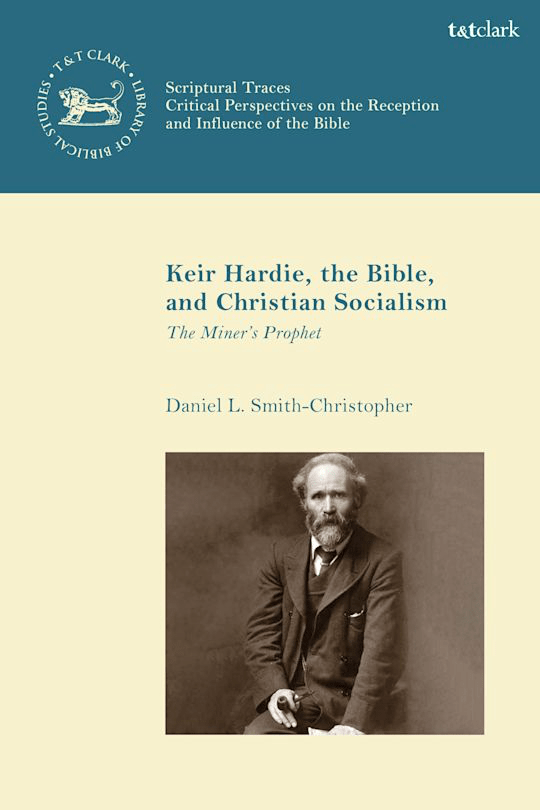
Keir Hardie, the Bible, and Christian Socialism: The Miner’s Prophet
by Daniel L. Smith-Christopher. £59.50 RRP £85.00 Website price saving £25.50 (30%).
Description: Daniel L. Smith-Christopher focuses on the life and efforts of Keir Hardie, one of the founders of the UK Labour Party and one of the foremost figureheads of trade unionism. Drawing upon the work of two contemporary and significant American theorists-Herbert Gutman’s classic essay on “Working-Class Religion” and Michael Gold’s call for “Proletarian Literature”-Smith-Christopher marries British and American historical and theoretical debates to argue that Hardie’s work is surely the quintessential example of a “proletarian exegesis” of the Bible.
Beginning with a summary of the major events in Hardie’s life, Smith-Christopher draws both upon existing biographies and more recent historical discussions that question assumption of British social history. He then reviews previous debates upon the influence of Hardie’s own Christian faith upon his journalistic output, and assesses three Christian Socialists whose work was advertised and reviewed by Hardie himself: Dennis Hird, John Morrison Davidson, and Caroline Martyn. Smith-Christopher proceeds to Hardie’s copious writings, both for The Labour Leader and separately published lectures, pamphlets, and somewhat longer works of autobiography and comment. Highlighting Hardie’s tendency to cite favourite texts (heavily from the Gospels and James, but also some notable Old Testament discussions), Smith-Christopher proves Hardie’s serious discussion of these texts beyond mere political rhetoric; concluding by comparing a selection of Hardie’s favourite Biblical arguments with contemporary research in Biblical Studies about these same passages, evaluating the problems and possibilities of proposing a “Proletarian Exegesis”.
Foreword
Chapter 1. What is “Proletarian Exegesis”?
Chapter 2. Keir Hardie (1856-1915): A Life
Chapter 3. Kier Hardie and Religion: A Review of Previous Debates
Chapter 4. A Cloud of Witnesses: Reading the Bible with Three Allies of Hardie
Chapter 5. Hardie’s Bible
Chapter 6. “What is to be Done”? Key Texts of Hardie’s “Proletarian Exegesis” of the Bible
Appendix ONE: Illustrations
Appendix TWO: “The Commercial Bible”
Bibliography
————————————————————————————————————————–
The Golden Road: How Ancient India Transformed the World By William Dalrymple

Hardback £30.00, Paperback £9.99, £27.00 RRP, £30.00 Website price saving £3.00 (10%).
FROM THE AWARD-WINNING, BESTSELLING, AUTHOR – A REVOLUTIONARY NEW HISTORY OF THE DIFFUSION OF INDIAN IDEAS.
‘A master storyteller’ Sunday Times
‘Richly woven, highly readable … Written with passion and verve’ Spectator
‘A more masterful and accessible survey … would be hard to find … Enthralling’ Literary Review
Description: India is the forgotten heart of the ancient world. For a millennium and a half, India was a confident exporter of its diverse civilisation, creating around it a vast empire of ideas. Indian art, religions, technology, astronomy, music, dance, literature, mathematics and mythology blazed a trail across the world, along a Golden Road that stretched from the Red Sea to the Pacific.
William Dalrymple draws from a lifetime of scholarship to highlight India’s oft-forgotten position as the heart of ancient Eurasia. For the first time, he gives a name to this spread of Indian ideas that transformed the world. From the largest Hindu temple in the world at Angkor Wat to the Buddhism of China, from the trade that helped fund the Roman Empire to the creation of the numerals we use today (including zero), India transformed the culture and technology of its ancient world – and our world today as we know it.
————————————————————————————————————————————————
Behind the Privet Hedge: Richard Sudell, the Suburban Garden and the Beautification of Britain by Michael Gilson.
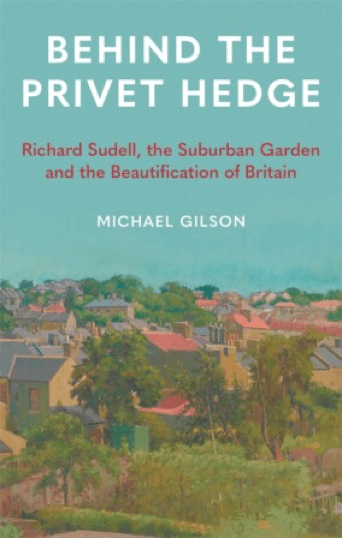
220 mm x 150 mm | 328 pages. 44 illustrations, 10 in colour. Hardback | £16.95.
World Rights: Reaktion. BUY
Unearths the British national obsession with the suburban garden.
Britain is a nation of gardeners; the suburban garden, with its roses and privet hedges, is widely admired and copied across the world. But it is little understood how millions across the nation developed an obsession with their colourful plots of land. Behind the Privet Hedge explores the history of this development and how, despite their stereotype as symbols of dull, middle-class conformity, these new open spaces were seen as a means to bring about social change in the early twentieth century. Michael Gilson restores to the story a remarkable but long-forgotten figure, Richard Sudell, who spent a lifetime ‘evangelizing’ that the garden be in the vanguard of progress towards a new egalitarian society with everyday beauty at its centre.
———————————————————————————————————————————————–
 Quaker Socialist Society
Leave a Reply