
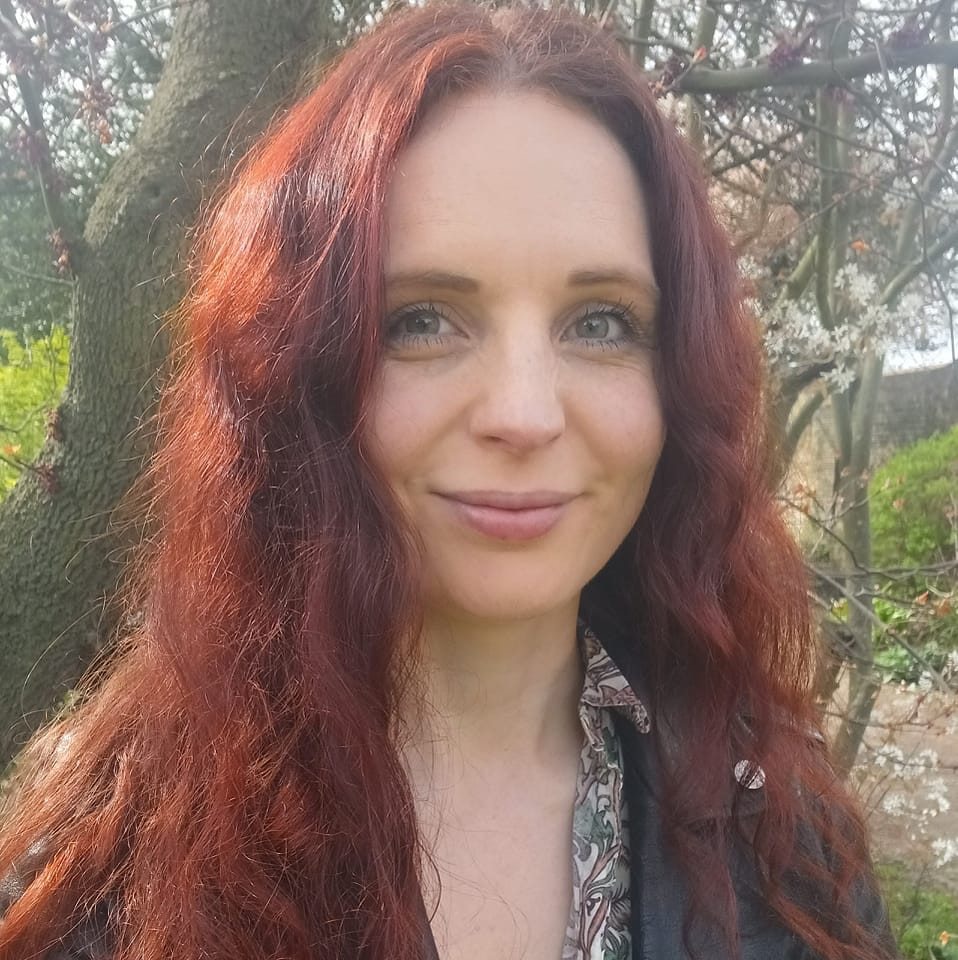
by Ruth Kettle-Frisby.
This was my contribution to ‘What Does Socialism Mean to Me?’ – a discussion evening organised by the Quaker Socialist Society (QSS) on 14th October 2025.
What Does Socialism Mean to Me? Truthfully? Is it a ‘love of hopeless causes’; the pipe dream that political centrists would have us believe? The desperate hope that the Left will stop atomising into various factions; embrace social equity without being distracted and divided by identity politics, and organise to build a cohesive progressive movement that’s collectively worth fighting for?
My political exhaustion aside, here’s a very current analysis of what socialism means to me: Eco-socialism is the current iteration that is making waves for a variety of important issues, including a free Palestine. I do think socialist policies should aim for our Quaker values of peace and justice, which must entail climate justice. Such policies should include:
• fair redistribution of wealth and resources, and degrowth, in an acknowledged symbiosis between happier, healthier people and a thriving, sustainable planet.
• renewable energy over further neo-colonial fossil fuel extraction.
• a wealth tax, debt cancellation for global south countries, reparations and loss and damage funding.
• Equitable access to clean air, land, water, food, social housing, health care, a decent education, support and opportunities.
Could the prefix ‘eco’ bring a much-needed collective focal point, or is it misleading to supplement socialism with its own properties? Could it compromise socialism? Further, it seems that given the decidedly right wing red/blue UK political landscape that concerns itself with destruction and injustice for endless economic growth, while scapegoating vulnerable people who are trapped into poverty via oppressive structures and inequitable austerity policies – we are hardly at the point of finely tuning socialism.
On the other hand, with so many left politically homeless after Jeremy Corbyn brought temporary hope via a Labour Party that strove to serve the many – not the few – a gaping hole lay in wait for a new socialist narrative. Eco-socialism is well- positioned to deliver progressive policies in a timely and effective rebranding.
Let’s face it, socialism per se is a problematic, heavily loaded term. This repackaging is already delineating it from authoritarian associations and capturing its capacity to accommodate the progressive modern zeitgeist.
Is ‘eco’ the right property to extract, isolate and combine with the term socialism? Instinctively, there is an – often distinctly capitalist – privilege that is associated with the prefix ‘eco’: from fancy solid toiletries to the ability to afford and maintain an electric vehicle, thriving garden or allotment; even to becoming vegan, or an eco-warrior. While these things can be beneficial up to a point, when people have nothing or very little, individual actions and behaviour changes can be nearly impossible. In fact some of these make life even harder for disabled people, for example paper straws.
And given that we won’t recycle our way out of the climate crisis, is this prefix appropriate? Worse still, does eco-privilege threaten swinging the political pendulum further away from active socialist solutions to poverty and injustice? While climate justice is deliverable through socialist policies, my concern is that the hyphenation between eco and socialism may become a chasm. It might back the continuation of neo-colonialist offsetting, greenwashing, carbon-capturing and a continued focus on ‘net zero’, as opposed to, say, divestment, a 1% progressive levy on consumption of fossil fuels, Global South debt cancellation and investment in fast, independently triggered climate breakdown grants.
Ethical socialism is another flavour of socialism that you can read about in the writing of our Friend Graham Taylor and the Quaker Socialist Society. Edward Bennots said that “If it is possible to have a moral society without socialism, we would promote the moral society. But we do not think it is possible.” So, Bennot thinks socialism follows from a moral imperative. In practical terms, could ethical socialism reinvigorate socialism it to give it broader political momentum?
The media demonise socialism on modern historic grounds, and consequently, people are understandably terrified or dismissive of it as idealistic, unviable and undesirable. Ethical socialism injects desirability in universally basic moral terms such as humanitarianism. But how stable are ethics as a universal standard?
I am tempted to think that when push comes to shove, if we all understand the fairly unsubtle meaning behind children’s books and films like Paddington, surely we can resist over-complicating this? However, a quick glance at the red crosses graffitied on Hornchurch infrastructure suggest that making the leap from a cute, well-spoken Peruvian bear, to a variety of people experiencing persecution and hardship – is less straightforward than storytellers would have us believe.
There are many competing ethical theories and ideologies that may further clash with ecological interpretations. To give a local example of a possible or perceived disconnect between environmental and ethical socialist concerns, when it came to plans to build a monstrous eyesore of a data centre on Greenbelt land not far from where I live in North Ockendon, I have nevertheless decided not to join Upminster friends and residents in condemning this development. This is because to me the ethical imperative to take some responsibility for our data storage trumps the ecological imperative favoured by some so-called NIMBYs (a somewhat contentious acronym for Not In My Back Yard). Similarly, I think basic needs like shelter should be top of any socialist agenda because currently a child in every classroom is homeless.
As we’ve seen, both logically and in practical terms, there is potential for tension or even a decoupling of any prefix that modifies socialism. If morality, ecology, democracy and feminism…are tenets of socialism…what are the long-term impacts of one aspect being definitively prioritised over others?
My sincere hope it that eco-socialism as a political movement – in conjunction and alliance with democratic or other framings of socialism – functions collaboratively and in good faith to contribute positively to turbo-boosting concrete solutions to poverty, injustice and inequality.
Ultimately, being any kind of socialist is about having the will to be part of a transformative paradigm shift that de-commodifies basic needs to uphold universal human rights.
A good and wise activist friend of mine, Fer’ha Syed invokes the term ‘good’ in a way that broadly aligns with both eco and ethical socialism. She recently said to me: “I don’t think you can be pro-environment without being a socialist; I don’t think you can be a good Muslim without being socialist.”
Personally, this rings true, and being a good Quaker entails being socialist. For the sake of the inmost Light that resides in all of us; peace, justice, equity, truth and simplicity can be politically configured into socialist policies through the lens of humility and care, whether or not you conceive of our values in the personified form of Jesus of Nazareth.
For me, socialism and my faith are separated only superficially; arbitrarily, even. My eldest little girl’s crushing neurodevelopmental diagnosis; the 1946 horror film, Bedlam; and the post-punk goth rock band, New Model Army brought me to Quakerism. A perfect storm of disillusionment, music, patterns of oppression, and matters of conscience led me to seek out radical Quakers rooted in the agrarian socialist ideology of the Diggers or True Levellers.
As a child I asked my dad, ‘If everybody is needed to make the word go round, why aren’t bus drivers paid the same as politicians?’ How would the politician get to work to run the country if it weren’t for the bus driver? How little I knew (or anticipated in terms of the primacy of modern car culture – complete with its urban SUV monstrosities, no less!) – but the principle had legs, as does the prospect of a universal basic income combined with access to universal public services.
Currently, we are valued in terms of economic productivity and rewarded at the expense of the majority of workers, disabled survivors, carers – who hold society together – and refugees. For many of the above, power and agency are limited by lack of access to social, economic and even cultural mobility in the capitalist race to extinction.
Too many people spend their whole lives grafting – often in multiple jobs, with little in the way of career prospects, and very little pay-off economically; but also psychologically, in terms of the confidence and self-esteem afforded to swathes of manifestly average, white, privileged men in suits.
In Georg Büchner’s play, the eponymous character Woyzeck retorts to his casually provocative boss and apparent ‘better’ that being poor means that you can’t afford morals. This incapsulates a big part of what socialism means to me. There are newborn babies with their lives laid out in front of them in narrow hospital corridors with prisons at the end of them.
Alongside latent or activated genetic predispositions, ethics, social sensibilities, manners, emotional regulation, and the conscience…are all conventionally nurtured; socially constructed.
For me, socialism is not straightforwardly about class either as it’s understood in the UK today. Blue-collar jobs can be extremely lucrative – especially with good social and economic support that is so strongly – although not exclusively – associated with privilege.
Socialism is not about charity, and it is not even about compassion. Rather, it is solidarity borne out of deep-seated awareness of historically embedded injustice in terms of the ongoing systemic abuse, exploitation and oppression of so many of us for profit.
The alcoholic in the alcove – he is me. The pregnant young drug addict on the streets – she is me. The family of refugees, fleeing war and persecution – they are us. The economic migrant determined to build a better life…name one person who hasn’t at least tried to lead a decent quality of life.
The couple who inherited money to buy a house and lose the will to tell the truth about the privileged nature of the successes that followed – perhaps they would be me too.The investment banker, completely divorced from so many of life’s basic struggles – is he me? Would I do any differently in his position? I hope so.
Does The Light within go out for some of the most powerful and destructive figures in history?Sometimes it flickers and fades, then roars back into fullest fire when fuelled with sadness and rage upon witnessing the extinction of the Light in our friends who experience the horrors of politically sanctioned dehumanisation.
The Light requires oxygen; the space away from fear, anxiety and hardship to wait and listen. But at the bottom of the capitalist chain, spirits can break and the Light – most visible in children, I think – is choked.
Further up the capitalist chain, the spirit of socialism is the conscious clipping of our wings in open and active rejection of our Icarian impulses towards entitlement and greed, as we meaningfully embrace our testimony to simplicity. Socialism entails dignity for everyone, but requires honesty and humility because it rejects the lie of hierarchical meritocracy that divides us, actively serving those with power and privilege.
Socialism – whatever the brand or flavour, if mobilised in good enough faith – is an effort of the will, spurred by the truth of deep, deep inequality, and the understanding – not only that this is categorically wrong in every sense – but that we are complicit in neo-liberal structural injustice unless we find meaningful, practical ways to join together and fight it.
 Quaker Socialist Society
Leave a Reply