
by Ruth Kettle-Frisby.
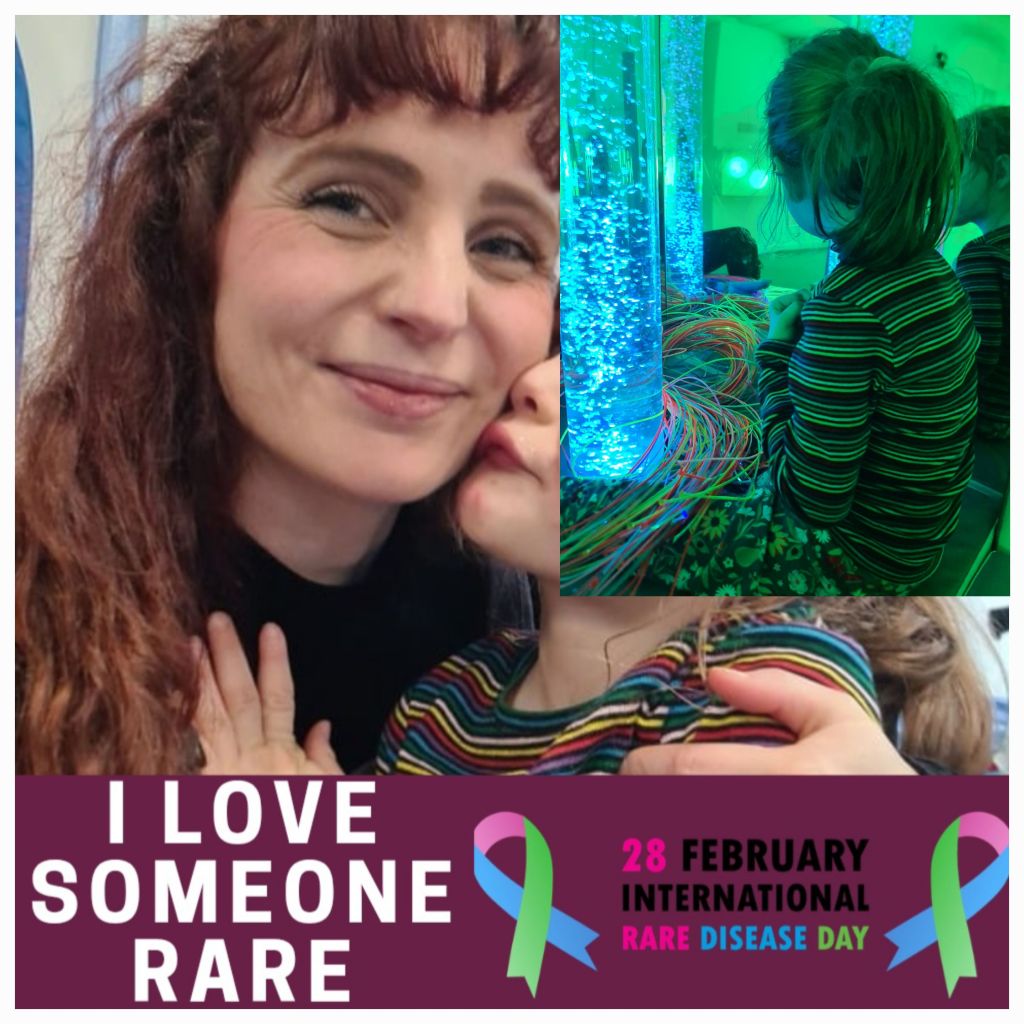
Rare families have to be nothing short of incredible. 28 February marks this year’s Rare Disease Day. A disease is classified as rare when fewer than 1 in 2,000 people are affected. 70% of rare diseases begin in childhood and 72% are genetic.
Today is the one day when hard working families caring for children with rare diseases – often accompanied by severe and complex health and developmental conditions – are empowered to emerge from the shadows of inconvenience and speak frankly and openly.
Children with rare diseases are among the most misunderstood of us all: medically – due to underfunded research – as well as socially, so it’s important that we stand proudly with them. And parent carers are endlessly proud of our wonderful children and everything they achieve – in spite of the multifaceted thrashing systemic current they are swimming against.
My own daughter lives with CDKL5. Like many rare diseases, this neuro-developmental condition profoundly impacts every aspect of her life, and yet in addition to being a clinical enigma – along with 3.5 million people in the UK who are living with a rare disease – she routinely comes up against high levels of systemic ableism.
In practice, rare families have to be nothing short of incredible. However, being incredible is exhausting. We fight up-hill battles and are forced to negotiate within hostile systems – always forging forwards, often silently bearing daily heavy loads.
The truth is, all too often the onus is on parents: to raise both public and professional awareness; to advocate – even for our children’s basic dignity – such as for continence pads; to take on the role of highly receptive detectives when our children are non-speaking; and to map our children’s needs in the context of their unique clinical history and a multitude of complex, interconnecting conditions.
Blanket policies regularly overlook needs that are rare-disease-specific, and in times of crisis, it is up to parents to fight. We quite literally go extra miles, seeking expertise overseas (a privilege wrapped in an ordeal that is by no means available to everyone).
This Rare Disease Day, let’s be better because every person with a rare condition is valuable: inherently valuable, a valuable part of our communities…a valuable part of us.
[Ruth Kettle-Frisby is a QSS member and a member of the QSS committee. A version of her article has appeared in the Havering Daily of 2026 March 04.]
 Quaker Socialist Society
Leave a Reply