
ABOUT THE QUAKER SOCIALIST SOCIETY. The Quaker Socialist Society provides a forum for those people, not just Quaker members, who stand for ethical socialism, social justice and a fair, safe and peaceful world. It aims to bring socialist ideas to Quakers and Quaker ideas to socialists.
Ever since 1652, when the Quaker movement was founded, Quakers have opposed social inequalities and any sort of formal religion or church hierarchy. The followers of George Fox refused to pay tithes to the church, or participate in any social distinctions, such as taking off their hats to social ‘superiors’. This egalitarianism arose naturally from the Quaker belief in an inner light (that there is ‘something of God in everyone’), regardless of class, sex, race, nationality, religion or social status. This inner light, or conscience, can be consulted by anyone who sits in stillness, and is the basis for the Quaker silence that is central to Quaker meetings.
The famous Quaker commitment to peace flowed naturally from the belief that anyone, no matter who they are, can directly access the inner light of conscience. Quakers believed inequality to be the root cause of war and therefore, if everyone sat in silence and equality, war would inevitably diminish. The early Quakers found plentiful evidence for their pacifism in the teachings of Christ and Christianity, but also in the teachings of other religions and in the teachings of non-religious humanists.
in the 19th century, with the rise of science and democracy, Quakers had to adjust. They found the way to adjust to the findings of science was to commit to truth. This was natural because by that time Quakers, because they always consulted conscience, had earned a reputation for honesty in business dealings. In the political sphere opened up by democracy they naturally became either radical liberals or socialists, as this accorded with their commitment to equality.
In the 21st century Quakers and socialists can both benefit from the closeness of their beliefs. Indeed, some Quakers have maintained that Quakerism and ethical socialism are the same thing. Certainly, Quakers can learn from radicals and socialists truths about society, economics and world history not available simply by consulting conscience during periods of silence and in the same way socialists can learn from Quakers about the value of stillness before taking action, and the value of treating everyone at all times with humanity and respect.
Quaker Socialists have been an organised group within Quakers since 1898, when the Socialist Quaker Society (SQS) was founded by Quaker Mary O’Brien who (with Shaw and Wells) was on the Executive Committee of the Fabian Society. The SQS was disbanded in 1924 chiefly because by then socialist ideas were making progress in the mainstream Quaker bodies and several Quaker socialists had been elected as MPs. For example, one Quaker Socialist, Hubert Peet, became editor of the Friend (the weekly periodical of British Quakers) and another, Alfred Salter, elected MP for Bermondsey, was able to introduce, along with his wife, Ada, a municipal revolution.
The present Quaker Socialist Society (QSS) was founded in 1975 by Ben Vincent. It arose from the feeling that during the Cold War Quakers had lost much of their social commitment to equality. The dramatic events of 1968-1974 had left Quakers as mere spectators of social change. The QSS wanted Quakers to return to their radical, egalitarian and pacifist roots.
Nowadays the QSS is best known for its annual lectures, which have always taken place at the same time as Quaker Yearly Meeting. This tradition was started by Mary O’Brien as long ago as 1899, with the set intention of bringing Socialist ideas to Quaker members. Since 1996 this lecture at the time of YM has been called the ‘Salter Lecture’, in honour of Ada and Alfred Salter. The lectures are by well-known academics or politicians (often, but not always, Quakers), and usually attract an audience of well over 300 people. You can read the texts of many Salter Lectures, by going to the heading, ‘Salter Lectures’ on this website.
—————————————————————————————————-
ABOUT ETHICAL SOCIALISM. There are two versions of ethical socialism and this causes confusion. The early one, described by Fenner Brockway, was the philosophy of the Independent Labour Party (the ILP) before it broke away from the Labour Party in 1932. Based on the values of community and comradeship it aimed to overcome capitalism and establish a decentralised socialist society based on co-operatives. In international affairs, the ethical socialism of the ILP looked to the unity of humanity and the eventual subordination of nation states to some world co-ordinating body. This is why Quaker socialists are often strong advocates of NGOs and the UNO.
The second version of ethical socialism appeared in the 1950s and was promoted in particular by the Social-Democrats. This concentrated on traditional morality. Strictly speaking it was not an ‘ethical’ socialism, in the sense of being based on the universal values of humanitarianism and co-operation, but a ‘moral’ socialism based on traditional family values, church values and national values. This sort of socialism was promoted by Glasman’s ‘Blue Labour’. In practice it is far distant from the ILP version of ethical socialism, championed by Keir Hardie and the Salters, that is the inspiration of the Quaker Socialist Society.
——————————————————————————————————
ABOUT ADA AND ALFRED SALTER. Ada and Dr Alfred Salter were Quakers and social reformers in Bermondsey, south-east London, in the early 20th century. Ada was dedicated to destroying the slums and concentrated on council housing and green beautification of the area. Alfred ran a pioneering medical practice, introduced many health innovations, and campaigned for a national health service.

Ada Salter (1866-1942), a pacifist from her youth in Raunds, Northamptonshire, before she became a Quaker, was appalled by the slums of London and she devoted her life to the demolition of slum housing. She built a model housing estate at Wilson Grove, campaigned against air pollution as early as 1913, and on the LCC carried through a programme for the beautification of all of London through parks, children’s playgrounds and tree-lined streets.
Alfred Salter (1872-1945), an outstanding doctor from Greenwich, was similarly appalled by the slums but more from a medical point of view. He treated poor patients for free and imported into Bermondsey all the latest medical clinics and facilities, creating in miniature an ’NHS before the NHS’. In 1922 Alfred was elected as MP for Bermondsey, representing Labour, while Ada in the same year became the first woman mayor in London and the first Labour woman mayor in Britain.

In this 1909 photo, taken in Ada’s garden, Alfred had already established his medical practice in Bermondsey, where the poor were treated free, and he was standing for election as an MP. He failed on that occasion, but was successful in 1922. However, Ada, at that time a local social worker at the Methodist settlement, did succeed in 1909. She was elected as Bermondsey’s first woman Councillor, first Labour councillor, and one of the first women councillors in the country. Although in a minority of one she was able to use her prominence to persuade the voteless women in the local factories to join a union, and this led to the historic Bermondsey strikes of 1911.
—————————————————————————————————–
ABOUT QUAKER MPs in PARLIAMENT. At most points in the past 200 years there have been a small number of Quakers elected to the UK’s Parliament. Most famous are John Bright (Liberal), Joseph Pease (Liberal), Arnold S Rowntree (Liberal), Alfred Salter (Labour) and Cecil Wilson (Labour). But here are more recent examples.
Ruth Cadbury (Labour)

Ruth Cadbury is MP for Brentford and Isleworth, having been a member since 2015. She served as Shadow Housing Minister from 2016 – 2017 and has been particularly outspoken in campaigns against the expansion of Heathrow Airport. She was previously an elected councillor in Hounslow for 25 years where she was well known for campaigns for the living wage for all employees. In her ‘maiden speech’ to parliament she spoke of the Quaker values of the Cadbury family, and the expectation that working people should receive good pay, good training, decent housing and adequate welfare support and job security. She gave the Salter Lecture at Yearly Meeting in 2022.
Catherine West (Labour)

Catherine West is MP for Hornsey and Wood Green, having been elected to that role in May 2015. Amongst many causes, she has been a prominent spokesperson in campaigns for nuclear disarmament, for the better treatment of asylum seekers and against Brexit. She was an elected member of Islington Council from 2002 to 2014 and leader there from 2010 to 2013. While leader, she set up the country’s first Fairness Commission, chaired by Professor Richard Wilkinson, co-author of The Spirit Level. Catherine West became a Quaker in the 1990s. She gave the Swarthmore Lecture in 2017 and the Salter Lecture in 2019. She is one of only two Quakers to have given both a Swarthmore Lecture and a Salter Lecture (the other one being Quaker Socialist Jonathan Dale).
———————————————————————————————-
ABOUT QUAKER MEPs. As well as the two current Quaker MPs at Westminster, and the many Quakers who have served at Westminster in the past, there were also before Brexit in 2020 two Quaker MPs in the European Parliament in Strasbourg.
Jude Kirton Darling MEP (Labour)
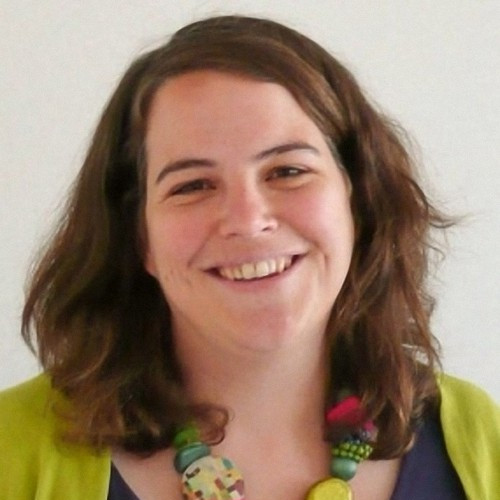
Jude Kirton-Darling was an MEP for the North East of England. She has especially focussed on trade during that time, as a member of the international trade committee. She worked previously for the Quaker Council for European Affairs, then the European Trade Union Confederation. She gave the Salter Lecture in 2015.
Molly Scott Cato MEP (Green)
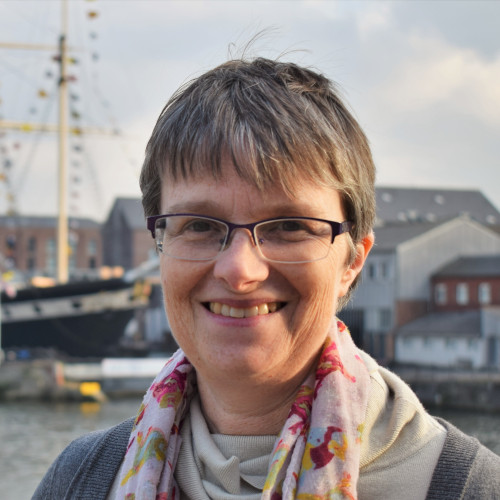
Molly Scott Cato was an MEP for the South West of England. Amongst the causes she has championed are urgent action on climate change, demilitarisation and peace in the Middle East. Previously a university teacher she has published widely on green economics. She gave the Salter Lecture in 2017.
OTHER QUAKER MPs IN HISTORY
There seems to be no complete list of Quaker MPs (but if there is one, please let us know). The following are the ones we have collected so far:
John Archdale (Whig, elected 1698 but, as a Nonconformist, not allowed to take his seat); Edmund Backhouse (Lib); Mark Ballard (Green MSP); John Barlow (Lib); Guy Barnett (Lab and QSS member); Alfred Bigland (Con); Richard Body (Con); Jacob Bright (Radical); John Bright (Lib); Ruth Cadbury (Lab); Molly Scott Cato (Green, MEP); John Ellis (Lib); John E Ellis (Lib); John Fielden (Radical); JFB Firth (Lib); William Fowler (Lib); Lewis Fry (Lib); Theodore Fry (Lib); Charles Gilpin (Lib); Frank Harris (Con); Charles Harrison (Lib); Edmund Harvey (Lib); Jude Kirton-Darling (Lab, MEP); E A Leatham (Lib); Tania Mathias (Con); George Palmer (Lib); Arthur Pease (Lib); Henry Pease (Lib); Joseph Pease (Lib); J W Pease (Lib); J N Richardson (Lib); Arnold Rowntree (Lib); Joshua Rowntree (Lib); Alfred Salter (Lab, SQS); John P Thomasson (Lib); Catherine West (Lab); Fred Willey (Lab); Cecil Wilson (Lab, SQS).
First Quaker MP elected was John Archdale (1698) – but blocked
First Quaker MP to take his seat was Joseph Pease (1832)
The second Quaker MP in Plt was John Bright (1843)
The first Quaker MP in the Cabinet was John Bright (1869)
Were 9 Quaker MPs elected in 1906 (Liberals)
Were 9 Quaker MPs elected in 1945 (mostly Labour)
Was only 1 Quaker MP elected In 1997 (Conservative, Richard Body)
Were 2 Quaker MPs elected in 2015 (both Labour, both women)
[Total number of Quaker MPs = 38]
——————————————————————————————————
A Picture Gallery of Quaker Socialists
These are a few of the Quaker Socialists who became well known in the course of the last hundred years. Though modern, their ideas are rooted in those of the early Quakers whose powerful words still resonate after 350 years.
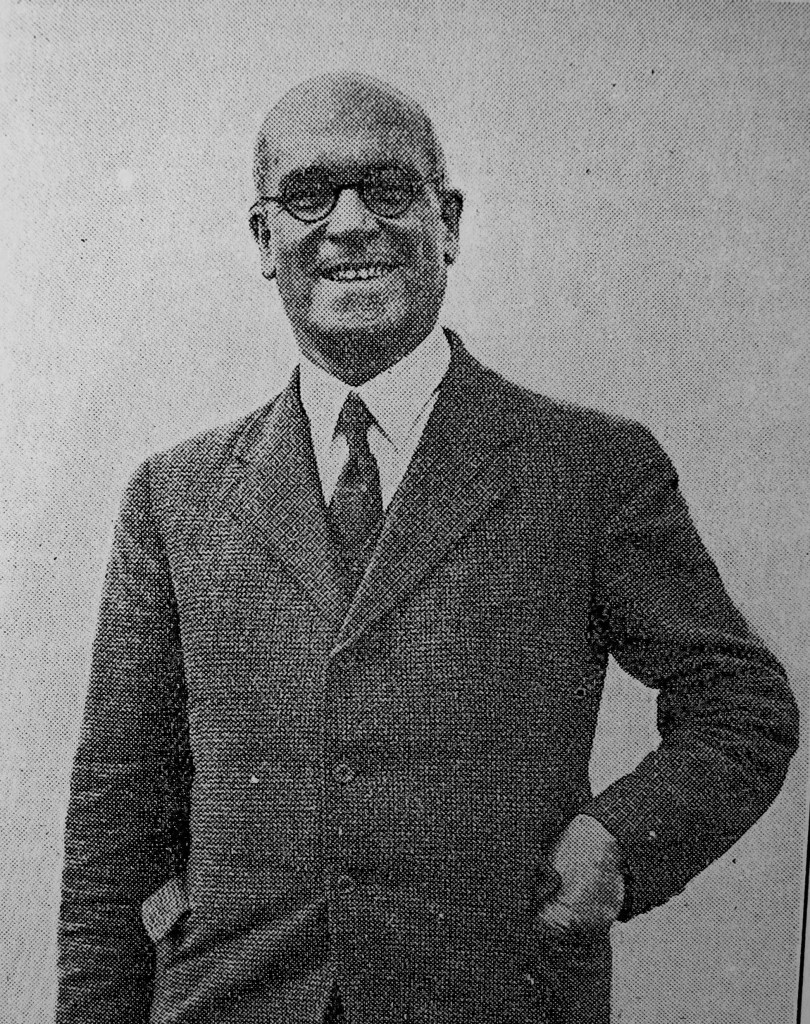
Alfred Salter
Brilliant doctor, medical reformer, a champion of slum clearance, and MP for Bermondsey. Member of the Socialist Quaker Society.
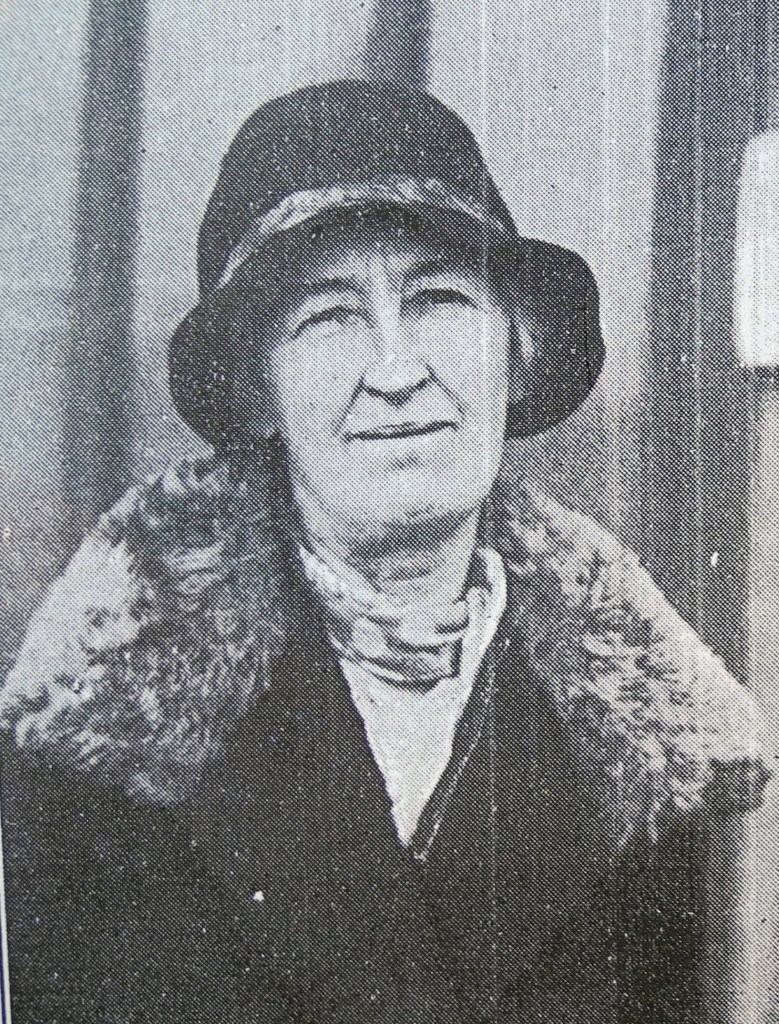
Ada Salter
First woman mayor in London, renowned for model housing and beautification of the slums. Member of the Socialist Quaker Society.
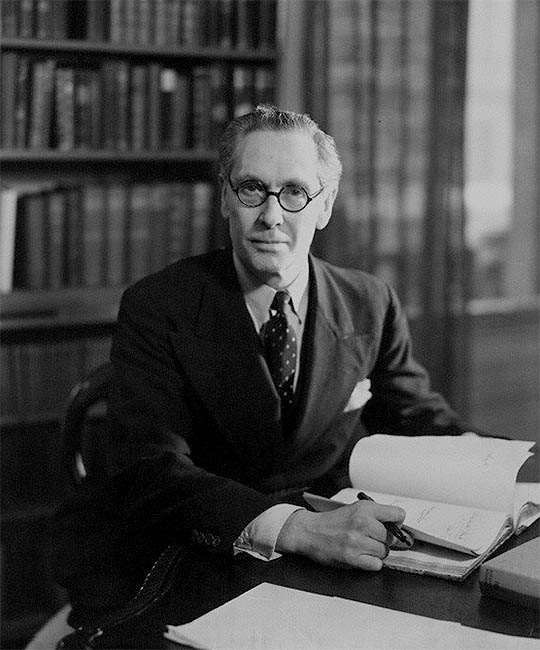
Philip Noel Baker
Olympic athlete and winner of the Nobel Peace Prize for Peace. Devoted his life to the cause of world disarmament. In 1975 he was a founder member of the Quaker Socialist Society.
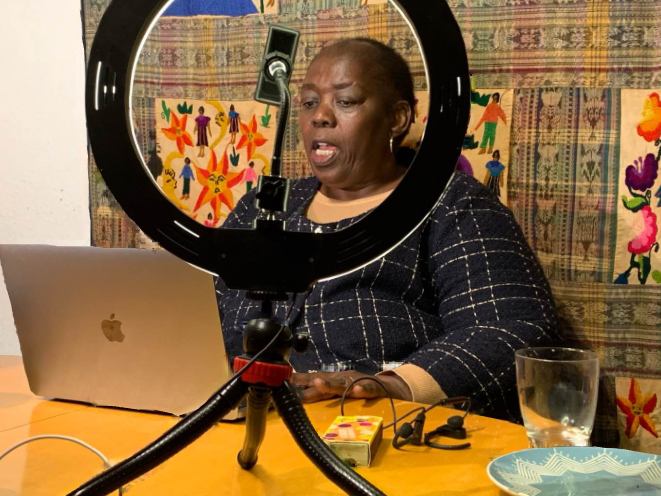
Nozizwe Madlala Routledge
Member of ANC, supporter of Mandela, minister in South African government. Member of Quaker Socialist Society.
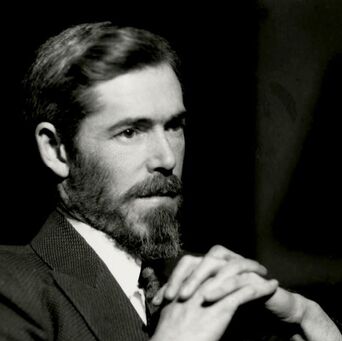
John MacMurray
A Scottish philosopher and Oxford don whose main influences were Kant and Marx. In the 1930s he analysed the basis of ethical socialism (the personal and the social), He became a Quaker later in life.

Bayard Rustin
Civil Rights organiser and principal organiser of the historic March on Washington. Champion of gay rights. Followed the socialsism of black activist Philip Randolph.

Joseph Southall
One of the greatest artists of the First World War. Follower of William Morris. Produced striking illustrations for Ploughshare, the magazine of the Socialist Quaker Society.

Paul Oestreicher
New Zealand peace campaigner of Jewish ancestry who became both an Anglican and a Quaker. Organiser of the Christian-Marxist Dialogue in the 1960s. Later, he criticised Tony Blair from a socialist viewpoint.

Joan Baez
Of Mexican descent, she is the most well-known of all American folk-singers. A Quaker, she put her beautiful voice at the service of the peace movement. A supporter of socialist Bernie Sanders.
 Quaker Socialist Society