Lawyer: Mishcon de Reya. Havering, Greater London, United Kingdom.
Clear the Air in Havering was founded by three local mums. We work hard to address misinformation about air pollution in Havering & to campaign for clean air strategies & education.
16 days to go: £4,088 pledged of £16,500 target from 175 pledges. Your card will only be charged if the case meets its target of £16,500 by Oct. 12, 2024, 3:54 p.m.
Stop the Fires & Clean up the Site at Launders Lane
We are Clear the Air Havering, a local environmental group founded by three local mums, and we are seeking funds to challenge the council’s lack of action over an illegal landfill site at Launders Lane, in Havering, which is affecting air quality and local resident’s lives.
The problem of Launders Lane
Constantly smouldering underground fires coming from the illegal landfill at Launders Lane in Rainham steadily pollute the air all year round. During the summertime the site regularly catches fire presenting significant unquantified, unprotected health and safety risks both to firefighters who are unable to access the fires, as well as residents as great plumes of toxic black smoke suffocate the sky. This already 20 year long public health crisis can no longer be allowed to continue.
Rainham is one of the most deprived areas of London and nothing has been done to stop the fires and to protect the by now desperate Rainham residents from harm. Rainham residents describe themselves as ‘the forgotten people of Havering’; their lives wilfully put at risk, paying for negligence with their lives. They have reported not wanting to go outside at all, struggling to breathe getting to the park (and having to come back again), that all windows have to be closed, children waking up in the night feeling that their throat is on fire, mothers waking up in terror thinking that their house is burning down, patients recovering from cancer struggling to breathe, parents of children with asthma constantly being on high alert. This is just not acceptable on any level.
The site is also classified as one of the highest-emitting methane sites in the UK. Methane can result in poor air quality by contributing to the formation of ground level ozone and particulate pollution. Exposure to ozone and particulate pollution damages airways, aggravates lung diseases, causes asthma attacks, increases rates of preterm birth, cardiovascular morbidity and mortality, and heightens stroke risk.
The Council Decision
Havering Council have decided not to designate the landfill as contaminated land. When councils make these decisions they are obliged by law to take certain things into account, including whether the site causes or is likely to cause significant harm to health. Our lawyers confirm that we have strong grounds to argue that this decision was made without taking into account the relevant factors: the council have failed to apply the Contaminated Land Statutory Guidance properly, have not adopted a structured approach to risk assessment, relied on flawed air pollution data and inconclusive evidence in relation to groundwater contamination, and have failed to adequately consider the impact the site has on the physical and mental health of local residents (which an expert report commissioned by the council suggested were “significant”).
Please support us!
We are asking for your support for our proposed application for a court review of the council’s recent decision. If the landfill is legally designated to be contaminated land, then the council and the Environment Agency will have specific legal duties to ensure the site is cleaned up. They will be required to serve a notice on the person responsible requiring them to remediate the land. Most importantly, if the relevant person can’t or won’t clean up the land, the council can step in and clean up the land themselves, and recoup as much of its costs as it can afterwards. It can also prosecute or commence civil proceedings against the person responsible – including holding company directors personally liable.
If the Site remains not designated as contaminated land, the council and the landowner can continue to blame each other and take no responsibility or action. The council has been trying to get the landowner to clear it up for the last 20 years – this is not working!
The residents have tried tirelessly to resolve this issue with the council and landowner to no avail. It is a last resort to seek action through the courts, but something has to be done to stop the fires. Our claim, if successful, will mean the council has to remake their decision, this time with the right information and with a proper and full assessment of the health and safety of the residents at the centre of their thinking, as required by the Contaminated Land Statutory Guidance. The residents of Rainham are owed a proper decision making process from the council, which takes into account the impact this site has on local health.
Our lawyers have written a pre-action letter to the council to explain our potential claim and to give them the opportunity to correct their decision making. This letter is has been sent on behalf of Ruth and Clear the Air in Havering and is available to view here , and some further information about us, the site, and the reasons we want to bring this claim are available on Clear the Air in Havering FB
The funding we need
We urgently need your help to raise an initial £16,500 to cover potential adverse costs* and court fees on behalf of Clear the Air in Havering and Ruth as potential claimants. We will then need additional funds to contribute to our lawyers’ (Mishcon de Reya LLP and David Wolfe KC) fees. We have set our initial stretch target for the fees at £50,000, but we ideally need to raise around £150,000, which we intend to raise in stages. Both Mishcon de Reya and David Wolfe KC are acting on a significantly reduced fee basis in order to act as our legal representatives advising us in this claim and ensuring it is brought within the relevant limitation period, but we still need to pay them for their work.
*In litigation in the UK, the rule is that the loser pays the winner’s costs. In claims such as these, such a rule is considered prohibitive to the bringing of claims at all because, as is the case here and in so many other cases, those affected by environmental injustice are often not the wealthiest in society. Accordingly, our lawyers intend to apply to the court for capped adverse costs under a regime called the Aarhus Convention. The maximum amount of costs which could then be ordered against us if we lose would be £10,000 for Clean the Air Havering and £5,000 for Ruth as an individual.
Here are three great books that have come to my attention this summer.
Daniel Smith-Christopher is an America Quaker who studies Christian Socialism. His new book, on Keir Hardie, is an absolute must for Quaker Socialists interested in history. It is expensive but could be ordered through libraries.
William Dalrymple is not a Quaker but Quakers have many connections to India and Indian history, both via the Indian religions and via Gandhi, and via Natal in South Africa, and in addition Dalrymple has a ‘socialist’ or, at least, anti-imperialist, take.
The last of the three, Quaker Michael Gilson’s Behind the Privet Hedge, with its links to the Salters, has already been highlighted on this site. It describes how England became a nation of gardeners. Highly readable and absolutely fascinating.
Keir Hardie, the Bible, and Christian Socialism: The Miner’s Prophet
by Daniel L. Smith-Christopher. £59.50 RRP £85.00 Website price saving £25.50 (30%).
Description: Daniel L. Smith-Christopher focuses on the life and efforts of Keir Hardie, one of the founders of the UK Labour Party and one of the foremost figureheads of trade unionism. Drawing upon the work of two contemporary and significant American theorists-Herbert Gutman’s classic essay on “Working-Class Religion” and Michael Gold’s call for “Proletarian Literature”-Smith-Christopher marries British and American historical and theoretical debates to argue that Hardie’s work is surely the quintessential example of a “proletarian exegesis” of the Bible.
Beginning with a summary of the major events in Hardie’s life, Smith-Christopher draws both upon existing biographies and more recent historical discussions that question assumption of British social history. He then reviews previous debates upon the influence of Hardie’s own Christian faith upon his journalistic output, and assesses three Christian Socialists whose work was advertised and reviewed by Hardie himself: Dennis Hird, John Morrison Davidson, and Caroline Martyn. Smith-Christopher proceeds to Hardie’s copious writings, both for The Labour Leader and separately published lectures, pamphlets, and somewhat longer works of autobiography and comment. Highlighting Hardie’s tendency to cite favourite texts (heavily from the Gospels and James, but also some notable Old Testament discussions), Smith-Christopher proves Hardie’s serious discussion of these texts beyond mere political rhetoric; concluding by comparing a selection of Hardie’s favourite Biblical arguments with contemporary research in Biblical Studies about these same passages, evaluating the problems and possibilities of proposing a “Proletarian Exegesis”.
Foreword
Chapter 1. What is “Proletarian Exegesis”?
Chapter 2. Keir Hardie (1856-1915): A Life
Chapter 3. Kier Hardie and Religion: A Review of Previous Debates
Chapter 4. A Cloud of Witnesses: Reading the Bible with Three Allies of Hardie
Chapter 5. Hardie’s Bible
Chapter 6. “What is to be Done”? Key Texts of Hardie’s “Proletarian Exegesis” of the Bible
Appendix ONE: Illustrations
Appendix TWO: “The Commercial Bible”
Bibliography
————————————————————————————————————————–
The Golden Road: How Ancient India Transformed the World By William Dalrymple
FROM THE AWARD-WINNING, BESTSELLING, AUTHOR – A REVOLUTIONARY NEW HISTORY OF THE DIFFUSION OF INDIAN IDEAS.
‘A master storyteller’ Sunday Times ‘Richly woven, highly readable … Written with passion and verve’ Spectator ‘A more masterful and accessible survey … would be hard to find … Enthralling’ Literary Review
Description: India is the forgotten heart of the ancient world. For a millennium and a half, India was a confident exporter of its diverse civilisation, creating around it a vast empire of ideas. Indian art, religions, technology, astronomy, music, dance, literature, mathematics and mythology blazed a trail across the world, along a Golden Road that stretched from the Red Sea to the Pacific.
William Dalrymple draws from a lifetime of scholarship to highlight India’s oft-forgotten position as the heart of ancient Eurasia. For the first time, he gives a name to this spread of Indian ideas that transformed the world. From the largest Hindu temple in the world at Angkor Wat to the Buddhism of China, from the trade that helped fund the Roman Empire to the creation of the numerals we use today (including zero), India transformed the culture and technology of its ancient world – and our world today as we know it.
————————————————————————————————————————————————
Behind the Privet Hedge: Richard Sudell, the Suburban Garden and the Beautification of Britain by Michael Gilson.
220 mm x 150 mm | 328 pages. 44 illustrations, 10 in colour. Hardback | £16.95.
Unearths the British national obsession with the suburban garden.
Britain is a nation of gardeners; the suburban garden, with its roses and privet hedges, is widely admired and copied across the world. But it is little understood how millions across the nation developed an obsession with their colourful plots of land. Behind the Privet Hedge explores the history of this development and how, despite their stereotype as symbols of dull, middle-class conformity, these new open spaces were seen as a means to bring about social change in the early twentieth century. Michael Gilson restores to the story a remarkable but long-forgotten figure, Richard Sudell, who spent a lifetime ‘evangelizing’ that the garden be in the vanguard of progress towards a new egalitarian society with everyday beauty at its centre.
Graham Taylor
[Please note that articles on this website represent only the views of their named authors, and not necessarily the views of Quaker Socialists in general, or of the Quaker Socialist Society in particular.]
Salter Lecture 2024 – Transcript of Video Recording
Applause, with Sheila smiling: “Well, you know what I’m thinking, don’t you? I’ll carry on anyway and say what I was going to say about the Quaker silence and no applause!”
Sheila: “I would like to welcome everybody and thank you very much indeed for coming this evening. My name is Sheila Taylor, and I’ve been coordinating the Salter Lecture on behalf of the Quaker Socialist Society. For QSS, the annual Salter lecture is an important part of our Quaker life, and this evening will be run in the same way as other Quaker gatherings. There will be a short silence before each speaker. There will be no applause during or after any contribution, and the meeting will end when the people on the platform shake hands.
This annual lecture is named in honour of Ada and Alfred Salter, the inspiring Quaker socialist couple who settled in Bermondsey at the beginning of the last century and devoted their lives to transforming the slums of south-east London with their pioneering work on social housing, public health and environmental beautification.
The Salters would have identified wholeheartedly with tonight’s topic. As pacifists, they campaigned unflinchingly for the peaceful resolution of international conflict. For that they were denounced as unpatriotic and even physically attacked. On one occasion, their house was stoned by an angry crowd and on another, the local Labor Party headquarters was set fire to, while Ada was speaking inside.
Ada found by bitter experience how difficult it was to change government policy in this respect. ‘It is always like this,’ she said, ‘We are against the last war and against the next war, but not against the present war.’
Inspired by the Salters, QSS chose this topic for our 2024 lecture. And to speak on it tonight I’m delighted to introduce our two lecturers, Paul Ingram and Jeremy Corbyn.
Paul became a Quaker soon after his first CND march in 1983, and hosted Peckham Quaker meeting in his own home for 20 years. In the Green Party he has held many positions, including two years as co-leader of Oxford City Council. His working life has been spent within the British and global nuclear weapon policy community. Perhaps his most unusual connection being with Iran where he was not only involved with mediation over their nuclear program, but also hosted a talk show for five years on Iranian state television. Most recently, he’s been part of the interdisciplinary team at the Centre for the Study of Existential Risk at Cambridge University.
Jeremy is arguably the most prominent socialist figure in Britain. For the older generation, he has been there leading or supporting every campaign for peace, disarmament and social progress throughout our lives. And for the younger generation, his five years as leader of the Labour Party brought new hope onto the political scene with his radical vision of global peace and justice. Jeremy famously stated that if he were to become Prime Minister, he would never use nuclear weapons. And just like the Salters, this caused much anger and condemnation in certain circles.
We are immensely grateful to Paul and Jeremy for helping to promote the alternative Salter vision with this year’s lecture. And if we may, we will now begin with a short silence and Paul will start speaking when he is ready.”
Paul:
I have lived since I was 12 with a sense that our society is on course for major catastrophe. In the early 1980s there were 70,000 deployed nuclear weapons and Reagan was talking at the time of confronting the evil empire.
My first CND march, as was just said, was in October 1983. It was sandwiched between two near misses for nuclear war – the Petrov false alarm incident just a few days earlier and the Soviet reaction to NATO’s Able Archer exercise a few weeks later.… though of course we didn’t know it at the time. We emerged from that particular Cold War seven years later, or at least it seemed that we did, just as I was starting out as a nuclear weapons policy researcher.
It turns out that shocks to the system can be positive. But the euphoria was short-lived. Even in the 1990s when the world forgot about nukes, I could see the hubris and the addiction to domination through force when America was imposing the Wolfowitz Doctrine and a neocon New World Order that would morph into Full Spectrum Dominance.… trends that led directly to the Iraq war, declining relations with Russia and confrontation with a rising China.
And now the threat of nuclear war hangs over us again, within a global polycrisis with multiple interconnected hazards, any one of which could lead to trigger general and global catastrophe. We harness powerful technologies such as artificial intelligence and biotech to exert our power over forces that obstruct our will. And the very same capabilities drive conflict and further risk.
Our economies are stagflated, with increasing debt at national, local and household levels. Debt owned by the global megarich who buy up the assets – housing and stocks – driving up those prices and people into poverty. Demand for public services is ballooning.
This of course exacerbates populist, nationalist sentiment, calls for control on migration, higher trade barriers, and economic decoupling, magnifying risk of global misunderstanding and conflict. And Trump hasn’t even been re-elected yet.
Whilst we contemplate our own oblivion, let’s not forget that numerous societies have already experienced catastrophe and annihilation, often as a result of contact with our own.
Wow. Take a deep breath. It’s depressing.
To be honest, I tire of my own negativity. When I hear others driven by blame, it’s even worse. There are many dangers in keeping our attention too long on the negative and the oppositional. We need to know when to move on.
Jeremy and I first met on the steering group of the Stop the War Coalition in 2002. I was representing the Greens and Jeremy…. well, the good people of North Islington. Our group organized the massive anti-war demonstrations before and in response to the invasion of Iraq. I remember asking how we could respond to our critics when they challenged us on what we would do about dictators like Saddam Hussein. The question had such heavy undertones of the ubiquitous challenge to pacifists of the Hitler question. The response from others on the group was quick…. This would complicate our message and divide us. We had to stick to the simple message: No war! This was right and very understandable. We were attracting millions of supporters, and Tony Blair was already politically wounded.
But we are back there again. Demonstrations and elections show the solidarity many feel with those that suffer from war today. The Lancet estimates that just under 200,000 or 8% of Gaza’s population, will have died from the war up to July. That’s a lot more than the estimates we are hearing, because of course many of those deaths are indirect. But it is in no uncertain terms genocide.
How are we to relate to Israel when recent opinion polls there suggest that around 40% think the military response has been just about right, and shockingly another 35% on top of that, that it has not gone far enough?
As Friends, we are urged to ‘Search out whatever in our own way of life may contain the seeds of war’. Here’s a question for you. Is Israel’s genocide worse than those conducted by the British in the past? How do we relate to them?
It does help to acknowledge our complicity and thereby transcend confrontation. At a conference this April in Moscow, in front of several hundred senior Russian officials and strategic thinkers, I spoke from the platform of my shame about Britain’s historical legacy in the Middle East and recent involvement in this conflict. It gave me the chance to point out that Russia too suffers similar delusions of grandeur and damaging military interventions, that we need to help each other overcome our addiction to the colonialist mindset.
But as Friends, our peace testimony is far from being a simple idealistic expression of moral judgment about wars far away. It is a highly pragmatic approach to relationship, culture and belief…. and holds clues around the political change necessary for our collective survival. It is about how we approach those we disagree with. Every time we blame THEM or set about solving our challenges in a confrontational manner is a step away from peace.
This isn’t easy. I know only too well the temptation to descend into righteous othering and confrontation. It may be driven by fear, by greed or purpose, or a need for control. The emotions involved can be intoxicating. They can also be manipulated to support powerful and dangerous ideologies, or draw us into others’ conflicts when they claim the status of victim. For example, we have an obligation to recognize and tackle racism, fear that divides and damages cohesion in our society.
But these sensitivities can be manipulated by those with their own agenda. Accusations of antisemitism have been used to isolate those who challenge settler colonialism, apartheid and genocide. The manner in which Jeremy was hounded out of the Labour Party was truly shocking, even to those of us in other parties. The manner in which this smear continues today is particularly distressing.
Complexity in our modern world, interpreted by soundbites and 15 second TikTok videos is all too often boiled down to binaries, us versus them, East versus West, Labour versus Conservative, disarmament versus deterrence. Ben Jarman talked about some of this on Saturday [In the Swarthmore Lecture] in relation to belonging and identity, the complexities of community, and our complicity living in a society that others its prisoners and excludes them.
I have created this rule of thumb for myself when approaching knotty problems…. If an action divides or isolates, it damages the prospects for peace. If it brings diverse people together and encourages communication, particularly when it’s difficult, then it’s positive (with the exception: if the purpose is to confront third parties).
It was this rule of thumb that enabled me to almost feel comfortable on TV defending the actions of an authoritarian leader earlier this month. Victor Orban had visited Zelensky, Xi, Putin and Trump in an effort to explore possible ceasefire proposals. In contrast, the European commission had decided to boycott his EU presidency in response.
But I forget sometimes. At the general election count, I caught myself seeing activists from other parties as ‘them’, those responsible for all the distortions and the disinformation that I had been attempting in my little way to counter. When I realized, I felt ashamed.
One of the arenas I work in is assisting states in the art of nuclear disarmament diplomacy. I devised the Stepping Stones Approach with the Swedish Foreign Ministry in 2018. This involves radical visioning of better futures as guide stars… but starts practically where states are at, taking them on a journey that organically unfolds. It forms the basis of the Stockholm Initiative for nuclear disarmament…16 non-nuclear weapon states driving political engagement. The first ever initiative to meet at political foreign minister level, five times and face-to-face (at least before Covid hit), to talk about nuclear disarmament.
As non-nuclear weapon states, the governments were aware that their perspective, experience and access to information was very different to those states they sought to influence, so they needed to adapt. The Initiative attempts to draw the nuclear weapon states into inclusive, collaborative, listening engagements to overcome the obstacles to disarmament. It involves visions of a world free of nuclear weapons, pragmatic steps that could take us in that direction, but crucially, a listening approach.
Proposals were developed as flexible points for open discussion. Invitations to dialogue. This radical incrementalist approach was heavily informed by Quaker writings. One such is expressed in Advices and Queries 17: Listen patiently and seek the truth which other people’s opinions may contain for you…Think it possible that you may be mistaken.
Certainty and righteousness drive conflict. Recognizing this, I have become a crusader for doubt. Doubt is, in the words of Leonard Cohen, the crack that’s how the light gets in. Have you ever really persuaded someone by the sheer force of your argument ever? If we have no humility and no curiosity, what is the point of listening to us? There’s no place for learning or growth.
I first met Rear Admiral John Gower when I was conducting the UK Trident Commission 12 years ago. He was the Assistant Chief of the Defence Staff, the uniform in the Ministry of Defence, responsible for nuclear weapons policy and the coalition government’s own Trident Alternatives Review. As you can imagine, we disagreed profoundly. But we treated each other with respect and later built a friendship across the divide that separated us – a peace activist and a nuclear war planner.
When I pitched my idea for the Stepping Stones Approach to the Swedish Foreign Minister in New York in 2018, I took John with me. Our personal stories and our cooperation were far more convincing than any verbal persuasion.
Now don’t get me wrong, I’m not advocating for naivety or even compromise…though it is important to be flexible. It does involve us expressing our own view with confidence, knowing it has validity as one amongst many. As an anti-nuclear activist, I would assume that my view was unwelcome in the halls of power. But I found that if I expressed it with sensitivity and respect, there were some that would receive it with interest. John was not interested in a squidgy middle ground. Some mistake this as weak. The Stepping Stones Approach grew up alongside the emergence of the Nuclear Ban Treaty and was strongly criticised by some who favoured clarity and confrontation on the basis of strong positioning.
But such an ideological attachment to righteous confrontation can harm our agenda. We can be better than that. I used to be a talk show host on domestic state Iranian television. I had the privilege to deliver a lecture to a number of high level officials in Tehran. I suggested they shift their scientific investment away from nuclear power, a poor bet for many reasons, and instead invest in renewables. Isuggested they could export this technology across the region and through this promote the Islamic Revolution, one of their principal goals. There was significant interest, but particular special interests and an established confrontational mindset blocked any shift.
As a lifelong anti-nuclear activist I have long come to recognize that my negative point of departure -rapid disarmament – has been at times an obstacle to the engagements I have sought with those Ineeded to influence. I needed a more positive and more radical point of departure. A big picture vision for a sustainable international society, building peace relations with itself. A vision that could unite diverse perspectives and peoples.
Now I’m not saying that an anti-nuclear protest is mistaken, far from it. But the real enemy is the manipulation of fear, the grasp for power, an obsession with self-interest and so-called national security described as ‘realist’…This is deeply embedded in our culture and assumptions about human nature and we need to shift it.
This new Labour government has just started a defence review. It promises a rapid rubber stamping of increases in defence spending. Our armed forces must be battle-ready for confrontations with Putin, Xi and other author authoritarian leaders challenging the US world order.
But it does so on the back of a questionable mandate. Just a little more than half the resident adult population voted a few weeks back. Less than 20% voted Labour. Little more than 35% of the adult population voted for all three mainstream parties, and they hold 95% of the seats. Many, many of those voted for negative reasons – to get them out. The politics of negativity and confrontation. Our politics is broken, so much so that we have come to imagine that politics is defined by confrontation.
This goes deep. We set up our parliament, our courts, even our educational approach on the idea that truth emerges from confrontation. Our deepest secular values of individualism and neo-liberalism further entrench this conflict. Is it any surprise then that this culture drives conflict internationally?
And most reasonable people despair at this conflict, but assume that it is inevitable, when it is not. Granted, self-interest is part of human nature. But it is not the full story. To stop at the assumption that we are by nature selfish could be the single most dangerous idea that humans have ever invented. As a good friend and political theorist, Sonya Ahmadi puts it, this belief lies at the heart of game theory, nuclear deterrence, and the rise of the neoliberal revolution that led to Thatcherism, Reaganism, and was then consolidated by Tony Blair. So its current incarnation is relatively recent and particularly extreme.
Self-care is essential. It protects our capacity to serve the greater good. When we fly, we are told to fix our own oxygen mask before we sort our child’s. But if we believe that self-interest and confrontation is the main driver of our relations, there is no hope of avoiding catastrophe. It’s a belief that could ensure that we as a species are self terminating.
We need a politics that involves true listening. I hope that Jeremy will tell us a bit of his amazing efforts over recent weeks to stimulate engagement in his own constituency through the mechanisms of deliberative democracy, and some of his work with the peace and justice movement. We need an alternative citizen-led open process that builds active peace within our own communities and enriches relationships across cultures, backgrounds, and experiences.
This listening also needs to happen within and between our political parties. I have a dream. I imagine an explicit, organized, cross-party movement of people listening and collaborating across political divides, united not by policy outcome, but in how we do politics… exploring ideas not as positions, but as invitations for dialogue with an expectation of movement. I imagine us rebuilding our politics based upon open thinking, not closed, dynamic adaptation and continuous improvement. And I think this is the meaning of the peace testimony. And this is a critical element of our collective salvation.
Because I believe that the dynamics of nuclear confrontation that I witnessed this last week in the Geneva halls of the United Nations are driven by this dysfunctional assumption that domestic politics and human relations are determined by confrontation.
I met Jeremy when he was party leader. I suggested that whilst we may feel ourselves on the right side of the debate over unilateral nuclear disarmament, we were not carrying the British people with us. We thereby fall into a trap and inadvertently hand control to those who believe in the benefits of nuclear weapons. I suggested we run a major public conversation on how the UK could better drive global nuclear disarmament, a question with clear public majority support that could unite with us.
And I had many ideas because I’d been thinking about them when developing the Stockholm Initiative. This could turn an issue often perceived as a political liability into an asset. Jeremy agreed wholeheartedly, but at the time the idea didn’t take off.
It may look even less likely now. Public confidence in nuclear disarmament has taken a battering with the war in Ukraine and the demonisation of Putin. But the awareness and fear of nuclear war is high, and confidence in the stability of nuclear deterrence has also taken a massive hit. So our point of departure is the widespread desire to reduce nuclear risk. From there we can go on a journey, a journey that might involve some of these steps…
…One that rejects the manipulation of catastrophic risk through nuclear threat.
…One that builds habits of cooperation across states that in the past have helped create the disarmament agreements that we actually have.
…One that acknowledges the weaknesses of nuclear deterrence and explores alternatives.
…One that might build towards a common security structure with the Russians and Chinese given respect and their approach, culture and engagement also respected.
…One that establishes collaborative and fair global governance mechanisms that genuinely escape a supremacy power-play agenda.
This journey would give us human beings just a chance of collective survival. Our conversation may involve citizens assemblies, online engagement, artistic expression, and other forms of genuine interactive discussion and education. It could expose the ways in which our previous government blocked multilateral nuclear disarmament talks, and the consequences arising from the current Prime Minister’s blind commitment to a failing Trident replacement program.
But the principle focus will be the positive open invitation into the citadel of foreign policy currently controlled by a small elite. In curating this conversation, we can hope to build confidence in the possibilities of a safer world. And it would be more difficult to dismiss us as naive purists.
This is why I’m honoured to share the platform tonight with a politician who has for decades campaigned for peace in all its aspects, who inspires constructive hope in so many. But also, contrary to the claims of his detractors, as a human being approaches engagement in a kind and generous manner, rarely condemning individuals, and willing to experiment in fresh renewal of our democratic process.
Jeremy:
Thank you Paul. And thank you very much for inviting me to come to the Salter lecture. I consider it an enormous honour. I’ve been to one previous Quaker Socialist Society meeting many, many years ago, and I’m very grateful to you for inviting me here this evening. And I’m looking forward to the questions and discussion that we’ll have. Because the role of the Quakers historically has been protecting dissent, protecting the right of freedom to follow whatever religious course you want to, and standing up against the centralised power of the church – which Tony Benn always described as the one piece of nationalisation the British state was very proud of: the construction of the Church of England as an all- powerful body. He was essentially a born dissenter, I suppose you’d say. And I absolutely admired Tony for that, and for many, many other things.
And I think to have the evening in memory of the Salters is really wonderful. Because Dr Salter was a doctor in Bermondsey and an MP for a very long time. He was one of the very few Labour MPs who managed to survive the 1931 election when Ramsay McDonald crossed over and the National Government was elected. He survived that and sadly stood down in 1945. He was quite elderly by then, but he would’ve made an amazing contribution to the construction of the National Health Service and maybe it would’ve been even better if he’d still been in Parliament at that time. And his work for peace was also alongside his work for social justice and health in his community.
And Ada Salter was an amazing woman in so many ways. An environmentalist 50 years ahead of her time, who started the campaign in 1913 to try and get clean air in London at that point, because she was pointing out the industrial effluent that was obviously killing children in the community where they both lived.
And I just think we should always remember those people that stood up under difficult circumstances. And no doubt, I can’t bother to research it, but I would imagine the Daily Mail was probably critical of them at the time. I would imagine they wouldn’t have gone along with all that sort of stuff somehow. And so it is in their memory that it’s right that we meet, and right that we understand the bravery of often random and sometimes surprising individuals throughout history who’ve tried to make the case for peace rather than war, to make the case for social and human and environmental justice rather than the general run to go to war.
And the imperial history of this country, which we’ll come onto in a moment, has been linked to a whole programme of massive education of our population, particularly in the 19th century when general education became the norm from the 1870 education reforms. There was a whole indoctrination process of every school child into the value and the benefits of empire and with it a sense of racial superiority over people in Africa, Latin America, south Asia, or anywhere in the world that wasn’t labelled Europe, and on top of that, there was a superiority over Europe. And those elements of mental superiority ended up being able to be used to support the most ghastly conflicts that the world has ever seen.
So I think it’s important that we think deeply in terms of how children’s minds are formed, both in primary and in secondary school, through the teaching of history and through the teaching of moral lessons about how you deal with each other.
At the moment, if you look around the world, it’s hardly a world of peace. The major war that’s going on in Ukraine has cost the lives of hundreds of thousands of people. The most massive level of environmental disruption, destruction rather, and disruption of food supplies to Africa. And the deaths of very large numbers of conscripted Ukrainian soldiers and conscripted Russian soldiers.
A mother or father mourning the loss of a son or a daughter is the same whatever nationality you are. It’s still the loss of one of your dearest and loved ones, whatever the conflict or whatever side they’re fighting in that particular conflict.
I find it beyond sad that none of our leaders in describing the war in Ukraine ever use the word peace, ever use the word, search – for a way out of the conflict. It took the Pope to make some moves. It took the African Union to make some moves. It took some effort by Antonio Gutierrez to try and get towards at least a negotiation or a settlement to try and get a ceasefire and move on from there. But instead, our government has just committed several billion pounds per year, ad nauseum, to Ukraine, much of which will be used to buy weapons from this country to fuel the war. I hate the war in Ukraine. I want to see it stopped. I don’t think what the Russians did is any way defensible or right. It doesn’t mean there hasn’t, there shouldn’t be, a search for peace to save life in Ukraine.
And I have to say, sort of en passant, that I absolutely support and welcome all Ukrainian refugees that have come to this country, have come to my community, have come to any community in this country. If we can do that for Ukrainian refugees, we can do that for refugees from Afghanistan, from Somalia or from anywhere else in the world. We don’t have to restrict it just to people coming from Ukraine.
And the other wars going on. Congo. Massive loss of life in the Congo at the present time occasioned by very powerful militia forces, which are funded essentially from the minerals industry, and the mining companies, which are used to extract coltan and cobalt from the Congo, which ends up in mobile phones and exported into the so-called respectable mineral chain via Rwanda. So it’s child labour, militias, and a horrendous death rate throughout the Congo, which is exploiting the natural resources of the Congo to go into the supply chains of industries all over the world.
I’ve had the advantage, if it is an advantage, of visiting Congo twice and going to Goma, which is in the east of Congo, which is a city of refugees, of thousands of women who are victims of rape, because rape is a weapon of war in the Congo. And at the same time the most glossy, expensive hotels and headquarters of mining companies, alongside roads that have no surface, that have no pavements, that are just deeply rutted. And every open space is occupied by refugees in tents.
You just see all the horrors and the greed of the world in one city there in front of you. And that the Congo is absorbing not so much the heavy weaponry that’s going into the Ukraine or other conflicts, but it’s absorbing large numbers of lighter weaponry, which is just as deadly and kills tens of thousands of people.
The war in Sudan, likewise, massive. Huge loss of life going on there. And again, the arms trade is feeding into it. And Paul has already explained so much about Gaza and the conflict there. And we are now witnessing 40,000 deaths in Gaza in what’s just over nine months have happened. And on top of all the others that have been killed over the years. And at least 2,000 deaths that have happened on the West Bank by settler violence against Palestinian villages.
And we’re watching this all live on television. We’re watching live on television as children die from diarrhoea, from dehydration, from hunger, or from operations that lacked anaesthetic because there was none available there. And within five, 10 kilometres of where those children are dying and other people are dying, older people are dying, there is the supply of water, there is food, there is medicine, and there is anaesthetic, there are the conditions. We’re just watching this in real time on television.
All our demonstrations, all our meetings, all our marches have made a difference, have forced the pace on international law. And I went to the ICJ discussion on the genocide application that was made by South Africa. They have made a difference and they have forced governments, and indeed the British government to my pleasant surprise has now withdrawn the objections to the ICC arrest warrant on Netanyahu. It’s not very much because they should have just said automatically, we are signed up to the Rome Convention, therefore we must abide by it. But at least that statement has been made.
But the issue of arms trade, arms deals and arms supplies, and the use of RAF Akrotiri as a staging point for dropping bombs, or taking bombs rather, into Israel which are later dropped on Gaza, is still going on. And so the demand for an end to the security cooperation with Israel is a very, very important part of our demands that we have to make in all the demonstrations that we put forward.
Now, I say this because I was in parliament last week when the House came back and we had the State Opening and so on, and the government grandly announced that there wasn’t much money available for improvement of services. Rachel Reeves spent about an hour today explaining there was no money available for anything that I could make out, and she gave a whole list of things that are going to be cancelled because there isn’t enough money available.
One of them I was actually quite pleased about, and that was the cancellation of this crazy tunnel next to Stonehenge, the A303. So the A303’s been cancelled. Wow, great! I’m very pleased about that, because I think you should leave Stonehenge alone and let us enjoy the history of it and understand the history and explore it, not destroy it.
But at the same time as the general lecture is coming out about the lack of resources that are available, there is no challenge to the grotesque levels of inequality within our society. A society of billionaires and food banks, and increasing gap between the richest and the poorest. And no challenge to the proposal to increase defence expenditure from slightly under 2% of gross domestic product now to 2.5% by 2030. And indeed, there are quite a few think-tanks hard at work, no doubt well funded by various arms interests, who think it should go up to 3%, completely arbitrary figures plucked out the air, saying we need this.
That means in financial terms that an annual expenditure of about 55 billion a year will go up in the case of the UK to over 80 billion a year, plus whatever inflation there is between now and 2030. That is a pretty big increase in expenditure, just on defence. And that is not all being spent on nuclear only by any means; only quite a small amount of that is on nuclear. It is on a whole range of weaponry, much of which will actually be bought in from the United States. And so it is, I think, an issue that we should be talking about much more. That if they’re saying there isn’t enough money to bring in a national care service and a national care programme for people in need of social care, then start looking at the defence budget and start looking at that as a source of money that you could put into the services that we need, as well as obviously changes in our taxation system.
Now, nuclear weapons are something that I suppose brought me into political activity when I was at school in Shropshire. I quite enjoyed being the only one – I was the only one in my class – that was opposed to nuclear weapons. And apart from my brother, the only ones in the school that were opposed to nuclear weapons. And running a CND branch in Newport Shropshire was a lively affair. There was all but two of us in it. But nevertheless the arguments were still made, or we still made them as best we could.
And I’ve always been inspired by the simple bravery of people that founded The Committee of 100, founded CND, and continued what was an argument very much in the face of convention saying that nuclear weapons are unacceptable in any terms. They are the ultimate weapon of mass destruction. There is no defence against them whatsoever.
I was often confronted with all these questions about: ‘Are you a real man? Are you prepared to use the nuclear weapon?’ And I sort of tried the testosterone argument. I said, ‘Yeah, I’m a really, really real man. I wouldn’t ever use them.’ Ooh, weakness, weakness, weakness. And so, by simply saying that I would never use nuclear weapons, that unleashed years of abuse in every conceivable way from the defence establishment, the arms industry and everyone else against everything that myself and others were trying to say.
I stick with that. Nuclear weapons are unbelievably evil things. There can be never be any defence against a nuclear weapon. And anyone that wants to use a nuclear weapon basically is happy to contemplate destruction of life on the planet or at least in parts of the planet. There is no defence against it, I think that we would all know. And the cost of nuclear weapons is massive and enormous, but it also means you have to look at the pressure that is there, which leads to policymaking, which gets us into the situation of spending this huge amount of money on arms rather than ever discussing peace.
Through the Peace and Justice Project, we’ve just produced this book called ‘Monstrous Anger of the Guns’. You’ll recognize the words ‘monstrous anger of the guns’ from the First World War poetry. And we put together this book about how the global arms trade is ruining the world, and crucially what we can do about it. And this is a lifetime book. It’s just been published. The printers really let us down, totally confused and threw us totally. We were expecting to launch the book at the Peace and Justice Project International Conference on September the 14th. And last week they arrived at my office with a thousand copies of the book already printed. They let us down and came a month early. I mean, you can’t trust printers anyway, can you? So it’s on, it’s going on sale now. And you can either buy it online from the Peace and Justice Project or I’m sure Housemans will be able to supply it and other bookshops. But please look out for it. Sheila, this is your copy. No applause [laughter] but thank you, Sheila, and I’ll sign it later if you wish.
So what this book does is to try to outline the cost, the effect on the wider economy of this concentration of brilliant people and brilliant research methods on production of armaments and weapons of war such as planes and ships and so on, and what the alternatives could be, what the alternatives could be with those skills there. And it is not, absolutely not, an attack on anybody that works in the arms industry. It is saying their skills should be put to something more productive and more useful. We are not in the business of making enemies of people who just need a job. We don’t want to sort of go into an area and say, Well, you know, none of you should be working there. Well, maybe that place should be making something different.
And there are plenty of examples in history. Back to 1945. Boulton Paul, aircraft manufacturers in Birmingham, in three weeks stopped making aircraft in parts, and three weeks later were turning out prefabricated aluminium houses to deal with the housing crisis at the end of the Second World War. Three weeks turned the whole factory around. And then the wonderful people at Lucas Aerospace in the seventies with their Lucas Aerospace Plan – Mike Cooley and others that put together that plan. And those that are now challenging urban systems and so many others about what they’re doing in this country – there’s a rich vein of people that have always had the imagination to think and act for something very, very different. And so I think we have to come into that scenario now and ask people to imagine a very different world, but it does mean serious campaigning work.
But it’s also understanding the dangers of the situation that we’re in. I’m sure many in this room have read a great deal of the history, particularly the run up to the First World War, the brilliant book by Adam Hochschild on the descent into the First World War and the way in which the various military alliances had come together and all the secret deals that had been done and the secret treaties which required each other to go to war. Suddenly all collapsed in three weeks from relative peace in Europe to the First World War and all the deaths that went with it.
And those people before the first World War – Keir Hardie, Jaures and many, many others, Karl Liebknecht and Rosa Luxembourg, and many others – that had tried to build that alliance of opposition to war all across Europe and actually made amazing progress in saying, British workers don’t want to kill German workers, German workers don’t want to kill French workers. And sort of working class unity across the continent just collapsed in a relatively short time at the start of the First World War, where Keir Hardie went from being the leader of the Labour Party opposing the First World War, to being shouted down by his own parliamentary colleagues as he spoke out against the war, and they sang the national anthem behind him in Parliament. As we know, Keir Hardie died in 1915. He didn’t get to see the end of it. But there was consistent opposition to the first World War by very brave people such as Fenner Brockway and others who went to prison for it.
The outcome of the First World War – we’re living with the consequences today. The Treaty of Versailles, that so tried to humiliate Germany and the German people, gave the ground on which the Nazis grew up, and the convenient lines secretly drawn on maps all over the Middle East give us the borders that exist in the Middle East at the present time. And the various elements of double dealing have given us the conflict that we’ve had for all that time, going on at the moment in Gaza. So we have to think quite carefully about what happens after wars as well as what happens in the build-up to them.
The end of the Second World War, yes, did bring about decolonisation of some places, But it also brought about the partition of India and Pakistan and the loss of several million lives as a result of it. And now a state of war between India and Pakistan that’s gone on for all of my lifetime and shows no signs of abating at the present time. So it is a question of understanding what we can achieve in educating people for peace.
So I would start with a couple of things. First of all, I think that the teaching of history in primary schools and secondary schools is the most important thing to concentrate on. I’m not so worried about teaching at university history because by that stage, students have obviously developed, one hopes, critical abilities of their own and will study and research whatever they want to do, one hopes. But the sort of rather formalized, not very analytical history of European expansion, of colonialism, of the buildup of colonial attitudes and racial superiority is a very, very serious issue. And so the easy word ‘decolonise the curriculum’ is actually quite important.
Dawn Butler and I developed an idea that we wanted to do and set up something called the Emancipation Education Trust, which would provide resources in schools which could start to look at issues such as how the slave trade was stopped, how it was abolished, and the bravery and the deaths of tens of thousands of slaves in uprisings against the slave trade. It is about understanding our history and above all where historical power comes from.
And we as socialists, what is our aim? Socialism is about producing for need rather than profit. It is about accepting the needs of everybody to eat, to have somewhere to live, to have a school to go to, to have a doctor to go to, to have somebody to care for you when you need to be cared for because you don’t have the ability to care for yourself.
It’s not a very complicated idea. Socialism is essentially one of basic humanity of how you care for and look after each other. But it’s also about how we live our lives and how we live with the environment rather than on top of the environment, sustainability. Sustainability of our lives, by living with nature rather than above it. And so to me, environmentalism and socialism are the same thing. And peace and socialism are absolutely the same thing. And so we have to mount those arguments.
Now, there are opportunities to mount those arguments. The government has just announced it’s going to have a defence review. All new governments have a defence review, and this one is no exception. They’ve announced the defence review. I’m not exactly clear who is undertaking this defence review yet, but maybe I’ve missed the announcement on it. But that’s also an opportunity for all of us.
What I’ve put in a suggestion to a number of peace organisations is that we come together and put in a collective response. A collective response to the defence review, pointing out the issues of costs, pointing out the issues of dangers around the world, and pointing out, as our book points out, the incredible lobbying power and political influence, power of the arms industry in the United States, Canada, France, Britain, Germany, and so on, all around the world. And the way that the war in Ukraine has led to a huge increase in armaments production in Europe, with Germany now opening up a particular armaments factory just for the war in Ukraine. But it’s also led to a big increase in arms production in Russia, in China, and in India. And so essentially there are two power blocks in the world that are feeding more and more weapons into the war in Ukraine. And the video images of those drones and other things are then used at the International Arms Fair to advertise the effectiveness or otherwise of particular weaponry. Is that really the way forward we want to go in this world? Or are we going to have some serious proposals for peace?
And so my argument would be: the Defence Review is also an opportunity to survey the issues of conflict, violence and wars around the world and turn that into arguments for peace. And so the Defence Review gives us that chance. Last thing I want to say is this – you mentioned it earlier, Paul – the rise of the far right in our society and the argument that is used, the argument that spending money on armaments and defence is actually an economic generator. So you decide to order a new aircraft carrier, order new fighter planes, it obviously creates a lot of jobs. It is essentially public spending on those jobs.
I have no problem with public investment to create employment and develop products, no problem with that whatsoever. But it depends what the products are and if they’re actually going to benefit people or they’re going to kill people. It’s no good complaining about the death of people from arms we export, if at the same time we export those arms which we know full well are going to kill people later on.
So it is a question of making that argument for peace, and I hope we were able to do that. But the rise of the far right. Last week you had Stephen Yaxley-Lennon and his friends trying to occupy Trafalgar Square with the most appalling language against refugees, who themselves are victims of wars in Afghanistan, Iraq, Iran, Syria, Libya, – you name it, they’re there.
I’ve been to Calais several times. You meet people who are victims of wars, some of which you’ve barely heard of, and just trying to get to a place of safety. Farage and his party, the Reform Party gaining 4 million votes in the election, which was the major factor in the election in the loss by the Tories. But Labour did not gain any more votes than previous elections. In fact, it lost votes on the last two general elections.
The danger is that the far right will rise on the basis of the arguments against minorities such as refugees being the cause of the problems of underfunding, of education, of housing, of health and so on. It’s complete nonsense, that argument. The underfunding of health and housing and education is nothing whatsoever to do with refugees. It’s everything to do with the direction of public spending by (a) giving tax breaks to the very rich. And secondly, by the excessive amount of money that’s been poured into the defence budget. So we need to sort of balance these things out and use these arguments. Otherwise the country descends even worse, and deeper, into the horrible racist abyss that they, those people, would want to lead us into.
The left are very keen on historical parallels and saying – and I’ve used a few myself saying this is like it was before the First World War, this is like it was before the Second World War. And so nothing ever repeats itself exactly, but you have to look at the sense of hope and optimism that’s there in politics in any way. And having just gone through the process of the election campaign in my own constituency, what I found most inspiring about it was the number of people that came along from all over who just said they wanted to be involved in something that was hopeful rather than fearful, something that was positive rather than condemnatory, something that was collaborative rather than exclusive. And it was to me a fascinating experience talking to the people that came along just to join in because they wanted to experience something very, very different.
And in the Peace and Justice Project we have produced this book. We’ve also produced a poetry book, ‘Poetry for the Many’, and we’ve done lots of poetry events around the country and other places. Well, I’m going to Ireland next week to do some more there. This brings in a lot of people who just want to think about ideas and things, allow people’s imagination to flourish. And that is important. We’re holding our international conference at Queen Mary College on the 14th of September, and that’ll be a hybrid conference – it’ll be both physical and online, with people speaking live from South Africa, from India, from the USA and other places. It will concentrate on global living standards, environmental issues, and obviously issues of war and peace such as the wars in Ukraine and other places.
And locally, just to finish on Paul’s invitation. I see the way forward politically, as far as I’m concerned anyway – as no longer being a member of the Labour Party (because the Labour Party has decided I’m not fit to be a member of Parliament or indeed a member of the Party, which is funny really) – but forming local assemblies, open assemblies in which I will report on what I do. But also we will then encourage the local community to come along with its ideas: ideas on housing, ideas on health, ideas on mental health issues, and so much else, as a sort of bubbling up of hope and encouragement of people dealing with the issues that they face.
The issues of war and peace are what the Salters faced – faced with incredible bravery, in the most difficult of circumstances and maintained their integrity and their principles to the very last and remembered forever in Bermondsey for what they did for that community there, for what they did for working class people, whose lives were physically improved a great deal because of their work.
And if by coming together as thoughtful associates, we can achieve a considerably better world by opposing the whole concept of war, instead look for the magic word of ‘peace’ and the justice that’s necessary to bring about peace, then we’ll have done good work.
I look forward to our discussion. Thank you very much.
Question and Answer Session (with Imi Hills, using Slido)
Jeremy:
…. the opposition to the Vietnam War in the 1960s. Those of us that can remember that far back were very, well, appalled at what we could find out was happening, because it wasn’t televised anything like the extent wars are now. And then we stood up against the mainstream opinion, which I remember being nauseously explained on the television every night, was that it was all about a house of cards falling over. Unless we stood up against the threat, the communist threat in Vietnam, then the whole world would be destroyed. And so we had to support the American strategy in Vietnam, which led to the horrors of that war.
I’ve just finished reading a book about Kennedy and his involvement in the Vietnam War, which actually was quite revealing. But that war did bring a lot of people out onto the streets here and in the United States. And that generation is still around, most of them, and those, that generation, learned a lot of lessons from it.
Later conflicts in the Gulf War and then later Iraq did mobilise very large numbers of people. Almost separately the anti-nuclear movement, that grew up from the 1950s onwards, then came together with the totality of the peace movement, when we came together in 2001 when we set up the Stop the War Coalition.
The Stop the War Coalition was not set up after Iraq, it was after Afghanistan, which is a quite significant point. And we had various discussions and, as you remember them quite well, we eventually settled on the generality of opposition to the war on the basis we could mobilise the most people on that. It was simplistic and it is simplistic, yes, but I always felt, and others felt very strongly the same, we just had to get the numbers out and the massive movement out against it. And so we did get the million plus demonstration which, whilst it didn’t stop the war, those activities did deter other countries such as France and Spain from joining in the war. It did have quite a big effect.
But the numbers that are now active in solidarity with the victims of the war in Gaza are not quite at the same level, but they’re more consistent. We’ve now had 14 national demonstrations on Palestine. I’ve been at all of them. And I sort of think every time I go, oh goodness, here we go again. Another, another demonstration, another march through Central London. And then I hear in my head phone conversations I’ve had with people in Gaza, in the West Bank and so on, they say, please, please, please carry on doing it because it gives us some encouragement that somebody does care about us.
And it does create levels of embarrassment amongst politicians. And I sort of monitor the language that’s used over ceasefire in the House of Commons. It was a dirty word last October, and now they’re all falling over themselves to say how much they support a ceasefire in Gaza. So in a slow moving sort of way, it’s had an effect. And so, let’s not run away with the idea that people aren’t, don’t care and aren’t concerned about it. They are. And it’s up to us to also the link the issues. And that’s why I made the whole point about levels of arms expenditure and the effect that has on the social needs of the people amongst whom we all live.
Imi:
There is a question here that says: How do you square citizen-led conversation on foreign policy with the fact that British citizenship is a heavily guarded privilege?
Jeremy:
Well, yes, it is a good point. It is an extremely guarded privilege. And I don’t know how many of youhere have ever enjoyed a Royal United Services Institute breakfast where they tell you about theneed to go to war all around the world? Yes, you’ve probably been to one too? You’ve seen thosemaps?
Paul: Absolutely.
Jeremy: The maps. Yeah, the maps. You know, Johnny Foreigner over here, we’re going to, he’s going to cause us trouble in the future. But I do remember some deeply depressing conversations with all these people in the early nineties. The nineties was the big moment, it really was: end of the Berlin Wall, agreements on nuclear reduction, agreements on ABM, etc, etc. And there was a reduction for a short time in defence expenditure, and certainly reduction in numbers in nuclear warheads. It wasn’t disarmament, it wasn’t peace, but it was a move in a very important direction.
And I just remember endless invitations from think tanks I’d never heard of to go along and be lectured about the dangers for the future. And they would sort of give a whole list of countries that could give us problems in the future. You must have gone to some of these things?
Paul: Yes.
Jeremy: They tell us how we have to be ready to go to war at a moment’s notice. And the current period is the most dangerous they’ve ever known because there is disarmament going on. We’ve got to stand up against that kind of language and produce an alternative.
And so you’re correct that foreign policy is very much a sort of elite activity, conducted in Chatham House, etc, and all these think tanks. In reality it has to be on the basis of a popular discussion and debate about the nature of war. And the Iraq War originally was not opposed by a majority of the population of this country. There were concerns, but opinion polls right up to February, March 2003 did not show majority opposition. It grew when people realized they’d been lied to over the weapons of mass destruction issue.
And an interesting point you might pick up on is that in the midst of the 2017 election, the Manchester bomb happened, which was appalling at any level, and I obviously did like any other human being would do, condemned the bomb and the horrible loss of life that went with it and went to Manchester for the memorial events that were held in Albert Square there. And then all campaigning was suspended in the election. And then I decided that we should restart the campaign as soon as we could and had an argument with Theresa May about restarting the campaign.
And then I restarted it by giving a lecture on what I believe to be the causes of the growth of terror, which was of course the wars that we’ve been involved in. I was advised by a very large number of people, don’t say that. Don’t go there, don’t give that talk, don’t do that debate. It’ll ruin everything in the election campaign. I said, sorry, I’m doing it, because this is what I believe. We’ve got to as a nation understand that foreign wars have implications. So I duly made the speech, and it was duly condemned within minutes on all of the media. And then YouGov did a telephone poll three hours later and found 60% support for what I’d said on the basis that it was opening up the debate. The opposition collapsed immediately on that. So you can use a moment to try and invite people to learn a particular lesson.
Paul:
Yes. I think there are a number of dominant narratives in our society that are pushed by the elites that are actually quite shallow. And we can nibble away at them, and that’s one. And another one would be that we stood alone in World War Two and that Hitler was like some kind of evil. There was lots of evil there, but there was also a sense in which he was a product, as Jeremy was saying earlier, of the Versailles Treaty and history and legacy. And we are often given these very binary moments where you fight or you give in, you dominate or you’ll be dominated.
And then there’s a demonization that goes on. So Vladimir Putin is a terrible autocrat. He has all sorts of nastiness attached to him, but is he any worse than so many other leaders within our system? Is it so bad for me to go to Moscow – to the condemnation of large numbers of people – to talk about the way in which Britain has played a negative role, just like Russia has played a negative role?
I was able to speak to two deputy foreign ministers and a whole coterie of diplomats and military people from Russia about the negative actions, the negative consequences of their actions. But from a place of compassion and acknowledgement that we were part of the problem. Because if it’s always us and them, black and white, good versus evil, we will fail, and this will get worse and worse.
I think people understand that because their direct experience is one of oppression, of feeling blamed in so many different ways. And we need to overcome this sort of conflict triangle that people draw us into, where we are either victims, perpetrators or rescuers. And I think Ukraine today is a very clear case in point. The war in Ukraine is devastating, absolutely devastating. In Ukraine, the Ukrainians are being given incredibly difficult choices. We are by proxy fighting that war to the very last Ukrainian. And then people here are told that the cost of living crisis is Putin’s fault. When there are choices there about the way in which we are fighting that war by proxy. And these are difficult messages to get across, but I think people understand complexity more than we think.
Imi:
One of our top questions is: If countries stop giving funds and weapons to Ukraine, Russia might
overwhelm them. How would you suggest we stop funding war without abandoning Ukraine?
Paul:
I’m involved with somebody else here, a friend of mine, in some back-channel conversations with Ukrainians at the moment. And they’re quite clear that they need support and they need military support. But if we just kind of keep pumping weapons in, then more and more people will die. And there will not be a resolution to this conflict. It will be a frozen conflict that will continue on, on and on. More Ukrainians die.
This is what I meant in my talk when I talked about righteousness. We need to go beyond being right. We understand that sometimes in our most dear relationships where we have conflict, you know: two people living together, both feeling right, drives conflict. But there’s something more important than being right. And it is actually about reaching across and building relationship. The Russians are ready, I think. From my engagement with them, from my conversations, they’re ready to talk. And we need ceasefire. The more we keep pumping arms in, the more it continues. And the people that need ceasefire most are the Ukrainians themselves. Because we’re in a war at the moment where two sides are fighting over parts of land that neither of them really want because they, because there’s a lot of conflict there, inside those parts of Ukraine. There are choices, and there are opportunities here for some kind of dialogue, but it requires ceasefire first. And I think we’re closer to that than the media would like us to think.
There are leaders on this side of the conflict that don’t want ceasefire, that are arguing against it. And encouraging those within Ukraine to avoid it, to wait before ceasefire. Those actions, I believe, are criminal. I think what we need to be doing is talking about ceasefire, talking to the Ukrainians about where we go from now in this very difficult situation. But continuing to supply them with weapons because they ask and promising them NATO membership when we have no intention of giving them that membership. And when we privately tell them there is no hope, and in public we tell them that there’s an open door policy. There’s a lot of war-mongering going on by our leaders. And I think it is time that we took a very radically different stance.
Imi:
The top question is: During your years as Labour leader, you inspired millions with hope. Where is the political home now for young people and those who want to see real change?
Jeremy:
I find, I spend a lot of time travelling around the country doing lots of events, Palestine and many, many others. And I find large numbers of people who tell me they became politically active from 2015 onwards and have remained so, sometimes in different campaigns, housing, environment, peace campaigns and support of Palestine. A whole lot of issues like that. So that many of those people have been politicised and remained so. Is there a convenient single political home for people at the moment? Not obviously, but there are lots of avenues in which people can follow them.
And the five of us that were elected as independent MPs on July the fourth – that’s the ones from Leicester South, from Blackburn, Batley & Dewsbury, and Birmingham Perry Bar, and myself – have a common thread in that we’re all elected calling for a ceasefire in Gaza – other issues as well, but that was the common thread that ran through it. We are working very closely together. We didn’t know each other particularly at all before the election. We formed an informal grouping of the five of us. We’re working closely with our friends in the Green group, which is bigger now in Parliament, and we’re getting on fine with them. We’re also working with people in Plaid Cymru, as well as the Scottish National Party and quite a few people in the Labour Party that are also happy to work with us on a number of issues, particularly surrounding ceasefire and things like that.
I’m developing the idea of citizens assemblies and I wrote to get an article for The Guardian about this, sort of, I broke a self-denying ordinance, because I get very irritated by the Guardian, but I did write… (I’m sure everybody does. Don’t say anything!)… but I did write an article for the Guardian a week after the election in which I was setting out the ideas of mobilising popular opinion. I think this could develop very quickly. This could well develop into a sort of political voice of some sort, which brings together a whole lot of disparate groups.
What I am nervous about is forming a new political party with the top-down structure of people who ordain what the politics of it should be and the ideology of it should be. I think the mood is very much for something the other way around. And if you look at first of all, the low turnout in the election, in most constituencies – not in mine, I have to say, but generally speaking, there was a very high turnout in mine – but generally low turnout, and the way in which Paul quite rightly described it. Essentially it was an election campaign where it was a negative vote. People voted for somebody because they were against somebody else. Very few voted for somebody because they actually wanted that person to win or that party to win. It’s not total, but in general it was quite sort of negative process. That’s not how it ought to be.
And so I think the debate about public spending, the debate about social needs of people, but also the fundamental debate about the grotesque levels of greed and inequality in our society. I mean, you walk to this place from any of the three train stations near us – Euston, King’s Cross, St. Pancras. How many homeless people do you see on the way here? And how many mega-expensive cars do you see driving along the Euston Road at the same time? All occasioned by tax relief for the very rich and the poverty of people, all occasioned by the lack of expenditure on social needs of the poorest people.
I mean, it’s not sort of rocket science to say that you could actually do things a bit differently and create some social justice within our society. I think it’s unleashing that fundamental force for good in our society, which is what we can and must do. And I found the last few years a very interesting experience after having now been an independent MP for four years. It’s not the easiest place to be in Parliament, and sometimes you find it hard to find somewhere to sit in the tea room, but that’s okay. I’m not particularly worried about that. It is about what we actually do, and also the illusion that electoral politics will actually change everything. It won’t. It’s part of a process. People sort of sometimes say to me in quite a confrontational manner – you must have all been at these meetings – where really determined, very dedicated socialists say, ‘Well, it’s either the parliamentary road or the other road.’ I said, ‘OK, what would that be?’ Then they say, ‘Well, you know what I mean; it’s either the revolutionary road or the parliamentary road. Have you not read Ralph Miliband’s book?’ I say, ‘Yeah, I knew Ralph Miliband as well, and I enjoyed the book.’
But it is about a totality of actions that you take. You vote in elections for people because you either like them, or dislike them in most cases, or you believe that the program they’re offering will make some change to our lives. Does that mean you stop doing every other piece of campaigning or not? No, of course it doesn’t. Every major social change that ever happened in this country has not come about from an initiative within parliament. It’s come about from somewhere else. And so it is about how we activate ourselves at all times. We have a quite a depoliticised, demotivated, de-organised society where our media are more interested in sport and personality than they are in ideas and social justice and change. Now you know, you can achieve change in lots of ways by mobilising people through their ideas and their imagination. And it means you’ve got to do it all the time. That’s the joy of life, is it not?
Imi:
We often look for the psychological reasons why an individual wants to become a bully. Often their own trauma is the root. How can we apply this internationally?
Paul:
We have an image in this country of Iran, and some aspects of that image are accurate. They hang boys from cranes in public for same sex relationships. And just kind of open to that, to the horror of that. There are aspects of Iranian society that are deeply, deeply traumatized and brutish. It’s also one of the most progressive countries in the region on a number of different dimensions. I met huge numbers of fascinating, intelligent, progressive people in the Islamic Republic. I was able to talk to officials, members of the public, all sorts of people about their aspirations and their visions. And they were more active than most British people I know, and more knowledgeable about politics.
And I would say the same about Israelis, despite the statistic I was giving you earlier. There are some amazing, amazing Israelis and the courage they have in standing up and challenging their government at the moment.
I think there is another myth that I didn’t talk about. I talked in my lecture about the myth that we’re all self-interested. I made indirect reference to it. But the myth of the national state, of the idea that somehow we are very different from them over there, is incredibly damaging. And it’s completely wrong, because the diversity amongst our communities is extraordinary. So, there are bullies and there is brutishness, and Putin is in a long line of very brutal Russian leaders that go back many hundreds of years and predate communism. But there are also fascinating dimensions in Russian culture. Their literature is extraordinary. Their poetry is amazing. And there are always things to appeal to. And this shouldn’t be a surprise to Friends. I mean, we have the closest thing we have to a dogma is that there is that of God in everybody. And that is true within cultures, and it is true within individuals.
So when I talk to the deputy foreign minister in Russia, I’m talking with compassion. He gave a speech to this conference about how difficult it was to sit opposite Americans when it felt like there was a wall, a gulf and no listening. ‘What was the point?’ was his message. And my message back to him was: ‘You are in a relationship. You’ve got to talk, you’ve got to communicate. There is inevitable communication. If you don’t communicate, that’s communication. If you brandish your nuclear weapons, that is communication. Sitting the other side of a table and talking is much more efficient in terms of your messaging. So, carry on going. I know it’s difficult. I can only imagine. I’m not a diplomat. I haven’t sat for hours on end with my adversary the other side of the table. But we still have to do it.’
And it’s almost always wrong to judge in these binary ways that that person is a bully, and it’s my responsibility to stand up to the bully. Across life as individuals, as societies, as nations, we are sucked into the conflict triangle, where you are encouraged to think of yourself either as a victim or the rescuer that comes to the victim’s aid, and they are the perpetrator. And the reality is we cycle around that triangle.
The Israeli story is one of victim. And look at what that does today for justifying. They keep going back to October the seventh to justify the daily killing of innocent people. We have to break that triangle. And the way to break that triangle is to transcend those roles of victim, perpetrator and rescuer, and start to recognise that we all have those different dimensions in all of our experience.
And to have compassion for those that fall into the trap of that triangle.
Jeremy:
Following what Paul just said, I’ve been to Iran once as part of a delegation. It was a very strange delegation. I was in the company of Jack Straw, Ben Wallace and Lord Lamont.
Paul: I was there with George Galloway and that was even more…
Jeremy: The most, the highlight of the week actually wasn’t… There was, we were invited to meet a group that I was told was the Iranian Peace Campaign against the Iraq War or something like that. I’m not quite sure what the title was. It was never explained to us. They sat one side of the room and we sat the other, in this beautiful room with all these sort of mirror glass images all around us, and they spoke at great length about the bravery of the British people in founding the Stop the War Coalition, the fantastic work that’d been done for peace and how they were great solidarity. They wanted to compliment all of us on our work in promoting peace in Britain against the Iraq War.
And Lamont, Wallace and Straw sitting like this, and weren’t quite sure what to say or what to do. And Straw was the leader of the delegation. So when the peons of praise had been finally ended – it was about 20 minutes it took, it wasn’t brief, full-on stuff – Straw just grunted and said, ‘I think this question’s for Mr. Corbyn’. And I then gave a suitable reply, but pointed out ours was a politically very diverse delegation and I was not of the mainstream of the other three, which they found a bit difficult to understand actually.
And then, like Paul, my other experience that week was apart from raising human rights issues with a lot of ministers, particularly death penalty, public executions, killing of people for gay relationships and so on, all the things you talked about. What I also found was incredibly knowledgeable groups of people who knew incredible amounts about European politics and the American politics and everything else. And a very open way of debating the ideas and future of their own country and what was going on there. It wasn’t anything like the sort of monolithic political establishment I’d been led to believe that I would be having to deal with while I was there. I found it an absolutely fascinating experience being there.
And what you said about Israel, likewise. I just remember campaigning for many years for Mordecai Vananu’s release and going to Israel several times on the misled hope that we were going to be… Susanna York and I were told in terms that we would be allowed to visit him in prison. We got there, there was no such thing at all. You know, there was no way they were going to let us in prison to see Mordecai. So we mounted demonstrations and things. And then when Mordecai finally came out, there was a quite substantial reception party for him outside the Ashkelon prison when he came out. And he made an incredible speech about wanting to live in a nation of peace that didn’t oppress the Palestinians. And he made that. Was it reported on Israeli media? I doubt, I don’t know, but I doubt. Certainly we saw it, and it was interestingly reported by the BBC who were there, because I did an interview with them straightaway describing it.
And so, I just think we should just remember that there are people often in incredibly difficult circumstances, like the Salters and others, who despite everything do speak up for peace. I remember the founder of the peace movement in Israel. Wonderful guy who was a former fighter in the Irgun in 1948. And I went to see him in his flat. He’d become a pacifist and was a very wonderful guy. And I said, ‘What’s it like living in this neighbourhood as a pacifist in a country that is very keen on having a war with Palestine?’ He said, ‘Well, it’s simple. I go out in the morning and I measure opinion.’ I said, ‘How do you do that?’ He said, ‘Well, for the first 10 neighbours I meet when I go out, if only six are abusive to me, I know it’s going to be a good day.’
Imi:
I have a question at the moment, and one no doubt you both struggle with throughout your careers. It’s: How do we square how killing other humans is wrong with the fact that liberation for enslaved and colonised peoples has often needed violence in order to be achieved?
Paul:
Wow! For a start, I wouldn’t dream of judging other people’s choices when it comes to their reaction to oppression. And it is true that violence has been an important part of liberation for many people. And I don’t judge that negatively. But I do think that we need to be thinking beyond the violence, thinking beyond the war, recognising, particularly from our perspective as largely white, British, middle-aged, privileged – I know not everybody – privileged people, we cannot, we have no right, we cannot be thinking that violence is appropriate for our choices. And it is a very last resort. And the trouble is when we use that as an excuse to make it a first resort, when our governments do, when people that support those choices do. And it is our responsibility as people with privilege here in this room to be thinking beyond that question towards how do we overcome the colonialism in our own heads, in our own communities, in our own society, in our own attitudes, to do so with humility and with understanding that that is a question that is sitting alongside a massive opportunity to transform the way we do politics. One that isn’t driven by me being right and you being wrong, one that is actually driven by recognising that I’ve got stuff to learn, even from the Reform activist, to understand with compassion why they might have joined that party, why they might be saying that it’s the downtrodden and the oppressed that are the problem. To have an engagement with them and to understand that actually sometimes that comes from their sense of losing privilege or losing their status or whatever. And that we need to understand why that happens and then work with them in an open way to explore how we might move beyond the prejudice that emerges from that experience.
But that takes humility and it takes listening, and it takes me with a lifetime of political righteousness and a sense of clarity that I’m right, to let go of that or to hold it less tightly. I have my perspective, it’s important, it’s valid, but it’s only one amongst several that have validity too.
Jeremy:
I think it’s a very interesting and very good question because it’s easy to condemn violence by the oppressed against the oppressor without thinking about the circumstances of it. You think of, give a random example: Peterloo massacre in Manchester 1819. Did the crowd that assembled in Manchester look for a war, look for a fight, look for violence? They were mostly people that had been soldiers at the Battle of Waterloo, come home impoverished and been chased out of town after town. And also were motivated by people like orator Hunt and others who wanted to bring about degrees of social justice and social change. They met in peaceful assembly in Manchester. The response of the state was to shoot them, or some of them, as Shelley’s great poem The Masque of Anarchy explains.
Were those that demanded independence in various British colonies around the world trying to do it by violent means or were they saying, we don’t like being occupied, we want to be independent, we want to be able to run our own affairs? Were they then treated with respect and listened to and brought about change? Or were they instead imprisoned and in many cases violently attacked for doing so? Hence the actually terrible role that the post-war Labour government played in Malaya and in Indonesia and in Vietnam and in Kenya later on, particularly in Kenya in the mid-1950s. And so in most cases, the violence is actually in reaction to the refusal of the occupying colonial power to give any degree of independence.
I mean, just think for a moment about Vietnam 1945. The Vietminh forces had cooperated with opposition to the Japanese occupation of Vietnam, and quite reasonably assumed at the end of the war the colonists would leave Vietnam and it would become a self-governing independent country.
It was quite a logical thing to think through. Not a bit of it. The British who had not been in Vietnam rapidly went to Vietnam. They took troops out of India and Burma to Vietnam and there used Japanese prisoners of war to shoot Vietnamese people who were demanding independence, until the French actually arrived to continue with the job. And the war went on till 1954 when the French were finally driven out. Were the Vietminh looking for a war with Europe? No, not a bit of it. What they wanted was the expression of their right to their own self- determination. And you can look at conflict after conflict and see that.
Now, I hate violence. I hate the wars that go with it and I hate all, all that. But it means you’ve got to try and understand the historical process that has brought this about. Most people, when they want some huge element of political change, do not start from the premise they’re going to do it by violent means. They start with the premise of making the reasonable demand. And if the reasonable demand is not met, then that’s when you descend into something that’s quite horrific as a result of that.
And the horrors of war don’t end when the war stops. I mean, think if there was a ceasefire tonight in Gaza, if the Israeli forces withdrew tomorrow from Gaza and aid went in to reconstruct Gaza next week, and we were suddenly on a process of something completely different, and we were all having big concerts and fundraising to rebuild Gaza, that would be an incredible change. But there are at least 12,000 children in Gaza who’ve lost the entirety of their families. Every single member of their family, aunties, uncles, mum, dad, cousins, brothers, sisters, everything gone. And they will live for the next 70, 80 years with a survivor’s guilt, as will many others in Gaza and the West Bank. I don’t know what their mental state is going to be like. I don’t know what their attitudes are going to be like.
Violence doesn’t stop when violence ends. That can indeed generate the next level of violence, maybe a long way down the line. And so you’ve got to think of what the consequences of war actually are. More Americans committed suicide from being in Vietnam than were actually killed in Vietnam, because of the horrors of what they went through. And the mental health stress that was on soldiers, American soldiers was huge, and probably even greater for Vietnamese soldiers who were there in much larger numbers. And much larger numbers were killed in it. So yes, of course we hate and detest violence, but think of how it comes about and the processes that bring it back.
Imi: Well, to bring us back to why many of us are here: Conflict has enormous economic costs and a cost of living crisis. Should a modern peace movement highlight how peace brings us economic prosperity?
Jeremy: I think that that’s what I was talking about in my contribution earlier. That the peace movement has to be relevant to people, relevant to their needs and relevant to their fears and concerns and the levels of insecurity, particularly that young people face in our society, where if they’ve been to university, they’re in debt. If they’re living in any of the big cities, London, Birmingham, Manchester, Newcastle, or wherever else, they’re paying through the nose for private rented flats without any security of where they’re going to live next year or the year after. And their wage levels have basically been falling for the past 15 years or so. The real levels of wage have been falling.
So the peace movement shouldn’t separate itself from everybody else’s issue. Hence the points I was making about this proposal to spend – well, it was more than a proposal – this plan to increase defence expenditure by the huge figures that we’re talking about, over 20 billion pounds more per year going on defence. So I think you have to put that against the social and economic and environmental needs of the rest of society. And so we shouldn’t ever say, ‘We are the peace movement, we’re therefore not very interested in anything else.’ You’re not going to get much of a hearing if you say, ‘Well actually, you might be worried about your rent, but sorry, we’re talking about war and peace here.’ You actually ought to sort of link the issues together to be relevant to people’s ideas and lives.
Paul:
Yes, absolutely. And actually public opinion polls I think suggest that that is quite an effective strategy anyway. People realize. They see the billions of pounds being spent on the preparation or the actual prosecution of conflict and war. We are told that the cost of living crisis is inevitable. But these are choices as I was saying earlier. And I think that if we bring these issues much more closely together and demonstrate that this is bad for us, it’s bad for them, it’s bad for everybody.
We are sliding into World War Three. And part of that slide is because we are too quick to confront and to blame and to separate our economies, our societies from those that we will be in conflict with in the not-too-distant future unless we change course. And that is very real to people’s everyday lives. It reminds me of a time when I visited Egypt with an American friend of mine and….. (hm, just been told we need to wrap up, so I’m just going to be very quick with that story.) He was trying to understand why the Egyptians were so concerned about Israel’s nuclear weapons and not about Iran’s nuclear program. And what he didn’t realize was that for Egyptians, they’re struggling every day with a sense of injustice and grind and poverty. They know what it’s like to feel injustice, and they were far more concerned about injustice than they were about security in the international system. They weren’t worried about Israel’s nuclear weapons being targeted against them. They felt it was just not right, just like all the other injustices they felt every day. So it is about linking that sense of injustice and insecurity that people experience on a day-to-day level with that international equivalent.
Sheila:
I would like to thank our two speakers very much and to thank the audience very much. If this were a normal Quaker meeting, we would have a few moments of silence to think about what we’d been told and to leave in serious thought mode. However, I am told that although the hall was booked until nine o’clock, they expect us to be out of the hall at nine o’clock. So thank you very much again, and thank you to our speakers, and to Imi for the questions.
Jeremy Corbyn, Paul Ingram, Sheila Taylor.
[Please note that articles on this website represent only the views of their named authors, and not necessarily the views of Quaker Socialists in general, or of the Quaker Socialist Society in particular.]
In the General Election of July 2024 there were Six Quaker MPs elected to Parliament, four from the Labour Party, one from the Green Party and one Liberal Democrat. Ruth Cadbury and Catherine West were already MPs but the other four were elected for the first time. This is a good haul since In Quaker history there appear to have been only 46 MPs elected in all (although this figure may omit a few MPs elected at by-elections). The six elected in 2024 were:
Steffan Aquarone – Lib Dem (North Norfolk); Ruth Cadbury – Lab (Brentford & Isleworth); Carla Denyer – Green (Bristol Central); Josh Fenton-Glynn – Lab (Calder Valley); Catherine West – Lab (Hornsey & Friern Barnet); Yuan Yang – Lab (Earley & Woodley).
Carla Denyer is the first Quaker MP also a party leader (co-leader of the Green Party).
Yuan Yang is now Quaker Labour MP for the new constituency of Earley and Woodley.
Quaker MPs in history:
First Quaker MP elected was John Archdale (1698) – but blocked by law.
First Quaker MP to take his seat was Joseph Pease (1832)
The second Quaker MP in Plt was John Bright (1843)
The first Quaker MP in the Cabinet was John Bright (1869)
Were 9 Quaker MPs elected in 1906 (Liberals)
Were 9 Quaker MPs elected in 1945 (mostly Labour)
Was only 1 Quaker MP elected In 1997 (Conservative, Richard Body)
Were 3 Quaker MPs elected in 2015 (two Labour, one Conservative, all women)
Were two Quaker MPs elected in 2017 and 2019 (both Labour, both women)
Were 6 Quaker MPs elected in 2024
The most famous Quaker MPs are probably John Bright (Liberal) and Dr Alfred Salter (Labour). Alfred Salter is particularly important for the Quaker Socialists because QSS’s Salter Lecture is named after Alfred and Ada Salter. But here are more recent examples of Quaker MPs:
Ruth Cadbury (Labour)
Ruth Cadbury is MP for Brentford and Isleworth, having been a member since 2015. She served as Shadow Housing Minister from 2016 – 2017 and has been particularly outspoken in campaigns against the expansion of Heathrow Airport.
She was previously an elected councillor in Hounslow for 25
years where she was well known for campaigns for the living wage for all
employees.
In her ‘maiden speech’ to parliament she spoke of the Quaker values of the Cadbury family, and the expectation that working people should receive good pay, good training, decent housing and adequate welfare support and job security.
She gave the Salter Lecture at Yearly Meeting in 2022
Catherine West (Labour)
Catherine West is MP for Hornsey and Wood Green, having been elected to that role in May 2015. Amongst many causes, she has been a prominent spokesperson in campaigns for nuclear disarmament, for the better treatment of asylum seekers and against Brexit.
She was an elected member of Islington Council from 2002 to 2014 and leader there from 2010 to 2013. While leader, she set up the country’s first Fairness Commission, chaired by Professor Richard Wilkinson, co-author of The Spirit Level.
Catherine West became a Quaker in the 1990s. She gave the Swarthmore Lecture in 2017 and the Salter Lecture in 2019. She is one of only two Quakers to have given both a Swarthmore Lecture and a Salter Lecture (the other being Jonathan Dale)
As well as many Quakers serving as MPs at Westminster, there were also two Quakers MPs in the European Parliament.
Former MEPs
Jude Kirton Darling MEP (Labour)
Jude Kirton-Darling was an MEP for the North East of England. She has especially focussed on trade during that time, as a member of the international trade committee.
She worked previously for the Quaker Council for European Affairs, then the European Trade Union Confederation.
Molly Scott Cato was an MEP for the South West of England. Amongst the causes she has championed are urgent action on climate change, demilitarisation and peace in the Middle East.
Previously a university teacher she has published widely on green economics.
[Please note that articles on this website represent only the views of their named authors, and not necessarily the views of Quaker Socialists in general, or of the Quaker Socialist Society in particular.]
Quaker concerns for equality and integrity relate to NHS policy: equal healthcare for everyone according to their need, not their ability to pay, and honesty about the government’s health policies. Can these standards only be achieved through Socialist healthcare policies?
Equality and privatising the NHS
The UK is heading that way with USA companies running some of our services such as GP surgeries, management and IT support (2). For example, USA dialysis companies are paid £100,000,000s to run NHS kidney care, even though these companies have paid out $billions when sued for corruption, fraud and negligence that killed patients in the US (3). The NHS pays almost twice as much for private cataract surgery as it pays for the NHS equivalent.
The Labour Party say the NHS will always be publicly run and publicly funded. But crucially they do not say publicly provided by the state. When there are two or more providers that involve private companies, they compete to cut costs and increase profits for shareholders thereby lowering standards. This is seen in the USA, which spends twice as much on healthcare per person as comparable nations spend (1), $4.8 trillion in 2023. Yet Americans experience worse health, and many millions of them cannot afford to pay for any medical care, or else they are deeply in debt to healthcare companies.
In 2022, 10% of NHS patients, over two million people, were treated by private companies (4). Many patients did not realise this, as private healthcare companies can use the NHS logo. In addition, millions of people are insured to have private healthcare, or they resort to it because of long NHS waiting lists. Costs are higher but standards are lower in private care, which does not cover the most complex conditions and seriously ill patients. The NHS has to repair damage done to many private patients (5).
The Labour Party say little about their decades of stealthy, costly and wasteful privatisation of the NHS (6). This includes measures set up by the Conservatives and expanded by Labour during 1997-2010: PFIs, public-private finance initiatives, when every year the government pays tens of £billions in interest to private companies to build and run hospitals; the very expensive time-wasting NHS-wide ‘internal market’ set up in 1991 ready to support a wholly private system (7); use of private agency staff, and of chemists to replace GP services (8).
Labour is now advised by politicians who led these moves during the Blair-Brown years and since then have made fortunes working in companies such as KPMG (Jacky Smith) and Price Waterhouse Cooper (Alan Milburn). These companies not only drive privatisation, they also specialise in giving advice on tax-dodging, whereas the NHS depends on a fair tax system. NHS management boards now include representatives from private companies who are reshaping the NHS.
Before the election, Health Secretary Wes Streeting received £175,000 from donors involved in UK and US private healthcare companies. He plans to increase NHS privatisation. He has appointed Lord Darzi to chair another ‘independent’ Inquiry to support further NHS plans. Darzi also advocates private healthcare based on the US leading company Kaiser (9). His Reports in 2008 and 2018 led to closures of hospitals, A&E departments and GP surgeries to be replaced by privately run ‘polyclinics’, policies based on profit not on need and equality.
Integrity and health policy
Journalists publish information from convenient but not critical sources, such as three leading ‘independent’ health thinktanks with deep roots in private healthcare. For years one of them, King’s Fund, drove plans to reduce hospital bed numbers by one half (10), though now it complains about shortages. Journalists let politicians spread misinformation through the mainstream media (11).
They gloss over privatisation.
They pretend to support the ‘amazing’ NHS, while also criticising its many failings.
So they encourage the public to be very critical of the ‘broken’ NHS and shortages, paving the way for public acceptance of gradual further privatisations, such as having to pay to see a GP.
They present the NHS as a cost. Yet it is an asset and wealth creator whenever it helps people to be more fit and active and able to contribute to society. Health is as vital as wealth to social prosperity.
They pretend that referring NHS patients to private healthcare can ‘cut waiting lists’. Instead, this lengthens NHS waiting lists because even more staff who were trained and employed by the very short-staffed NHS are transferred away into private services.
They concentrate on needs for ‘new technology’. One in three radiology specialists are missing (12) and patients desperately need doctors as well as machines.
Instead of admitting that the problems are caused by Government privatising and cost-cutting policies, Conservative politicians blame immigrants and the growing numbers of long-term sick and disabled, old and overweight people who ‘demand’ too many services and too much support from taxpayers. This stirs up conflict and resentment, eroding the NHS’s basis in Socialist solidarity.
Labour politicians blame Conservative cost-cutting and emphasise how much the NHS depends on migrants, one fifth of its staff. They rightly add that we should not take healthcare staff from other countries but should train our own professionals. Yet between Labour’s plans to reduce net migration, the continued severe underfunding of the NHS, the years needed to train medical staff, and constraints on training capacity, NHS staffing for the next five years at least is very uncertain.
Ministers say they will not ‘renew’ austerity. Yet current plans to keep down state funding will continue and increase austerity. Labour’s proposed 1.1% annual rise in spending will be lower than even the austerity years (13).
The British Medical Association estimates that during 2009-2024, the NHS has been underfunded by £362 billion (14). Funds are urgently needed to reduce long waiting lists, which lead to patients becoming more ill, more expensive to treat, and more likely to die. Over 340,000 people in England died in 2023 while they were on NHS hospital waiting lists (15). More than 250 people each week ‘die unnecessarily’ while waiting for A&E care (16).
Funds are also desperately needed: to restore practitioners’ pay levels and improve their working conditions to stop staff haemorrhaging from the NHS; to train new staff to replace them; to repair and replace broken systems, buildings and equipment that were neglected over the past 15 years; to invest in new healthcare services and technologies when these are constantly innovating and developing.
Large reforms are needed to expand social care to receive the patients ‘blocking’ up to one in three hospital beds, when they need social care not hospital care (17). Another huge challenge is adequate funding and reforms for all areas of state services that help to keep people healthy: housing, a proper minimum wage, child benefit and social security, clean water, public transport, schools, sports centres, environmental protection, and many other nation-wide ‘levelling up’ supports.
The greatest lie is that Britain, the sixth richest economy in the world, cannot afford to fund public services adequately. The NHS was founded during a time of higher national debt than today’s, when Socialist spending policies brought 30 years of prosperity (18). Today, the richest 1% in Britain holds more wealth than 70 per cent of British people, and globally the richest 1% has gained another £21 trillion since 2020 (19). Leading experts agree that Labour’s austerity policies for economic growth will not work (20,21).
It seems that wealth cannot be spread more fairly, debate be more honest, or the NHS be saved, until a Socialist government that really respects equality and integrity is elected.
Priscilla Alderson 17/07/24
[Please note that articles on this website represent only the views of their named authors, and not necessarily the views of Quaker Socialists in general, or of the Quaker Socialist Society in particular.]
Seishi Morikawa is a second generation ‘Hibakusha’ (a survivor of the atomic bomb dropped by an American pilot on the Japanese city of Hiroshima in 1945) and a campaigner against nuclear weapons. He came to London in July to speak at a meeting in Parliament planned by CND but this was cancelled because of the General Election. His speech was therefore never delivered, even though he had flown to London from Japan. To mitigate his disappointment and the disappointment of his audience, QSS offered to publish the speech on this website and now it can be read below. Seishi maintains that second generation survivors are not recognised by the Japanese government because of the financial implications. This has consequences for the children of others round the world whose parents have died as a result of traumatic bombing. QSS also took Seishi to Westminster Meeting House to meet Friends over a lunch of home-made soup (photograph below). Seishi is in the back row on the right.
The following is the speech that Seishi Murokawa would have delivered at the meeting in Parliament if the General Election had not intervened.
Toward a Nuclear-Free Future! by Seishi Morikawa
Hello, everyone! Allow me to begin by introducing myself. My name is Seishi Morikawa. I’m Japanese and currently living in Japan.
I was born in Hiroshima in 1954 and, when I was 4 months old, I moved to the Tokyo metropolitan area of Japan. I have worked for Japan Post Holdings Company as a door-to-door salesperson for life insurance, and eventually became a sales instructor. After some time, I was promoted to the position of Vice Postmaster. And I retired 8 years ago. In 1945, My father was exposed to the atomic bombing in Hiroshima. He was at the NHK Hiroshima Central Broadcasting Station of Japan Broadcasting Corporation, which was only 1 km away from the hypocentre, which makes me a second-generation atomic bomb survivor. Most of the people in that area died immediately or within a few days, not only because of heat rays or the blast, but also because of initial radiation. Many who appeared uninjured developed disorders and died days or months later, due to acute radiation sickness. However, my father miraculously survived, and lived until 95 years old, though he suffered from a lot of illnesses. Given that, I believe that my life is a miracle of miracles.
Today, I would like to talk about the reality of the second-generation atomic bomb survivors, and I would like you to know one of the definitive characteristics of the nuclear disaster, which is that it causes pain and suffering across multiple generations. First of all, to make sure, please let me define “the second-generation atomic bomb survivors”. The second-generation A-bomb survivors means the people born of mothers or fathers who were exposed to the atomic bombing. Since the second generation was born after this historical event, they are distinguished from in-utero A-bomb survivors, namely atomic bomb victims who were exposed, while their mothers were pregnant with them.
Before talking about issues of the second-generation, I would like to tell you the 3 characteristics of atomic bomb damages and harm.
The Atomic Bomb and Its Victims
Until now, many atomic bomb victims have come forward to share their firsthand experience of the atomic bombing and have painstakingly advocated for the abolition of nuclear weapons. However, the retelling of these experiences have caused them unimaginable suffering. Nuclear weapons possess a set of radically different characteristics that are unprecedented by any other weapon previously created by the human race. These characteristics are heat rays, blast, and radiation – all of which have a devastating impact on the human body and the surrounding environment.
At 8:15 a.m. on August 6, 1945, the B-29 bomber Enola Gay of the U.S. dropped the atomic bomb on Hiroshima, and 43 seconds later, it exploded 600 m(meters) above Shima Hospital, located 300 m southeast of the originally targeted Aioi Bridge. Within one second of detonation, the fireball generated in the air grew to a radius of 200 m. It blazed for approximately 10 seconds. For 3 seconds beginning 0.01 seconds after detonation, the heat rays emitted in all directions by this fireball exerted powerful effects at ground level. Temperatures in the hypocenter vicinity reached 3,000°C–4,000°C.The surface of roof tiles within 600 m of the hypocenter melted and bubbled. Out to 1.8-2 km(kilometers), clothing on bodies or drying on lines ignited.
The atomic explosion created a super-high pressure of several hundred thousand atmospheres at the epicenter. Then the surrounding air expanded rapidly and enormously, which generated a shock wave followed by a powerful wind. The speed of the blast reached 280 m/s at 100m from ground zero. Once the blast had waned, the air at the center of the explosion thinned out, causing a powerful backdraft. Within a radius of 2 km from the hypocenter, almost all wooden buildings were flattened, and in reinforced concrete buildings, the windows were blown out, and the building interiors caught on fire.
One more characteristic of the damage caused by the atomic bomb is due to radiation, besides the aforementioned heat rays and blast. Penetrating deeply into bodies, radiation damaged cells, altered blood, diminished the blood generation function of bone marrow, and damaged the lungs, liver, and other organs. The initial radiation emitted within a minute of the explosion was lethal within 1 km of the hypocenter. Most in that area died within a few days. Many who appeared uninjured developed illnesses and died days or months later. The explosion left residual radiation on the ground for a long period of time. Consequently, those who entered the city after the explosion to search for family or co-workers, as well as those who entered to participate in relief activities, developed symptoms similar to those resulting from direct exposure. Many died. The City of Hiroshima estimates that by the end of December 1945, when the acute disorders had subsided, about 140,000 citizens had died. Radiation effects from the atomic bomb extended beyond the acute effects that appeared immediately after the bombing. It caused various disorders for decades and continues to threaten the health of survivors today. In early 1946, burn scars on some survivors began to swell into keloids. In-utero survivors, namely atomic bomb victims who were exposed, while their mothers were pregnant with them, were born with microcephaly, with its attendant intellectual disabilities and developmental delay.
Starting around 1950, the number of leukemia patients soared. Starting around 1955, the incidence of thyroid, breast, lung and other cancers increased. However, the mental anguish due to the atomic bomb far outweighed its physical pain. Those who had not experienced the atomic bomb were unable to understand the insurmountable depth of the victims’ suffering. Most atomic bomb victims not only carry the memory of the unimaginable hellscape that they witnessed after the bombing but are also tortured by immense guilt for having survived the bombing while deserting their family, friends, and acquaintances. When the bomb victims share their experiences, they recount painful memories that they would much rather forget.
To this day, atomic bomb victims frequently face social prejudice and discrimination. The general public knows little about the physiological effects of the atomic bomb, and very little information has been disclosed about the health status of the bomb victims, the radiation effects, and how atomic bomb-related diseases have manifested over the years. In addition, both the bomb victims and the general public were concerned about “how children of bomb victims would turn out.” Even when the bomb victims were able to conceive healthy children, many were concerned about the discrimination their children could face as second-generation bomb victims. According to recent media coverage, some bomb victims waited to apply for the acquisition of “Atomic Bomb Survivors Health Book” – or the Atomic Bomb Survivor’s Certificates – until after their children were married and their grandchildren (third-generation bomb victims) were born, so as not to publicize their status and expose them to the discrimination that they had endured.
Nevertheless, what drives the bomb victims to recall their past and subsequent suffering – topics that they would surely not want to recount let alone speak about in public – is their advocacy for nuclear abolition, their conviction that nuclear weapons should never be used again, and their enduring hope that they would be the last ones to experience such an atrocity. However, despite the bomb victims’ efforts, still more than 12,000 nuclear stockpiles continue to exist around the world. Moreover, the “nuclear deterrent theory,” which claims that peace is in fact maintained by nuclear deterrence, continues to be a dominant narrative within contemporary media. Although the Treaty on the Prohibition of Nuclear Weapons was adopted by the United Nations (UN) in July 2017 and entered into force in January 2021, the road to nuclear abolition remains an uphill battle.
What are the Problems Encountered by Second-Generation Bomb Victims?
At present, the number of people who can provide firsthand accounts of the atomic bombing is decreasing rapidly and the significance of accurately conveying the bomb victims’ experiences and preventing them from fading from our collective memory is increasingly paramount. Although second-generation bomb victims may not have experienced the bombing firsthand, they shared intimate ties with the bomb victims. In fact, the bomb victims were their parents who were the closest family members so that they have observed the victims’ lives since their early childhood. This is an experience unique to second-generation bomb victims. Thus, second-generation bomb victims are naturally qualified to convey the experiences of the first-generation bomb victims.
The average age of second-generation victims is now around 70 years of age. As they approach the latter half of their lives, they are encountering problems of their own. In the late 1960s, there was a series of leukemia-related deaths among second-generation victims. In order to demand subsidized medical coverage and financial support for second-generation victims, social advocacy groups were formed, for example in Hiroshima, the “Association for the Protection of In-Utero Atomic Bomb Survivors and Second-Generation Atomic Bomb Survivors”. Moreover, privately funded research on the hereditary effects of radiation began to emerge. Some of this research suggested that there is a significant difference between second-generation victims and the rest of the population. Second-generation victims from all over Japan began to mobilize to demand comprehensive physical examinations, subsidized medical coverage, allowances for health care and improving the quality of life. In response, the Ministry of Health and Welfare (so named at the time) suddenly announced in the autumn of 1978 that they would be conducting a nationwide “physical examination” of second-generation survivors. The purpose of said examination was outlined as follows: “Although our research conducted by the Radiation Effects Research Foundation (co-sponsored by American and Japanese governments) has proved that there is no conclusive evidence of hereditary effects due to radiation, a number of second-generation victims have expressed concerns about their health. In response, we will conduct a nationwide physical examination to dispel the second-generation survivors’ concerns, and to confirm once again that there is no evidence of hereditary effects due to radiation.” The Ministry of Health, Labour and Welfare has been conducting this physical examination since 1979 every fiscal year even in the absence of subsidized medical coverage including treatment.
Now, I would like to introduce you a tremendous investigative reporting article written by Ms. Misa Koyama who used to be a Mainichi Newspaper reporter regarding second-generation A-bomb survivors’ issues focusing on hereditary effects of radiation and the necessity of financial support for second-generation survivors. This article was published on June 4, 2022, in the nationwide edition of Mainichi Newspaper. Here is the article:
“A copy of the physical examination survey and research report on the children of atomic bomb victims which was written about 40 years ago was donated by Seishi Morikawa to The Mainichi Newspaper. Seishi Morikawa is a second-generation atomic bomb survivor. At the time, he urged Ministry of Health and Welfare not to disclose the report. Apparently, the Ministry of Health and Welfare chose not to disclose the report. Also, we ask why Seishi Morikawa chose to oppose the publication at that time but now decides to openly publish it. Unraveling the historical details, we can see the “deep chasm” that lies between the attitude of the nation and the current situation of second- generation A- bomb survivors. The donated document was a copy of “The 1979 Fiscal Year’s Survey and Research Report on the Health of the Second-Generation of the Atomic Bomb Survivors”. The Ministry of Health and Welfare commissioned Japan Public Health Association to prepare the report based on the results of the physical examinations of second-generation A-bomb survivors in fiscal 1979. They compared a total of 17,212 second-generation A-bomb survivors in 39 prefectures, including Hiroshima and Nagasaki with the results of the National Health Survey of the general public regarding their white blood cells, hemoglobin count, blood pressure, and other factors. According to the test values of the report, when comparing second generation A-bomb survivors in Hiroshima with the average values of Japanese as a whole, the number of white blood cells was about 20% less, and the proportion of abnormal urine proteins of elementary school girls was about five times higher. There were also deficiencies, such as the fact that the results of liver function that should have been tested were not noted. Nevertheless, the Ministry concluded that “the health condition of second-generation survivors is not at all different from citizens in general” and “It is the current academic fact that second generation A-bomb survivors have no health problems caused by A-bomb radiation”.
Seishi Morikawa said “I thought it was a survey to deny the necessity of financial support for second generation A-bomb survivors with the predetermined conclusion that there was no hereditary effect. Now, he is 68 years old, living in Kawasaki City, Japan. He is the person who donated the report and was the representative of Kanto Second Generation Atomic Bomb Survivors Liaison Council at the time. He and the group members were opposed to the investigation from the time of announcement by the Ministry of Health and Welfare. This was because the Ministry of Health and Welfare stated that its purpose was “to eliminate the anxiety of second-generation A-bomb survivors and as to confirm that there are no hereditary effects”. Therefore, they felt that it would not lead to subsidized medical coverage. On August 6, 1945, his father, Sadami Morikawa, then 29 years old, was exposed to the atomic bombing about 1 km (0.6 miles) east of the hypocenter of Hiroshima. Some years later, he moved to Kawasaki City as the result of a job transfer where he established an A-bomb survivors’ group. In 1971, he contributed to the realization of health checks and medical expenses subsidies for the second-generation A-bomb survivors by the Kawasaki local government, ahead of other municipalities or the Japanese Government.
Seishi Morikawa was born 9 years after his father experienced the bombing. He was prone to become feverish in his early childhood. The cause, however, was unknown. After entering elementary school, he suffered from diarrhoea, fatigue, general malaise, and acute bronchitis associated with whenever a cold worsened. Hereditary effects of radiation have not been definitely proven. However, the principle of the Atomic Bomb Victims Relief Law tells us, unless we can absolutely deny the possibility of hereditary effects, a certain degree of subsidized medical coverage and allowances for improving the quality of life must be provided. In fact, a considerable number of second-generation survivors are currently suffering from several diseases or symptoms. Thus, Seishi came to the conclusion that the second generation of the A-bomb survivors are definitely victims of the atomic bombings. In 1982, in order to reach an agreement regarding the publication of the report, the Ministry of Health and Welfare presented the health examination survey and research report to the organization, of which Seishi was president. However, Seishi could not find any basis for the conclusion that there is no hereditary effect. To begin with, tests of this health examination were so few that it was not adequate for verifying the health condition or identifying diseases precisely and comprehensively. He foresaw it would cause the spread of misinformation among citizens, and he and his group demanded that the Ministry not publicize the report. Kosei Takahashi, a lecturer of the Faculty of Medicine at the University of Tokyo attended the negotiations with the Ministry to support Seishi Morikawa’s group. He was well known for his activism in pursuing the issues of harmful effects of medicines and chemicals. He passed away at the age of 86 in 2004. During the negotiations, he indicated the abnormal numerical value in some inspection results such as urinary protein, and he affirmed “There is a definite abnormality though the Ministry denied this, and the Ministry’s conclusion is unfit and not based on scientific data”. In the end, the Ministry seem to not have made the report public, but the staff of the Ministry of Health, Labour and Welfare said that “it is difficult to confirm this because there are no staff members who were there at the time”.
Seishi stored the report carefully up until now. He was conflicted as to whether he should continue to withhold the report or to go ahead and publicize what he had once stopped. However, he finally decided to make it public because the report tells us that the point in dispute has not changed at all in 40 years. Issues such as the hereditary effects of radiation or the necessity of life support measures for second-generation survivors have been left unresolved. The Radiation Effects Research Foundation, which is jointly managed and operated by the governments of U.S. and Japan are planning to investigate health issues of second-generation A-bomb survivors with genome analysis from now on. However, they explain that the purpose is to “clarify the reason why the health effects of second- generation A-bomb survivors have not been recognized, and to respond to the anxiety of A-bomb survivors and second-generation A-bomb survivors.” On the other hand, even from within the Radiation Effects Research Foundation, there are voices questioning the necessity of the investigation. They said, “We cannot conclude statistically that there is no hereditary effect, and it’s impossible to reach an agreement on the necessity of support measures for second-generation A-bomb survivors purely based on the result of physical examinations and research.”
Seishi Morikawa appeals that “Many second-generation A-bomb survivors, including myself, have suffered from illnesses. If there were the financial support by the government, many lives would have been saved.” In June 2017, the Ministry of Health, Labour and Welfare offered a similar explanation during a negotiation with the Japan Confederation of A-and H-bomb Sufferers Organizations. Their position was unchanged since more than 40 years ago. Not only did they deny the need for governmental support such as subsidized medical coverage, but they also refused a request for more thorough physical examinations (such as the expansion of examination criteria, cancer screenings). They insisted that “the research by the Radiation Effects Research Foundation revealed no evidence of hereditary effects.” On the other hand, they concluded that they would continue their examinations because second-generation bomb victims are gradually ageing, and there might be a possibility of onset of illness due to late hereditary effects of radiation. Thus, the Japanese government has had a consistent position on the radiation problem since the end of the Second World War, exemplified by the Ministry of Health, Labour and Welfare’s statements.
① If the Japanese government acknowledges the hereditary effects of nuclear radiation on second and third generation victims, a significant budget would be required to administer the necessary support . In their view, subsidies related to nuclear radiation must be limited to first-generation atomic bomb victims. The issue might be expanded to the question of subsidized medical coverage or financial support for the descendants of first generation bomb-victims, and even for the victims of nuclear power plants accidents such as the TEPCO⦅Tokyo Electric Power Company ⦆ Fukushima Daiichi Nuclear Power Plant accident. It would also include the non-supported evacuees, who are defined as the Internally Displaced Persons from the high-radiation area of Fukushima, and the workers of nuclear power plants. Expanding the subsidies to include all of these people may cause several movements to become increasingly more active synergistically.
② If the hereditary effects of nuclear radiation are acknowledged, anti-nuclear sentiments may resurface among the Japanese people, making it increasingly difficult to promote nuclear development and build nuclear power plants for becoming and continuing to be a potential nuclear armed nation. Case in point: the 1954 Bikini Atoll nuclear tests stoked strong anti-nuclear sentiments among the Japanese people. The approximately 1,000 fishing vessels, including Daigo Fukuryu Maru (The 5th Lucky Dragon) were exposed to radioactive fallout from the U.S. hydrogen bomb test in March 1954. They were 10km away from Bikini atoll. It became a trigger for the movement against nuclear weapons in Japan. The next year (1955), The World Conference against Atomic and Hydrogen Bombs was held in Hiroshima , and 5,000 people from 11 countries participated. Moreover, in 1956, the Japan Confederation of A-and H-bomb Sufferers Organizations was established. In an effort to downplay the incident, the Japanese and the U.S. governments – both advocates for nuclear development – neglected to inform the public about the risk of being exposed to radiation. As a result, after Daigo Fukuryumaru incident, approximately 1,000 more fishing vessels entered the nuclear zone, and were exposed to radiation by the end of the year (1954). To this day, most Japanese people are not aware of this fact.
③ Hence the Japanese government maintains their “official position” that “there are no hereditary effects of nuclear radiation.” In reality, however, there is speculation that the Radiation Effects Research Foundation and the Ministry of Health, Labour and Welfare have obtained data exhibiting significant differences between second-generation bomb victims and the rest of the population during their “physical examinations” over the years. For the Japanese government, the examination results or the checked data are likely very valuable when pursuing further nuclear development programs, which explains why the government has continued to accumulate data through repeated “physical examinations.” While the government continues to claim that the Radiation Effects Research Foundation has revealed “no evidence of hereditary effects,” they have not fully disclosed the examination data to back up this claim. As the government continued to deny the existence of hereditary effects for many decades, bomb victims and activist groups advocating the abolition of nuclear weapons and even second-generation bomb victims began to have less conviction about the second-generations’ problem. Even though many still resist the government’s unsubstantiated claims, I am afraid that the government’s unresponsiveness has effectively stifled the movement, and any mention of hereditary effects has become increasingly taboo as it is associated with discrimination. Today, people generally avoid discussions about the second-generation bomb victims’ health status, let alone the existence of hereditary effects. Even second-generation bomb victims themselves avoid these topics, fearing that it would exacerbate discrimination against them and their community. After many years of advocating for their rights, they have fallen silent. That is the reality. These attitudes might also be affecting the behaviors of third-generation survivors. They are working hard to preserve the firsthand accounts of the atomic bombing experience and I would like to show my respects to them. However, most of their motivations stem from their grandparents’ experiences. They rarely mention their second-generation parents. The second-generation “problem”, so to speak, has been drastically minimized in our collective psyche – even the engaged third-generation activists will likely consider their second-generation parents as simply parents. They do not recognize their parents as “second generation bomb victims with second generation bomb survivor problems”. This is, of course, neither the second- nor third-generation victims’ fault. The sole responsibility falls on the government for downplaying the second-generation bomb victims’ experiences while using them to extract data that substantiates further nuclear development.”
As the time left for second-generation bomb victims becomes increasingly shorter, to say nothing of the original bomb victims, I fear that the problems suffered by second-generation bomb victims may fade into obscurity. The following is a passage from the “United Nations Scientific Committee on the Effects of Atomic Radiation, UNSCEAR2001Report to the General Assembly, with Scientific Annex: (titled) Hereditary Effects of Radiation.”
“Radiation exposure has never been demonstrated to cause hereditary effects in human populations. The absence of observable effects in children of survivors of the atomic bombings in Japan, one of the largest study populations, indicates that moderate acute radiation exposures of even a relatively large human population must have little impact. However, experimental studies in plants and animals have clearly demonstrated that radiation can induce hereditary effects. Humans are unlikely to be an exception in that regard.
The 2007 recommendation by the International Commission on Radiological Protection (ICRP) contains the following view. Regarding the Linear Non-Threshold (LNT) hypothesis of cancer caused by low-dose radiation, the hypothesis still holds that “the increase in the cancer and hereditary effect caused by radiation is proportional to the increase in dose” at the low-dose region of 100 mSv or less. (It is scientifically correct.). In other words, the ICRP acknowledges that, scientifically, it is correct to postulate that the rate of cancer or hereditary effect increases in proportion to the relevant organ or tissue’s extent of exposure in the low-dose region of around 100 mSv or less. Many second-generation bomb victims are facing the following problems and concerns.
① They are concerned about their parents’ health, and the welfare of first-generation bomb victims at large.
② They are also concerned about their own health and how possible illness may impact their livelihood.
The illnesses and symptoms common among second-generation bomb victims are diverse, unique for each victim, and are not limited to typical radiation illnesses such as leukemia, thyroid cancer, multiple myeloma, and other types of cancers. Instead, problems range from digestive disorders, heart diseases, respiratory problems, nosebleeds and asthma, abnormal white blood cell counts, and small wounds that are difficult to heal and get infected easily.
③ Second-generation bomb victims face social prejudice and discrimination. Some have experienced discrimination from potential spouses or discrimination in job interviews from potential employers when they were younger. Even after marrying and having children, they may be concerned about the health of their children and worried about the discrimination they may be subject to as third-generation bomb victims. In addition, if their children marry, they are concerned about the health of their grandchildren, who would be fourth-generation bomb victims. As one can see, one of the frightening aspects of nuclear weapons – a continued threat to the survival of humanity – is that they inflict serious harm on subsequent generations.
The threat of nuclear weapons is not limited to wars. Nuclear radiation, in fact, is an increasingly ubiquitous threat that is already spreading around the globe exemplified by 1) nuclear weapons tests, 2) radiation exposure via working in uranium mines. A requirement for the operation of nuclear power stations used for plutonium extraction, which is a necessary resource for nuclear weapons production, 3) radiation exposure via working in nuclear power stations, and 4) radiation exposure via nuclear power plant accidents, which afflict residents in the area. Furthermore, subsequent generations are already feeling the damaging impact of nuclear radiation.
I have met many second-generation bomb victims through founding the Association of Second-Generation Bomb Victims and via various other second-generation bomb victim organizations. Through these networks, I have conducted many interviews about their lives and their health statuses. While some second-generation victims were relatively healthy, I also heard many accounts of a diverse range of illnesses. I am one such victim myself. An individual I met was sickly and often bedridden, therefore he had difficulty maintaining a regular job. He had no choice but to work in a commission-only job that he was only able to do when he was relatively healthy, resulting in an unstable income. Several second-generation bomb victims I was close to passed away in their 20s and 30s due to leukemia, liver cancer, tongue cancer, or heart disease.
Furthermore, upon reading my book “Toward a Nuclear-Free Future: Message from a Second-Generation Atomic Bomb Victim” published in December 2018, which discusses my life, health challenges, clinical history and characteristic symptoms, many second-generation bomb victims have sent sympathetic messages my way. One such comment read: “I always thought my clinical history and health problems were due to my individual constitution and had nothing to do with the fact I am a second-generation bomb victim. However, my symptoms overlap with the problems the author has been experiencing. For instance, my injuries are hard to heal and they get infected easily, I have a weak stomach and often suffer from diarrhea, I tire easily, my white blood cell count is low, my bones break easily, I have frequent nose bleeds, etc.. I believe that many other second-generation bomb victims suffer from similar health problems and live with pain and concerns. The book made me realize the necessity for second-generation bomb victims to share their experiences with a wider audience.”
Moreover, it is becoming more common in recent years to hear about the many health issues of third-generation bomb victims, and even those of fourth-generation bomb victims.
3. Toward a Nuclear-Free Future
The operation of nuclear power plants and the production of the nuclear weapons necessarily discharge nuclear wastes which emit radiation. Therefore, nuclear weapons are harming the people of nuclear armed nations through the process of production even if they are not being used as arms. The dismantled weapons need adequate facilities for their temporary storage, and eventually permanent disposal. Environmentally safe ways to permanently dispose of nuclear weapons are currently non-existent.
Each of these points have strengthened my conviction. The hereditary effects of radiation are irrefutable. We, the descendants of atomic bomb victims, are living proof! It is clear that the human race cannot coexist with nuclear weapons, nuclear power plants, nuclear submarines ships, and carriers. It is therefore of utmost urgency to abolish nuclear weapons and remove previously mentioned nuclear power from this planet. The first step we must take toward this goal now is the ratification of the Treaty on the Prohibition of Nuclear Weapons adopted in 2017 and came into effect in 2021.
It’s an urgent issue to have all of the nuclear armed countries and potential nuclear-capable nations such as Japan ratify the treaty so that the treaty becomes substantially valid. As a second-generation bomb victim and global citizen, I ardently hope that many countries, including Japan and the U.K., neither of which participated in the treaty negotiations, will ratify the treaty immediately, and paving the way for nuclear abolition. Moreover, every victim of nuclear radiation – regardless of whether their exposure was a result of nuclear weapons, nuclear tests, uranium mining, working at nuclear power stations, or accidents at nuclear power plants – along with their descendants, should be entitled to receive medical, and welfare support to guarantee their right to a decent quality of life.
We simply cannot realize a society where nuclear victims are properly looked after (through compensation, treatment, and support) without abolishing nuclear weapons and nuclear power. Nuclear abolition and the human rights of victims are two sides of the same coin; we cannot discuss one without the other.
Thank you for listening!
Seishei Murokawa
[Please note that articles on this website represent only the views of their named authors, and not necessarily the views of Quaker Socialists in general, or of the Quaker Socialist Society in particular.]
Salter Lecture 2024 – Transcript of Video Recording
Applause, with Sheila smiling: “Well, you know what I’m thinking, don’t you? I’ll carry on anyway and say what I was going to say about the Quaker silence and no applause!”
Sheila: “I would like to welcome everybody and thank you very much indeed for coming this evening. My name is Sheila Taylor, and I’ve been coordinating the Salter Lecture on behalf of the Quaker Socialist Society. For QSS, the annual Salter lecture is an important part of our Quaker life, and this evening will be run in the same way as other Quaker gatherings. There will be a short silence before each speaker. There will be no applause during or after any contribution, and the meeting will end when the people on the platform shake hands.
This annual lecture is named in honour of Ada and Alfred Salter, the inspiring Quaker socialist couple who settled in Bermondsey at the beginning of the last century and devoted their lives to transforming the slums of south-east London with their pioneering work on social housing, public health and environmental beautification.
The Salters would have identified wholeheartedly with tonight’s topic. As pacifists, they campaigned unflinchingly for the peaceful resolution of international conflict. For that they were denounced as unpatriotic and even physically attacked. On one occasion, their house was stoned by an angry crowd and on another, the local Labor Party headquarters was set fire to, while Ada was speaking inside.
Ada found by bitter experience how difficult it was to change government policy in this respect. ‘It is always like this,’ she said, ‘We are against the last war and against the next war, but not against the present war.’
Inspired by the Salters, QSS chose this topic for our 2024 lecture. And to speak on it tonight I’m delighted to introduce our two lecturers, Paul Ingram and Jeremy Corbyn.
Paul became a Quaker soon after his first CND march in 1983, and hosted Peckham Quaker meeting in his own home for 20 years. In the Green Party he has held many positions, including two years as co-leader of Oxford City Council. His working life has been spent within the British and global nuclear weapon policy community. Perhaps his most unusual connection being with Iran where he was not only involved with mediation over their nuclear program, but also hosted a talk show for five years on Iranian state television. Most recently, he’s been part of the interdisciplinary team at the Centre for the Study of Existential Risk at Cambridge University.
Jeremy is arguably the most prominent socialist figure in Britain. For the older generation, he has been there leading or supporting every campaign for peace, disarmament and social progress throughout our lives. And for the younger generation, his five years as leader of the Labour Party brought new hope onto the political scene with his radical vision of global peace and justice. Jeremy famously stated that if he were to become Prime Minister, he would never use nuclear weapons. And just like the Salters, this caused much anger and condemnation in certain circles.
We are immensely grateful to Paul and Jeremy for helping to promote the alternative Salter visionwith this year’s lecture. And if we may, we will now begin with a short silence and Paul will start speaking when he is ready.”
Paul:
I have lived since I was 12 with a sense that our society is on course for major catastrophe. In the early 1980s there were 70,000 deployed nuclear weapons and Reagan was talking at the time of confronting the evil empire.
My first CND march, as was just said, was in October 1983. It was sandwiched between two near misses for nuclear war – the Petrov false alarm incident just a few days earlier and the Soviet reaction to NATO’s Able Archer exercise a few weeks later.… though of course we didn’t know it at the time. We emerged from that particular Cold War seven years later, or at least it seemed that we did, just as I was starting out as a nuclear weapons policy researcher.
It turns out that shocks to the system can be positive. But the euphoria was short-lived. Even in the 1990s when the world forgot about nukes, I could see the hubris and the addiction to domination through force when America was imposing the Wolfowitz Doctrine and a neocon New World Order that would morph into Full Spectrum Dominance.… trends that led directly to the Iraq war, declining relations with Russia and confrontation with a rising China.
And now the threat of nuclear war hangs over us again, within a global polycrisis with multiple interconnected hazards, any one of which could lead to trigger general and global catastrophe. We harness powerful technologies such as artificial intelligence and biotech to exert our power over forces that obstruct our will. And the very same capabilities drive conflict and further risk.
Our economies are stagflated, with increasing debt at national, local and household levels. Debt owned by the global megarich who buy up the assets – housing and stocks – driving up those prices and people into poverty. Demand for public services is ballooning.
This of course exacerbates populist, nationalist sentiment, calls for control on migration, higher trade barriers, and economic decoupling, magnifying risk of global misunderstanding and conflict. And Trump hasn’t even been re-elected yet.
Whilst we contemplate our own oblivion, let’s not forget that numerous societies have already experienced catastrophe and annihilation, often as a result of contact with our own.
Wow. Take a deep breath. It’s depressing.
To be honest, I tire of my own negativity. When I hear others driven by blame, it’s even worse. There are many dangers in keeping our attention too long on the negative and the oppositional. We need to know when to move on.
Jeremy and I first met on the steering group of the Stop the War Coalition in 2002. I was representing the Greens and Jeremy…. well, the good people of North Islington. Our group organized the massive anti-war demonstrations before and in response to the invasion of Iraq. I remember asking how we could respond to our critics when they challenged us on what we would do about dictators like Saddam Hussein. The question had such heavy undertones of the ubiquitous challenge to pacifists of the Hitler question. The response from others on the group was quick…. This would complicate our message and divide us. We had to stick to the simple message: No war! This was right and very understandable. We were attracting millions of supporters, and Tony Blair was already politically wounded.
But we are back there again. Demonstrations and elections show the solidarity many feel with those that suffer from war today. The Lancet estimates that just under 200,000 or 8% of Gaza’s population, will have died from the war up to July. That’s a lot more than the estimates we are hearing, because of course many of those deaths are indirect. But it is in no uncertain terms genocide.
How are we to relate to Israel when recent opinion polls there suggest that around 40% think the military response has been just about right, and shockingly another 35% on top of that, that it has not gone far enough?
As Friends, we are urged to ‘Search out whatever in our own way of life may contain the seeds of war’. Here’s a question for you. Is Israel’s genocide worse than those conducted by the British in the past? How do we relate to them?
It does help to acknowledge our complicity and thereby transcend confrontation. At a conference this April in Moscow, in front of several hundred senior Russian officials and strategic thinkers, I spoke from the platform of my shame about Britain’s historical legacy in the Middle East and recent involvement in this conflict. It gave me the chance to point out that Russia too suffers similar delusions of grandeur and damaging military interventions, that we need to help each other overcome our addiction to the colonialist mindset.
But as Friends, our peace testimony is far from being a simple idealistic expression of moral judgment about wars far away. It is a highly pragmatic approach to relationship, culture and belief…. and holds clues around the political change necessary for our collective survival. It is about how we approach those we disagree with. Every time we blame THEM or set about solving our challenges in a confrontational manner is a step away from peace.
This isn’t easy. I know only too well the temptation to descend into righteous othering and confrontation. It may be driven by fear, by greed or purpose, or a need for control. The emotions involved can be intoxicating. They can also be manipulated to support powerful and dangerous ideologies, or draw us into others’ conflicts when they claim the status of victim. For example, we have an obligation to recognize and tackle racism, fear that divides and damages cohesion in our society.
But these sensitivities can be manipulated by those with their own agenda. Accusations of antisemitism have been used to isolate those who challenge settler colonialism, apartheid and genocide. The manner in which Jeremy was hounded out of the Labour Party was truly shocking, even to those of us in other parties. The manner in which this smear continues today is particularly distressing.
Complexity in our modern world, interpreted by soundbites and 15 second TikTok videos is all too often boiled down to binaries, us versus them, East versus West, Labour versus Conservative, disarmament versus deterrence. Ben Jarman talked about some of this on Saturday [In the Swarthmore Lecture] in relation to belonging and identity, the complexities of community, and our complicity living in a society that others its prisoners and excludes them.
I have created this rule of thumb for myself when approaching knotty problems…. If an action divides or isolates, it damages the prospects for peace. If it brings diverse people together and encourages communication, particularly when it’s difficult, then it’s positive (with the exception: if the purpose is to confront third parties).
It was this rule of thumb that enabled me to almost feel comfortable on TV defending the actions of an authoritarian leader earlier this month. Victor Orban had visited Zelensky, Xi, Putin and Trump in an effort to explore possible ceasefire proposals. In contrast, the European commission had decided to boycott his EU presidency in response.
But I forget sometimes. At the general election count, I caught myself seeing activists from other parties as ‘them’, those responsible for all the distortions and the disinformation that I had been attempting in my little way to counter. When I realized, I felt ashamed.
One of the arenas I work in is assisting states in the art of nuclear disarmament diplomacy. I devised the Stepping Stones Approach with the Swedish Foreign Ministry in 2018. This involves radical visioning of better futures as guide stars… but starts practically where states are at, taking them on a journey that organically unfolds. It forms the basis of the Stockholm Initiative for nuclear disarmament…16 non-nuclear weapon states driving political engagement. The first ever initiative to meet at political foreign minister level, five times and face-to-face (at least before Covid hit), to talk about nuclear disarmament.
As non-nuclear weapon states, the governments were aware that their perspective, experience and access to information was very different to those states they sought to influence, so they needed to adapt. The Initiative attempts to draw the nuclear weapon states into inclusive, collaborative, listening engagements to overcome the obstacles to disarmament. It involves visions of a world free of nuclear weapons, pragmatic steps that could take us in that direction, but crucially, a listening approach.
Proposals were developed as flexible points for open discussion. Invitations to dialogue. This radical incrementalist approach was heavily informed by Quaker writings. One such is expressed in Advices and Queries 17: Listen patiently and seek the truth which other people’s opinions may contain for you…Think it possible that you may be mistaken.
Certainty and righteousness drive conflict. Recognizing this, I have become a crusader for doubt. Doubt is, in the words of Leonard Cohen, the crack that’s how the light gets in. Have you ever really persuaded someone by the sheer force of your argument ever? If we have no humility and no curiosity, what is the point of listening to us? There’s no place for learning or growth.
I first met Rear Admiral John Gower when I was conducting the UK Trident Commission 12 years ago. He was the Assistant Chief of the Defence Staff, the uniform in the Ministry of Defence, responsible for nuclear weapons policy and the coalition government’s own Trident Alternatives Review. As you can imagine, we disagreed profoundly. But we treated each other with respect and later built a friendship across the divide that separated us – a peace activist and a nuclear war planner.
When I pitched my idea for the Stepping Stones Approach to the Swedish Foreign Minister in New York in 2018, I took John with me. Our personal stories and our cooperation were far more convincing than any verbal persuasion.
Now don’t get me wrong, I’m not advocating for naivety or even compromise…though it is important to be flexible. It does involve us expressing our own view with confidence, knowing it has validity as one amongst many. As an anti-nuclear activist, I would assume that my view was unwelcome in the halls of power. But I found that if I expressed it with sensitivity and respect, there were some that would receive it with interest. John was not interested in a squidgy middle ground. Some mistake this as weak. The Stepping Stones Approach grew up alongside the emergence of the Nuclear Ban Treaty and was strongly criticised by some who favoured clarity and confrontation on the basis of strong positioning.
But such an ideological attachment to righteous confrontation can harm our agenda. We can be better than that. I used to be a talk show host on domestic state Iranian television. I had the privilege to deliver a lecture to a number of high level officials in Tehran. I suggested they shift their scientific investment away from nuclear power, a poor bet for many reasons, and instead invest in renewables. Isuggested they could export this technology across the region and through this promote the Islamic Revolution, one of their principal goals. There was significant interest, but particular special interests and an established confrontational mindset blocked any shift.
As a lifelong anti-nuclear activist I have long come to recognize that my negative point of departure -rapid disarmament – has been at times an obstacle to the engagements I have sought with those Ineeded to influence. I needed a more positive and more radical point of departure. A big picture vision for a sustainable international society, building peace relations with itself. A vision that could unite diverse perspectives and peoples.
Now I’m not saying that an anti-nuclear protest is mistaken, far from it. But the real enemy is the manipulation of fear, the grasp for power, an obsession with self-interest and so-called national security described as ‘realist’…This is deeply embedded in our culture and assumptions about human nature and we need to shift it.
This new Labour government has just started a defence review. It promises a rapid rubber stamping of increases in defence spending. Our armed forces must be battle-ready for confrontations with Putin, Xi and other author authoritarian leaders challenging the US world order.
But it does so on the back of a questionable mandate. Just a little more than half the resident adult population voted a few weeks back. Less than 20% voted Labour. Little more than 35% of the adult population voted for all three mainstream parties, and they hold 95% of the seats. Many, many of those voted for negative reasons – to get them out. The politics of negativity and confrontation. Our politics is broken, so much so that we have come to imagine that politics is defined by confrontation.
This goes deep. We set up our parliament, our courts, even our educational approach on the idea that truth emerges from confrontation. Our deepest secular values of individualism and neo-liberalism further entrench this conflict. Is it any surprise then that this culture drives conflict internationally?
And most reasonable people despair at this conflict, but assume that it is inevitable, when it is not. Granted, self-interest is part of human nature. But it is not the full story. To stop at the assumption that we are by nature selfish could be the single most dangerous idea that humans have ever invented. As a good friend and political theorist, Sonya Ahmadi puts it, this belief lies at the heart of game theory, nuclear deterrence, and the rise of the neoliberal revolution that led to Thatcherism, Reaganism, and was then consolidated by Tony Blair. So its current incarnation is relatively recent and particularly extreme.
Self-care is essential. It protects our capacity to serve the greater good. When we fly, we are told to fix our own oxygen mask before we sort our child’s. But if we believe that self-interest and confrontation is the main driver of our relations, there is no hope of avoiding catastrophe. It’s a belief that could ensure that we as a species are self terminating.
We need a politics that involves true listening. I hope that Jeremy will tell us a bit of his amazing efforts over recent weeks to stimulate engagement in his own constituency through the mechanisms of deliberative democracy, and some of his work with the peace and justice movement. We need an alternative citizen-led open process that builds active peace within our own communities and enriches relationships across cultures, backgrounds, and experiences.
This listening also needs to happen within and between our political parties. I have a dream. I imagine an explicit, organized, cross-party movement of people listening and collaborating across political divides, united not by policy outcome, but in how we do politics… exploring ideas not as positions, but as invitations for dialogue with an expectation of movement. I imagine us rebuilding our politics based upon open thinking, not closed, dynamic adaptation and continuous improvement. And I think this is the meaning of the peace testimony. And this is a critical element of our collective salvation.
Because I believe that the dynamics of nuclear confrontation that I witnessed this last week in the Geneva halls of the United Nations are driven by this dysfunctional assumption that domestic politics and human relations are determined by confrontation.
I met Jeremy when he was party leader. I suggested that whilst we may feel ourselves on the right side of the debate over unilateral nuclear disarmament, we were not carrying the British people with us. We thereby fall into a trap and inadvertently hand control to those who believe in the benefits of nuclear weapons. I suggested we run a major public conversation on how the UK could better drive global nuclear disarmament, a question with clear public majority support that could unite with us.
And I had many ideas because I’d been thinking about them when developing the Stockholm Initiative. This could turn an issue often perceived as a political liability into an asset. Jeremy agreed wholeheartedly, but at the time the idea didn’t take off.
It may look even less likely now. Public confidence in nuclear disarmament has taken a battering with the war in Ukraine and the demonisation of Putin. But the awareness and fear of nuclear war is high, and confidence in the stability of nuclear deterrence has also taken a massive hit. So our point of departure is the widespread desire to reduce nuclear risk. From there we can go on a journey, a journey that might involve some of these steps…
…One that rejects the manipulation of catastrophic risk through nuclear threat.
…One that builds habits of cooperation across states that in the past have helped create the disarmament agreements that we actually have.
…One that acknowledges the weaknesses of nuclear deterrence and explores alternatives.
…One that might build towards a common security structure with the Russians and Chinese given respect and their approach, culture and engagement also respected.
…One that establishes collaborative and fair global governance mechanisms that genuinely escape a supremacy power-play agenda.
This journey would give us human beings just a chance of collective survival. Our conversation may involve citizens assemblies, online engagement, artistic expression, and other forms of genuine interactive discussion and education. It could expose the ways in which our previous government blocked multilateral nuclear disarmament talks, and the consequences arising from the current Prime Minister’s blind commitment to a failing Trident replacement program.
But the principle focus will be the positive open invitation into the citadel of foreign policy currently controlled by a small elite. In curating this conversation, we can hope to build confidence in the possibilities of a safer world. And it would be more difficult to dismiss us as naive purists.
This is why I’m honoured to share the platform tonight with a politician who has for decades campaigned for peace in all its aspects, who inspires constructive hope in so many. But also, contrary to the claims of his detractors, as a human being approaches engagement in a kind and generous manner, rarely condemning individuals, and willing to experiment in fresh renewal of our democratic process.
Jeremy:
Thank you Paul. And thank you very much for inviting me to come to the Salter lecture. I consider it an enormous honour. I’ve been to one previous Quaker Socialist Society meeting many, many years ago, and I’m very grateful to you for inviting me here this evening. And I’m looking forward to the questions and discussion that we’ll have.
Because the role of the Quakers historically has been protecting dissent, protecting the right of freedom to follow whatever religious course you want to, and standing up against the power of the centralized power of the church, which Tony Benn always described as the one piece of nationalisation the British state was very proud of: the construction of the Church of England as an all- powerful body. He was essentially a born dissenter, I suppose you’d say. And I absolutely admired Tony for that, and for many, many other things.
And I think to have the evening in memory of the Salters is really wonderful. Because Dr Salter was a doctor in Bermondsey and an MP for a very long time. He was one of the very few Labour MPs who managed to survive the 1931 election when Ramsay McDonald crossed over and the National Government was elected. He survived that and sadly stood down in 1945. He was quite elderly by then, but he would’ve made an amazing contribution to the construction of the National Health Service and maybe it would’ve been even better if he’d still been in Parliament at that time. And his work for peace was also alongside his work for social justice and health in his community.
And Ada Salter was an amazing woman in so many ways. An environmentalist 50 years ahead of her time, who started the campaign in 1913 to try and get clean air in London at that point, because she was pointing out the industrial effluent that was obviously killing children in the community where they both lived.
And I just think we should always remember those people that stood up under difficult circumstances. And no doubt, I can’t bother to research it, but I would imagine the Daily Mail was probably critical of them at the time. I would imagine they wouldn’t have gone along with all that sort of stuff somehow. And so it is in their memory that it’s right that we meet, and right that we understand the bravery of often random and sometimes surprising individuals throughout history who’ve tried to make the case for peace rather than war, to make the case for social and human and environmental justice rather than the general run to go to war.
And the imperial history of this country, which we’ll come onto in a moment, has been linked to a whole programme of massive education of our population, particularly in the 19th century when general education became the norm from the 1870 education reforms. There was a whole indoctrination process of every school child into the value and the benefits of empire and with it a sense of racial superiority over people in Africa, Latin America, south Asia, or anywhere in the world that wasn’t labelled Europe. And on top of that, there was a superiority over Europe. And those elements of mental superiority ended up being able to be used to support the most ghastly conflicts that the world has ever seen.
And so I think it’s important that we think deeply in terms of how children’s minds are formed, both in primary and in secondary school, through the teaching of history and through the teaching of moral lessons about how you deal with each other.
At the moment, if you look around the world, it’s hardly a world of peace. The major war that’s going on in Ukraine has cost the lives of hundreds of thousands of people. The most massive level of environmental disruption, destruction rather, and disruption of food supplies to Africa. And the deaths of very large numbers of conscripted Ukrainian soldiers and conscripted Russian soldiers.
A mother or father mourning the loss of a son or a daughter is the same whatever nationality you are. It’s still the loss of one of your dearest and loved ones, whatever the conflict or whatever side they’re fighting in that particular conflict.
And I find it beyond sad that none of our leaders in describing the war in Ukraine ever use the word peace, ever use the word, search for a way out of the conflict. It took the Pope to make some moves.It took the African Union to make some moves. It took some effort by Antonio Gutierrez to try and get towards at least a negotiation or a settlement to try and get a ceasefire and move on from there.
But instead, our government has just committed several billion pounds per year, ad nauseum, to Ukraine, much of which will be used to buy weapons from this country to fuel the war. I hate the war in Ukraine. I want to see it stopped. I don’t think what the Russians did is any way defensible or right. It doesn’t mean there hasn’t, there shouldn’t be, a search for peace to save life in Ukraine.
And I have to say, sort of en passant, that I absolutely support and welcome all Ukrainian refugees that have come to this country, have come to my community, have come to any community in this country. If we can do that for Ukrainian refugees, we can do that for refugees from Afghanistan, from Somalia or from anywhere else in the world. We don’t have to restrict it just to people coming from Ukraine.
And the other wars going on. Congo. Massive loss of life in the Congo at the present time occasioned by very powerful militia forces, which are funded essentially from the minerals industry, and the mining companies, which are used to extract coltan and cobalt from the Congo, which ends up in mobile phones and exported into the so-called respectable mineral chain via Rwanda. So it’s child labour, militias, and a horrendous death rate throughout the Congo, which is exploiting the natural resources of the Congo to go into the supply chains of industries all over the world.
And I’ve had the advantage, if it is an advantage, of visiting Congo twice and going to Goma, which is in the east of Congo, which is a city of refugees, of thousands of women who are victims of rape, because rape is a weapon of war in the Congo. And at the same time the most glossy, expensive hotels and headquarters of mining companies, alongside roads that have no surface, that have no pavements, that are just deeply rutted. And every open space is occupied by refugees in tents.
You just see all the horrors and the greed of the world in one city there in front of you. And that the Congo is absorbing not so much the heavy weaponry that’s going into the Ukraine or other conflicts, but it’s absorbing large numbers of lighter weaponry, which is just as deadly and kills tens of thousands of people.
The war in Sudan, likewise, massive. Huge loss of life going on there. And again, the arms trade is feeding into it. And Paul has already explained so much about Gaza and the conflict there. And we are now witnessing 40,000 deaths in Gaza in what’s just over nine months have happened. And on top of all the others that have been killed over the years. And at least 2,000 deaths that have happened on the West Bank by settler violence against Palestinian villages.
And we’re watching this all live on television. We’re watching live on television as children die from diarrhoea, from dehydration, from hunger, or from operations that lacked anaesthetic because there was none available there. And within five, 10 kilometres of where those children are dying and other people are dying, older people are dying, there is the supply of water, there is food, there is medicine, and there is anaesthetic, there are the conditions. We’re just watching this in real time on television.
And so all our demonstrations, all our meetings, all our marches have made a difference, have forced the pace on international law. And I went to the ICJ discussion on the genocide application that was made by South Africa. They have made a difference and they have forced governments. And indeed the British government to my pleasant surprise has now withdrawn the objections to the ICC arrest warrant on Netanyahu. It’s not very much because they should have just said automatically, we are signed up to the Rome Convention, therefore we must abide by it. But at least that statement has been made.
But the issue of arms trade, arms deals and arms supplies, and the use of RAF Akrotiri as a staging point for dropping bombs, or taking bombs rather, into Israel which are later dropped on Gaza, is still going on. And so the demand for an end to the security cooperation with Israel is a very, very important part of our demands that we have to make in all the demonstrations that we put forward.
Now, I say this because I was in parliament last week when the House came back and we had the State Opening and so on, and the government grandly announced that there wasn’t much money available for improvement of services. And Rachel Reeves spent about an hour today explaining there was no money available for anything that I could make out. And she gave a whole list of things that are going to be cancelled because there isn’t enough money available.
One of them I was actually quite pleased about, and that was the cancellation of this crazy tunnel next to Stonehenge, the A303. So the A303’s been cancelled. Wow, great! I’m very pleased about that, because I think you should leave Stonehenge alone and let us enjoy the history of it and understand the history and explore it, not destroy it.
But at the same time as the general lecture is coming out about the lack of resources that are available, there is no challenge to the grotesque levels of inequality within our society. A society of billionaires and food banks, and increasing gap between the richest and the poorest. And no challenge to the proposal to increase defence expenditure from slightly under 2% of gross domestic product now to 2.5% by 2030. And indeed, there are quite a few think-tanks hard at work, no doubt well funded by various arms interests, who think it should go up to 3%, completely arbitrary figures plucked out the air, saying we need this.
That means in financial terms that an annual expenditure of about 55 billion a year will go up in the case of the UK to over 80 billion a year, plus whatever inflation there is between now and 2030. That is a pretty big increase in expenditure, just on defence. And that is not all being spent on nuclear only by any means; only quite a small amount of that is on nuclear. It is on a whole range of weaponry, much of which will actually be bought in from the United States. And so it is, I think, an issue that we should be talking about much more. That if they’re saying there isn’t enough money to bring in a national care service and a national care programme for people in need of social care, then start looking at the defence budget and start looking at that as a source of money that you could put into the services that we need, as well as obviously changes in our taxation system.
Now, nuclear weapons are something that I suppose brought me into political activity when I was at school in Shropshire. I quite enjoyed being the only one – I was the only one in my class – that was opposed to nuclear weapons. And apart from my brother, the only ones in the school that were opposed to nuclear weapons. And running a CND branch in Newport Shropshire was a lively affair. There was all but two of us in it. But nevertheless the arguments were still made, or we still made them as best we could.
And I’ve always been inspired by the simple bravery of people that founded The Committee of 100, founded CND, and continued what was an argument very much in the face of convention saying that nuclear weapons are unacceptable in any terms. They are the ultimate weapon of mass destruction. There is no defence against them whatsoever.
And I was often confronted with all these questions about: ‘Are you a real man? Are you prepared to use the nuclear weapon?’ And I sort of tried the testosterone argument. I said, ‘Yeah, I’m a really, really real man. I wouldn’t ever use them.’ Ooh, weakness, weakness, weakness. And so, by simply saying that I would never use nuclear weapons, that unleashed years of abuse in every conceivable way from the defence establishment, the arms industry and everyone else against everything that myself and others were trying to say.
I stick with that. Nuclear weapons are unbelievably evil things. There can be never be any defence against a nuclear weapon. And anyone that wants to use a nuclear weapon basically is happy to contemplate destruction of life on the planet or at least in parts of the planet. There is no defence against it, I think that we would all know. And the cost of nuclear weapons is massive and enormous, but it also means you have to look at the pressure that is there, which leads to policymaking, which gets us into the situation of spending this huge amount of money on arms rather than ever discussing peace.
And through the Peace and Justice Project, we just produced this book called ‘Monstrous Anger of the Guns’. You’ll recognize the words ‘monstrous anger of the guns’ from the First World War poetry. And we put together this book about how the global arms trade is ruining the world, and crucially what we can do about it. And this is a lifetime book. It’s just been published.
The printers really let us down, totally confused and threw us totally. We were expecting to launch the book at the Peace and Justice Project International Conference on September the 14th. And last week they arrived at my office with a thousand copies of the book already printed. They let us down and came a month early. I mean, you can’t trust printers anyway, can you? So it’s on, it’s going on sale now. And you can either buy it online from the Peace and Justice Project or I’m sure Housemans will be able to supply it and other bookshops. But please look out for it. Sheila, this is your copy. No applause [laughter] but thank you, Sheila, and I’ll sign it later if you wish.
So what this book does is to try to outline the cost, the effect on the wider economy of this concentration of brilliant people and brilliant research methods on production of armaments and weapons of war such as planes and ships and so on, and what the alternatives could be, what the alternatives could be with those skills there. And it is not, absolutely not, an attack on anybody that works in the arms industry. It is saying their skills should be put to something more productive and more useful. We are not in the business of making enemies of people who just need a job. We don’t want to sort of go into an area and say, Well, you know, none of you should be working there. Well, maybe that place should be making something different.
And there are plenty of examples in history. Back to 1945 Boulton Paul, aircraft manufacturers in Birmingham, in three weeks stopped making aircraft in parts. And three weeks later were turning out prefabricated aluminium houses to deal with the housing crisis at the end of the Second World War. Three weeks turned the whole factory around. And then the wonderful people at Lucas Aerospace in the seventies with their Lucas Aerospace Plan – Mike Cooley and others that put together that plan.
And those that are now challenging urban systems and so many others about what they’re doing in this country. There’s a rich vein of people that have always had the imagination to think and act for something very, very different. And so I think we have to come into that scenario now and ask people to imagine a very different world, but it does mean serious campaigning work.
But it’s also understanding the dangers of the situation that we’re in. I’m sure many in this room have read a great deal of the history, particularly the run up to the First World War, the brilliant book by Adam Hochschild on the descent into the First World War and the way in which the various military alliances had come together and all the secret deals that had been done and the secret treaties which required each other to go to war. Suddenly all collapsed in three weeks from relative peace in Europe to the First World War and all the deaths that went with it.
And those people before the first World War – Keir Hardie, Jaures and many, many others, Karl Liebknecht and Rosa Luxembourg, and many others – that had tried to build that alliance of opposition to war all across Europe and actually made amazing progress in saying, British workers don’t want to kill German workers, German workers don’t want to kill French workers. And sort of working class unity across the continent just collapsed in a relatively short time at the start of the First World War, where Keir Hardie went from being the leader of the Labour Party opposing the First World War, to being shouted down by his own parliamentary colleagues as he spoke out against the war. And they sang the national anthem behind him in Parliament. And as we know, Keir Hardie died in 1915. He didn’t get to see the end of it. But there was consistent opposition to the first World War by very brave people such as Fenner Brockway and others who went to prison for it.
The outcome of the First World War. We’re living with the consequences today. The Treaty of Versailles, that so tried to humiliate Germany and the German people, gave the ground on which the Nazis grew up, and the convenient lines secretly drawn on maps all over the Middle East gives us the borders that in the Middle East at the present time. And the various elements of double dealing have given us the conflict that we’ve had for all that time, going on at the moment in Gaza. So we have to think quite carefully about what happens after wars as well as what happens in the build-up to them.
The end of the Second World War, yes, did bring about decolonisation of some places, But it also brought about the partition of India and Pakistan and the loss of several million lives as a result of it. And now a state of war between India and Pakistan that’s gone on for all of my lifetime and shows no signs of abating at the present time. So it is a question of understanding what we can achieve in educating people for peace.
So I would start with a couple of things. First of all, I think that the teaching of history in primary schools and secondary schools is the most important thing to concentrate on. I’m not so worried about teaching at university history because by that stage, students have obviously developed, one hopes, critical abilities of their own and will study and research whatever they want to do, one hopes. But the sort of rather formalized, not very analytical history of European expansion, of colonialism, of the buildup of colonial attitudes and racial superiority is a very, very serious issue. And so the easy word ‘decolonise the curriculum’ is actually quite important.
Dawn Butler and I developed an idea that we wanted to do and set up something called the Emancipation Education Trust, which would provide resources in schools which could start to look at issues such as how the slave trade was stopped, how it was abolished, and the bravery and the deaths of tens of thousands of slaves in uprisings against the slave trade. It is about understanding our history and above all where historical power comes from.
And we as socialists, what is our aim? Socialism is about producing for need rather than profit. It is about accepting the needs of everybody to eat, to have somewhere to live, to have a school to go to, to have a doctor to go to, to have somebody to care for you when you need to be cared for because you don’t have the ability to care for yourself.
It’s not a very complicated idea. Socialism is essentially one of basic humanity of how you care for and look after each other. But it’s also about how we live our lives and how we live with the environment rather than on top of the environment, sustainability. Sustainability of our lives, by living with nature rather than above it. And so to me, environmentalism and socialism are the same thing. And peace and socialism are absolutely the same thing. And so we have to mount those arguments.
Now, there are opportunities to mount those arguments. The government has just announced it’s going to have a defence review. All new governments have a defence review, and this one is no exception. They’ve announced the defence review. I’m not exactly clear who is undertaking this defence review yet, but maybe I’ve missed the announcement on it. But that’s also an opportunity for all of us.
What I’ve put in a suggestion to a number of peace organisations is that we come together and put in a collective response. A collective response to the defence review, pointing out the issues of costs, pointing out the issues of dangers around the world, and pointing out, as our book points out, the incredible lobbying power and political influence, power of the arms industry in the United States, Canada, France, Britain, Germany, and so on, all around the world. And the way that the war in Ukraine has led to a huge increase in armaments production in Europe, with Germany now opening up a particular armaments factory just for the war in Ukraine. But it’s also led to a big increase in arms production in Russia, in China, and in India. And so essentially there are two power blocks in the world that are feeding more and more weapons into the war in Ukraine. And the video images of those drones and other things are then used at the International Arms Fair to advertise the effectiveness or otherwise of particular weaponry. Is that really the way forward we want to go in this world? Or are we going to have some serious proposals for peace?
And so my argument would be: the Defence Review is also an opportunity to survey the issues of conflict, violence and wars around the world and turn that into arguments for peace. And so the Defence Review gives us that chance. Last thing I want to say is this – you mentioned it earlier, Paul – the rise of the far right in our society and the argument that is used, the argument that spending money on armaments and defence is actually an economic generator. So you decide to order a new aircraft carrier, order new fighter planes, it obviously creates a lot of jobs. It is essentially public spending on those jobs.
I have no problem with public investment to create employment and develop products, no problem with that whatsoever. But it depends what the products are and if they’re actually going to benefit people or they’re going to kill people. It’s no good complaining about the death of people from arms we export, if at the same time we export those arms which we know full well are going to kill people later on.
So it is a question of making that argument for peace, and I hope we were able to do that. But the rise of the far right. Last week you had Stephen Yaxley-Lennon and his friends trying to occupy Trafalgar Square with the most appalling language against refugees, who themselves are victims of wars in Afghanistan, Iraq, Iran, Syria, Libya, you name it, they’re there.
I’ve been to Calais several times. You meet people who are victims of wars, some of which you’ve barely heard of, and just trying to get to a place of safety. Farage and his party, the Reform Party gaining 4 million votes in the election, which was the major factor in the election in the loss by the Tories. But Labour did not gain any more votes than previous elections. In fact, it lost votes on the last two general elections.
The danger is that the far right will rise on the basis of the arguments against minorities such as refugees being the cause of the problems of underfunding, of education, of housing, of health and so on. It’s complete nonsense, the argument. The underfunding of health and housing and education is nothing whatsoever to do with refugees. It’s everything to do with the direction of public spending by (a) giving tax breaks to the very rich. And secondly, by the excessive amount of money that’s been poured into the defence budget. So we need to sort of balance these things out and use these arguments. Otherwise the country descends even worse and deeper into the horrible racist abyss that they, those people would want to lead us into.
The left are very keen on historical parallels and saying – and I’ve used a few myself saying this is like it was before the First World War. This is like it was before the Second World War. And so nothing ever repeats itself exactly, but you have to look at the sense of hope and optimism that’s there in politics in any way. And having just gone through the process of the election campaign in my own constituency, what I found most inspiring about it was the number of people that came along from all over who just said they wanted to be involved in something that was hopeful rather than fearful. Something that was positive rather than condemnatory. Something that was collaborative rather than exclusive. And it was to me a fascinating experience talking to the people that came along just to join in because they wanted to experience something very, very different.
And in the Peace and Justice Project we have produced this book. We’ve also produced a poetry book, ‘Poetry for the Many’. And we’ve done lots of poetry events around the country and other places. Well, I’m going to Ireland next week to do some more there. And this brings in a lot of people who just want to think about ideas and things, allow people’s imagination to flourish. And that is important. And we’re holding our international conference at Queen Mary College on the 14th of September. And that’ll be a hybrid conference. It’ll be both physical and online, with people speaking live from South Africa, from India, from the USA and other places. And it will concentrate on global living standards, environmental issues, and obviously issues of war and peace such as the wars in Ukraine and other places.
And locally, just to finish on Paul’s invitation. I see the way forward politically, as far as I’m concerned anyway – no longer being a member of the Labour Party, because the Labour Party has decided I’m not fit to be a member of Parliament or indeed a member of the Party, which is funny really – forming local assemblies, open assemblies in which I will report on what I do. But also we will then encourage the local community to come along with its ideas: ideas on housing, ideas on health, ideas on mental health issues, and so much else, as a sort of bubbling up of hope and encouragement of people dealing with the issues that they face.
The issues of war and peace are what the Salters faced, faced with incredible bravery, in the most difficult of circumstances and maintained their integrity and their principles to the very last and remembered forever in Bermondsey for what they did for that community there, for what they did for working class people whose lives were physically improved a great deal because of their work.
And if by coming together as thoughtful associates, we can achieve a considerably better world by opposing the whole concept of war, instead look for the magic word of peace and the justice that’s necessary to bring about peace, then we’ll have done good work.
I look forward to our discussion. Thank you very much.
Question and Answer Session (with Imi Hills, using Slido)
Jeremy:
….the opposition to the Vietnam War in the 1960s. Those of us that can remember that far back were very, well, appalled at what we could find out was happening, because it wasn’t televised anything like the extent wars are now. And then we stood up against the mainstream opinion, which I remember being nauseously explained on the television every night, was that it was all about a house of cards falling over. Unless we stood up against the threat, the communist threat in Vietnam, then the whole world would be destroyed. And so we had to support the American strategy in Vietnam, which led to the horrors of that war.
I’ve just finished reading a book about Kennedy and his involvement in the Vietnam War, which actually was quite revealing. But that war did bring a lot of people out onto the streets here and in the United States. And that generation is still around, most of them, and those, that generation, learned a lot of lessons from it.
Later conflicts in the Gulf War and then later Iraq did mobilise very large numbers of people. Almost separately the anti-nuclear movement, that grew up from the 1950s onwards, then came together with the totality of the peace movement, when we came together in 2001 when we set up the Stop the War Coalition.
The Stop the War Coalition was not set up after Iraq, it was after Afghanistan, which is a quite significant point. And we had various discussions and, as you remember them quite well, we eventually settled on the generality of opposition to the war on the basis we could mobilise the most people on that. It was simplistic and it is simplistic, yes, but I always felt, and others felt very strongly the same, we just had to get the numbers out and the massive movement out against it. And so we did get the million plus demonstration which, whilst it didn’t stop the war, those activities did deter other countries such as France and Spain from joining in the war. It did have quite a big effect.
But the numbers that are now active in solidarity with the victims of the war in Gaza are not quite at the same level, but they’re more consistent. We’ve now had 14 national demonstrations on Palestine. I’ve been at all of them. And I sort of think every time I go, oh goodness, here we go again. Another, another demonstration, another march through Central London. And then I hear in my head phone conversations I’ve had with people in Gaza, in the West Bank and so on, they say, please, please, please carry on doing it because it gives us some encouragement that somebody does care about us.
And it does create levels of embarrassment amongst politicians. And I sort of monitor the language that’s used over ceasefire in the House of Commons. It was a dirty word last October, and now they’re all falling over themselves to say how much they support a ceasefire in Gaza. So in a slow moving sort of way, it’s had an effect. And so, let’s not run away with the idea that people aren’t, don’t care and aren’t concerned about it. They are. And it’s up to us to also the link the issues. And that’s why I made the whole point about levels of arms expenditure and the effect that has on the social needs of the people amongst whom we all live.
Imi:
There is a question here that says: How do you square citizen-led conversation on foreign policy with the fact that British citizenship is a heavily guarded privilege?
Jeremy:
Well, yes, it is a good point. It is an extremely guarded privilege. And I don’t know how many of youhere have ever enjoyed a Royal United Services Institute breakfast where they tell you about theneed to go to war all around the world? Yes, you’ve probably been to one too? You’ve seen thosemaps?
Paul: Absolutely.
Jeremy: The maps. Yeah, the maps. You know, Johnny Foreigner over here, we’re going to, he’s going to cause us trouble in the future. But I do remember some deeply depressing conversations with all these people in the early nineties. The nineties was the big moment, it really was: end of the Berlin Wall, agreements on nuclear reduction, agreements on ABM, etc, etc. And there was a reduction for a short time in defence expenditure, and certainly reduction in numbers in nuclear warheads. It wasn’t disarmament, it wasn’t peace, but it was a move in a very important direction.
And I just remember endless invitations from think tanks I’d never heard of to go along and be lectured about the dangers for the future. And they would sort of give a whole list of countries that could give us problems in the future. You must have gone to some of these things?
Paul: Yes.
Jeremy: They tell us how we have to be ready to go to war at a moment’s notice. And the current period is the most dangerous they’ve ever known because there is disarmament going on. We’ve got to stand up against that kind of language and produce an alternative.
And so you’re correct that foreign policy is very much a sort of elite activity, conducted in Chatham House, etc, and all these think tanks. In reality it has to be on the basis of a popular discussion and debate about the nature of war. And the Iraq War originally was not opposed by a majority of the population of this country. There were concerns, but opinion polls right up to February, March 2003 did not show majority opposition. It grew when people realized they’d been lied to over the weapons of mass destruction issue.
And an interesting point you might pick up on is that in the midst of the 2017 election, the Manchester bomb happened, which was appalling at any level, and I obviously did like any other human being would do, condemned the bomb and the horrible loss of life that went with it and went to Manchester for the memorial events that were held in Albert Square there. And then all campaigning was suspended in the election. And then I decided that we should restart the campaign as soon as we could and had an argument with Theresa May about restarting the campaign.
And then I restarted it by giving a lecture on what I believe to be the causes of the growth of terror, which was of course the wars that we’ve been involved in. I was advised by a very large number of people, don’t say that. Don’t go there, don’t give that talk, don’t do that debate. It’ll ruin everything in the election campaign. I said, sorry, I’m doing it, because this is what I believe. We’ve got to as a nation understand that foreign wars have implications. So I duly made the speech, and it was duly condemned within minutes on all of the media. And then YouGov did a telephone poll three hours later and found 60% support for what I’d said on the basis that it was opening up the debate. The opposition collapsed immediately on that. So you can use a moment to try and invite people to learn a particular lesson.
Paul:
Yes. I think there are a number of dominant narratives in our society that are pushed by the elites that are actually quite shallow. And we can nibble away at them, and that’s one. And another one would be that we stood alone in World War Two and that Hitler was like some kind of evil. There was lots of evil there, but there was also a sense in which he was a product, as Jeremy was saying earlier, of the Versailles Treaty and history and legacy. And we are often given these very binary moments where you fight or you give in, you dominate or you’ll be dominated.
And then there’s a demonization that goes on. So Vladimir Putin is a terrible autocrat. He has all sorts of nastiness attached to him, but is he any worse than so many other leaders within our system? Is it so bad for me to go to Moscow – to the condemnation of large numbers of people – to talk about the way in which Britain has played a negative role, just like Russia has played a negative role?
I was able to speak to two deputy foreign ministers and a whole coterie of diplomats and military people from Russia about the negative actions, the negative consequences of their actions. But from a place of compassion and acknowledgement that we were part of the problem. Because if it’s always us and them, black and white, good versus evil, we will fail, and this will get worse and worse.
I think people understand that because their direct experience is one of oppression, of feeling blamed in so many different ways. And we need to overcome this sort of conflict triangle that people draw us into, where we are either victims, perpetrators or rescuers. And I think Ukraine today is a very clear case in point. The war in Ukraine is devastating, absolutely devastating. In Ukraine, the Ukrainians are being given incredibly difficult choices. We are by proxy fighting that war to the very last Ukrainian. And then people here are told that the cost of living crisis is Putin’s fault. When there are choices there about the way in which we are fighting that war by proxy. And these are difficult messages to get across, but I think people understand complexity more than we think.
Imi:
One of our top questions is: If countries stop giving funds and weapons to Ukraine, Russia might
overwhelm them. How would you suggest we stop funding war without abandoning Ukraine?
Paul:
I’m involved with somebody else here, a friend of mine, in some back-channel conversations with Ukrainians at the moment. And they’re quite clear that they need support and they need military support. But if we just kind of keep pumping weapons in, then more and more people will die. And there will not be a resolution to this conflict. It will be a frozen conflict that will continue on, on and on. More Ukrainians die.
This is what I meant in my talk when I talked about righteousness. We need to go beyond being right. We understand that sometimes in our most dear relationships where we have conflict, you know: two people living together, both feeling right, drives conflict. But there’s something more important than being right. And it is actually about reaching across and building relationship. The Russians are ready, I think. From my engagement with them, from my conversations, they’re ready to talk. And we need ceasefire. The more we keep pumping arms in, the more it continues. And the people that need ceasefire most are the Ukrainians themselves. Because we’re in a war at the moment where two sides are fighting over parts of land that neither of them really want because they, because there’s a lot of conflict there, inside those parts of Ukraine. There are choices, and there are opportunities here for some kind of dialogue, but it requires ceasefire first. And I think we’re closer to that than the media would like us to think.
There are leaders on this side of the conflict that don’t want ceasefire, that are arguing against it. And encouraging those within Ukraine to avoid it, to wait before ceasefire. Those actions, I believe, are criminal. I think what we need to be doing is talking about ceasefire, talking to the Ukrainians about where we go from now in this very difficult situation. But continuing to supply them with weapons because they ask and promising them NATO membership when we have no intention of giving them that membership. And when we privately tell them there is no hope, and in public we tell them that there’s an open door policy. There’s a lot of war-mongering going on by our leaders. And I think it is time that we took a very radically different stance.
Imi:
The top question is: During your years as Labour leader, you inspired millions with hope. Where is the political home now for young people and those who want to see real change?
Jeremy:
I find, I spend a lot of time travelling around the country doing lots of events, Palestine and many, many others. And I find large numbers of people who tell me they became politically active from 2015 onwards and have remained so, sometimes in different campaigns, housing, environment, peace campaigns and support of Palestine. A whole lot of issues like that. So that many of those people have been politicised and remained so. Is there a convenient single political home for people at the moment? Not obviously, but there are lots of avenues in which people can follow them.
And the five of us that were elected as independent MPs on July the fourth – that’s the ones from Leicester South, from Blackburn, Batley & Dewsbury, and Birmingham Perry Bar, and myself – have a common thread in that we’re all elected calling for a ceasefire in Gaza – other issues as well, but that was the common thread that ran through it. We are working very closely together. We didn’t know each other particularly at all before the election. We formed an informal grouping of the five of us. We’re working closely with our friends in the Green group, which is bigger now in Parliament, and we’re getting on fine with them. We’re also working with people in Plaid Cymru, as well as the Scottish National Party and quite a few people in the Labour Party that are also happy to work with us on a number of issues, particularly surrounding ceasefire and things like that.
I’m developing the idea of citizens assemblies and I wrote to get an article for The Guardian about this, sort of, I broke a self-denying ordinance, because I get very irritated by the Guardian, but I did write… (I’m sure everybody does. Don’t say anything!)… but I did write an article for the Guardian a week after the election in which I was setting out the ideas of mobilising popular opinion. I think this could develop very quickly. This could well develop into a sort of political voice of some sort, which brings together a whole lot of disparate groups.
What I am nervous about is forming a new political party with the top-down structure of people who ordain what the politics of it should be and the ideology of it should be. I think the mood is very much for something the other way around. And if you look at first of all, the low turnout in the election, in most constituencies – not in mine, I have to say, but generally speaking, there was a very high turnout in mine – but generally low turnout, and the way in which Paul quite rightly described it. Essentially it was an election campaign where it was a negative vote. People voted for somebody because they were against somebody else. Very few voted for somebody because they actually wanted that person to win or that party to win. It’s not total, but in general it was quite sort of negative process. That’s not how it ought to be.
And so I think the debate about public spending, the debate about social needs of people, but also the fundamental debate about the grotesque levels of greed and inequality in our society. I mean, you walk to this place from any of the three train stations near us – Euston, King’s Cross, St. Pancras. How many homeless people do you see on the way here? And how many mega-expensive cars do you see driving along the Euston Road at the same time? All occasioned by tax relief for the very rich and the poverty of people, all occasioned by the lack of expenditure on social needs of the poorest people.
I mean, it’s not sort of rocket science to say that you could actually do things a bit differently and create some social justice within our society. I think it’s unleashing that fundamental force for good in our society, which is what we can and must do. And I found the last few years a very interesting experience after having now been an independent MP for four years. It’s not the easiest place to be in Parliament, and sometimes you find it hard to find somewhere to sit in the tea room, but that’s okay. I’m not particularly worried about that. It is about what we actually do, and also the illusion that electoral politics will actually change everything. It won’t. It’s part of a process. People sort of sometimes say to me in quite a confrontational manner – you must have all been at these meetings – where really determined, very dedicated socialists say, ‘Well, it’s either the parliamentary road or the other road.’ I said, ‘OK, what would that be?’ Then they say, ‘Well, you know what I mean; it’s either the revolutionary road or the parliamentary road. Have you not read Ralph Miliband’s book?’ I say, ‘Yeah, I knew Ralph Miliband as well, and I enjoyed the book.’
But it is about a totality of actions that you take. You vote in elections for people because you either like them, or dislike them in most cases, or you believe that the program they’re offering will make some change to our lives. Does that mean you stop doing every other piece of campaigning or not? No, of course it doesn’t. Every major social change that ever happened in this country has not come about from an initiative within parliament. It’s come about from somewhere else. And so it is about how we activate ourselves at all times. We have a quite a depoliticised, demotivated, de-organised society where our media are more interested in sport and personality than they are in ideas and social justice and change. Now you know, you can achieve change in lots of ways by mobilising people through their ideas and their imagination. And it means you’ve got to do it all the time. That’s the joy of life, is it not?
Imi:
We often look for the psychological reasons why an individual wants to become a bully. Often their own trauma is the root. How can we apply this internationally?
Paul:
We have an image in this country of Iran, and some aspects of that image are accurate. They hang boys from cranes in public for same sex relationships. And just kind of open to that, to the horror of that. There are aspects of Iranian society that are deeply, deeply traumatized and brutish. It’s also one of the most progressive countries in the region on a number of different dimensions. I met huge numbers of fascinating, intelligent, progressive people in the Islamic Republic. I was able to talk to officials, members of the public, all sorts of people about their aspirations and their visions. And they were more active than most British people I know, and more knowledgeable about politics.
And I would say the same about Israelis, despite the statistic I was giving you earlier. There are some amazing, amazing Israelis and the courage they have in standing up and challenging their government at the moment.
I think there is another myth that I didn’t talk about. I talked in my lecture about the myth that we’re all self-interested. I made indirect reference to it. But the myth of the national state, of the idea that somehow we are very different from them over there, is incredibly damaging. And it’s completely wrong, because the diversity amongst our communities is extraordinary. So, there are bullies and there is brutishness, and Putin is in a long line of very brutal Russian leaders that go back many hundreds of years and predate communism. But there are also fascinating dimensions in Russian culture. Their literature is extraordinary. Their poetry is amazing. And there are always things to appeal to. And this shouldn’t be a surprise to Friends. I mean, we have the closest thing we have to a dogma is that there is that of God in everybody. And that is true within cultures, and it is true within individuals.
So when I talk to the deputy foreign minister in Russia, I’m talking with compassion. He gave a speech to this conference about how difficult it was to sit opposite Americans when it felt like there was a wall, a gulf and no listening. ‘What was the point?’ was his message. And my message back to him was: ‘You are in a relationship. You’ve got to talk, you’ve got to communicate. There is inevitable communication. If you don’t communicate, that’s communication. If you brandish your nuclear weapons, that is communication. Sitting the other side of a table and talking is much more efficient in terms of your messaging. So, carry on going. I know it’s difficult. I can only imagine. I’m not a diplomat. I haven’t sat for hours on end with my adversary the other side of the table. But we still have to do it.’
And it’s almost always wrong to judge in these binary ways that that person is a bully, and it’s my responsibility to stand up to the bully. Across life as individuals, as societies, as nations, we are sucked into the conflict triangle, where you are encouraged to think of yourself either as a victim or the rescuer that comes to the victim’s aid, and they are the perpetrator. And the reality is we cycle around that triangle.
The Israeli story is one of victim. And look at what that does today for justifying. They keep going back to October the seventh to justify the daily killing of innocent people. We have to break that triangle. And the way to break that triangle is to transcend those roles of victim, perpetrator and rescuer, and start to recognise that we all have those different dimensions in all of our experience.
And to have compassion for those that fall into the trap of that triangle.
Jeremy:
Following what Paul just said, I’ve been to Iran once as part of a delegation. It was a very strange delegation. I was in the company of Jack Straw, Ben Wallace and Lord Lamont.
Paul: I was there with George Galloway and that was even more…
Jeremy: The most, the highlight of the week actually wasn’t… There was, we were invited to meet a group that I was told was the Iranian Peace Campaign against the Iraq War or something like that. I’m not quite sure what the title was. It was never explained to us. They sat one side of the room and we sat the other, in this beautiful room with all these sort of mirror glass images all around us, and they spoke at great length about the bravery of the British people in founding the Stop the War Coalition, the fantastic work that’d been done for peace and how they were great solidarity. They wanted to compliment all of us on our work in promoting peace in Britain against the Iraq War.
And Lamont, Wallace and Straw sitting like this, and weren’t quite sure what to say or what to do. And Straw was the leader of the delegation. So when the peons of praise had been finally ended – it was about 20 minutes it took, it wasn’t brief, full-on stuff – Straw just grunted and said, ‘I think this question’s for Mr. Corbyn’. And I then gave a suitable reply, but pointed out ours was a politically very diverse delegation and I was not of the mainstream of the other three, which they found a bit difficult to understand actually.
And then, like Paul, my other experience that week was apart from raising human rights issues with a lot of ministers, particularly death penalty, public executions, killing of people for gay relationships and so on, all the things you talked about. What I also found was incredibly knowledgeable groups of people who knew incredible amounts about European politics and the American politics and everything else. And a very open way of debating the ideas and future of their own country and what was going on there. It wasn’t anything like the sort of monolithic political establishment I’d been led to believe that I would be having to deal with while I was there. I found it an absolutely fascinating experience being there.
And what you said about Israel, likewise. I just remember campaigning for many years for Mordecai Vananu’s release and going to Israel several times on the misled hope that we were going to be… Susanna York and I were told in terms that we would be allowed to visit him in prison. We got there, there was no such thing at all. You know, there was no way they were going to let us in prison to see Mordecai. So we mounted demonstrations and things. And then when Mordecai finally came out, there was a quite substantial reception party for him outside the Ashkelon prison when he came out. And he made an incredible speech about wanting to live in a nation of peace that didn’t oppress the Palestinians. And he made that. Was it reported on Israeli media? I doubt, I don’t know, but I doubt. Certainly we saw it, and it was interestingly reported by the BBC who were there, because I did an interview with them straightaway describing it.
And so, I just think we should just remember that there are people often in incredibly difficult circumstances, like the Salters and others, who despite everything do speak up for peace. I remember the founder of the peace movement in Israel. Wonderful guy who was a former fighter in the Irgun in 1948. And I went to see him in his flat. He’d become a pacifist and was a very wonderful guy. And I said, ‘What’s it like living in this neighbourhood as a pacifist in a country that is very keen on having a war with Palestine?’ He said, ‘Well, it’s simple. I go out in the morning and I measure opinion.’ I said, ‘How do you do that?’ He said, ‘Well, for the first 10 neighbours I meet when I go out, if only six are abusive to me, I know it’s going to be a good day.’
Imi:
I have a question at the moment, and one no doubt you both struggle with throughout your careers. It’s: How do we square how killing other humans is wrong with the fact that liberation for enslaved and colonised peoples has often needed violence in order to be achieved?
Paul:
Wow! For a start, I wouldn’t dream of judging other people’s choices when it comes to their reaction to oppression. And it is true that violence has been an important part of liberation for many people. And I don’t judge that negatively. But I do think that we need to be thinking beyond the violence, thinking beyond the war, recognising, particularly from our perspective as largely white, British, middle-aged, privileged – I know not everybody – privileged people, we cannot, we have no right, we cannot be thinking that violence is appropriate for our choices. And it is a very last resort. And the trouble is when we use that as an excuse to make it a first resort, when our governments do, when people that support those choices do. And it is our responsibility as people with privilege here in this room to be thinking beyond that question towards how do we overcome the colonialism in our own heads, in our own communities, in our own society, in our own attitudes, to do so with humility and with understanding that that is a question that is sitting alongside a massive opportunity to transform the way we do politics. One that isn’t driven by me being right and you being wrong, one that is actually driven by recognising that I’ve got stuff to learn, even from the Reform activist, to understand with compassion why they might have joined that party, why they might be saying that it’s the downtrodden and the oppressed that are the problem. To have an engagement with them and to understand that actually sometimes that comes from their sense of losing privilege or losing their status or whatever. And that we need to understand why that happens and then work with them in an open way to explore how we might move beyond the prejudice that emerges from that experience.
But that takes humility and it takes listening, and it takes me with a lifetime of political righteousness and a sense of clarity that I’m right, to let go of that or to hold it less tightly. I have my perspective, it’s important, it’s valid, but it’s only one amongst several that have validity too.
Jeremy:
I think it’s a very interesting and very good question because it’s easy to condemn violence by the oppressed against the oppressor without thinking about the circumstances of it. You think of, give a random example: Peterloo massacre in Manchester 1819. Did the crowd that assembled in Manchester look for a war, look for a fight, look for violence? They were mostly people that had been soldiers at the Battle of Waterloo, come home impoverished and been chased out of town after town. And also were motivated by people like orator Hunt and others who wanted to bring about degrees of social justice and social change. They met in peaceful assembly in Manchester. The response of the state was to shoot them, or some of them, as Shelley’s great poem The Masque of Anarchy explains.
Were those that demanded independence in various British colonies around the world trying to do it by violent means or were they saying, we don’t like being occupied, we want to be independent, we want to be able to run our own affairs? Were they then treated with respect and listened to and brought about change? Or were they instead imprisoned and in many cases violently attacked for doing so? Hence the actually terrible role that the post-war Labour government played in Malaya and in Indonesia and in Vietnam and in Kenya later on, particularly in Kenya in the mid-1950s. And so in most cases, the violence is actually in reaction to the refusal of the occupying colonial power to give any degree of independence.
I mean, just think for a moment about Vietnam 1945. The Vietminh forces had cooperated with opposition to the Japanese occupation of Vietnam, and quite reasonably assumed at the end of the war the colonists would leave Vietnam and it would become a self-governing independent country.
It was quite a logical thing to think through. Not a bit of it. The British who had not been in Vietnam rapidly went to Vietnam. They took troops out of India and Burma to Vietnam and there used Japanese prisoners of war to shoot Vietnamese people who were demanding independence, until the French actually arrived to continue with the job. And the war went on till 1954 when the French were finally driven out. Were the Vietminh looking for a war with Europe? No, not a bit of it. What they wanted was the expression of their right to their own self- determination. And you can look at conflict after conflict and see that.
Now, I hate violence. I hate the wars that go with it and I hate all, all that. But it means you’ve got to try and understand the historical process that has brought this about. Most people, when they want some huge element of political change, do not start from the premise they’re going to do it by violent means. They start with the premise of making the reasonable demand. And if the reasonable demand is not met, then that’s when you descend into something that’s quite horrific as a result of that.
And the horrors of war don’t end when the war stops. I mean, think if there was a ceasefire tonight in Gaza, if the Israeli forces withdrew tomorrow from Gaza and aid went in to reconstruct Gaza next week, and we were suddenly on a process of something completely different, and we were all having big concerts and fundraising to rebuild Gaza, that would be an incredible change. But there are at least 12,000 children in Gaza who’ve lost the entirety of their families. Every single member of their family, aunties, uncles, mum, dad, cousins, brothers, sisters, everything gone. And they will live for the next 70, 80 years with a survivor’s guilt, as will many others in Gaza and the West Bank. I don’t know what their mental state is going to be like. I don’t know what their attitudes are going to be like.
Violence doesn’t stop when violence ends. That can indeed generate the next level of violence, maybe a long way down the line. And so you’ve got to think of what the consequences of war actually are. More Americans committed suicide from being in Vietnam than were actually killed in Vietnam, because of the horrors of what they went through. And the mental health stress that was on soldiers, American soldiers was huge, and probably even greater for Vietnamese soldiers who were there in much larger numbers. And much larger numbers were killed in it. So yes, of course we hate and detest violence, but think of how it comes about and the processes that bring it back.
Imi: Well, to bring us back to why many of us are here: Conflict has enormous economic costs and a cost of living crisis. Should a modern peace movement highlight how peace brings us economic prosperity?
Jeremy: I think that that’s what I was talking about in my contribution earlier. That the peace movement has to be relevant to people, relevant to their needs and relevant to their fears and concerns and the levels of insecurity, particularly that young people face in our society, where if they’ve been to university, they’re in debt. If they’re living in any of the big cities, London, Birmingham, Manchester, Newcastle, or wherever else, they’re paying through the nose for private rented flats without any security of where they’re going to live next year or the year after. And their wage levels have basically been falling for the past 15 years or so. The real levels of wage have been falling.
So the peace movement shouldn’t separate itself from everybody else’s issue. Hence the points I was making about this proposal to spend – well, it was more than a proposal – this plan to increase defence expenditure by the huge figures that we’re talking about, over 20 billion pounds more per year going on defence. So I think you have to put that against the social and economic and environmental needs of the rest of society. And so we shouldn’t ever say, ‘We are the peace movement, we’re therefore not very interested in anything else.’ You’re not going to get much of a hearing if you say, ‘Well actually, you might be worried about your rent, but sorry, we’re talking about war and peace here.’ You actually ought to sort of link the issues together to be relevant to people’s ideas and lives.
Paul:
Yes, absolutely. And actually public opinion polls I think suggest that that is quite an effective strategy anyway. People realize. They see the billions of pounds being spent on the preparation or the actual prosecution of conflict and war. We are told that the cost of living crisis is inevitable. But these are choices as I was saying earlier. And I think that if we bring these issues much more closely together and demonstrate that this is bad for us, it’s bad for them, it’s bad for everybody.
We are sliding into World War Three. And part of that slide is because we are too quick to confront and to blame and to separate our economies, our societies from those that we will be in conflict with in the not-too-distant future unless we change course. And that is very real to people’s everyday lives. It reminds me of a time when I visited Egypt with an American friend of mine and….. (hm, just been told we need to wrap up, so I’m just going to be very quick with that story.) He was trying to understand why the Egyptians were so concerned about Israel’s nuclear weapons and not about Iran’s nuclear program. And what he didn’t realize was that for Egyptians, they’re struggling every day with a sense of injustice and grind and poverty. They know what it’s like to feel injustice, and they were far more concerned about injustice than they were about security in the international system. They weren’t worried about Israel’s nuclear weapons being targeted against them. They felt it was just not right, just like all the other injustices they felt every day. So it is about linking that sense of injustice and insecurity that people experience on a day-to-day level with that international equivalent.
Sheila:
I would like to thank our two speakers very much and to thank the audience very much. If this were a normal Quaker meeting, we would have a few moments of silence to think about what we’d been told and to leave in serious thought mode. However, I am told that although the hall was booked until nine o’clock, they expect us to be out of the hall at nine o’clock. So thank you very much again, and thank you to our speakers, and to Imi for the questions.
Jeremy Corbyn, Paul Ingram, Sheila Taylor
[Please note that articles on this website represent only the views of their named authors, and not necessarily the views of Quaker Socialists in general, or of the Quaker Socialist Society in particular.]
Here is the link to the Salter Lecture 2024 on the hot topic of ‘War and Peace’. The lecture is in two halves: first there is a contribution by Paul Ingram, and then one by Jeremy Corbyn. Finally there is a Question-and-Answer session. Paul’s contribution contains perceptive new insights drawn from his work in Iran and Russia. Jeremy’s position is better known but it is refreshing to hear from him directly without his comments being filtered through the usual bias and prejudice of the mainstream media. For some the Question-and-Answer may be the most interesting section, as it contains such fascinating questions and rich responses.
The Salter Lecture
The Salter Lecture is the annual lecture organised since 1899 by the Quaker Socialists to coincide with the time of British Quakers’ Yearly Meeting. The name of ‘Salter Lecture’ was adopted in 1996 in honour of Alfred Salter, the 50th anniversary of whose death was in 1995, but the first name was not used so that his equally renowned wife, Ada, could be included in the acknowledgment. This year the title was ‘War and Peace’ and the lecture was shared by Jeremy Corbyn, the pacifist MP, and the Quaker Paul Ingram, an expert on disarmament and mediation. Attendance was in person only, but the lecture was made available later on You Tube, as had been the case for many of the Salter Lectures in recent years.
[Please note that articles on this website represent only the views of their named authors, and not necessarily the views of Quaker Socialists in general, or of the Quaker Socialist Society in particular.]
Behind the Privet Hedge, a biography of Richard Sudell by Michael Gilson. Richard Sudell, a Quaker Socialist, was the gardening expert behind Ada Salter’s Beautification programme in Bermondsey but he also promoted many other gardening schemes in slums and suburbs all over the country. Quaker Michael Gilson’s new book argues that Sudell played a key role in turning Britain into “a nation of gardeners” during the inter-war period.
Michael Gilson, Behind the Privet Hedge: Richard Sudell, the Suburban Garden and the Beautification of Britain (Reaktion Books, 2024)
I once got told off by a Conservative member of the Greater London Assembly for disrespecting the suburbs. I was making a specific point about the unsuitability of suburban-style housing in the inner city but I’d been glib and I felt duly chastened. In fact, that minor exchange might stand for quite a lot of left-leaning discourse regarding the suburbs. Michael Gilson quotes the architect Bill Howell describing his mission ‘to turn the tide back from the suburban dream … we don’t want to rush out and live in horrible little suburbs and semi-detached houses’.
In this respect, Gilson’s new book Behind the Privet Hedge – a biography of the significant, but neglected and sometimes derided, twentieth-century landscape architect Richard Sudell – provides an important corrective. His book not only rescues Sudell himself from the ‘enormous condescension of posterity’ but encourages us to think again about the politics of suburbia and its overlooked virtues. Around 5 million homes were built in the interwar period (including some 1.1 million council homes), most of them in new suburbs. Gilson cites figures suggesting that by 1939 two thirds of houses in England and Wales had gardens and around 80 percent of households took part in some form of gardening. This, then, is a significant part of our social history, worthy of serious study.
A snobbish attitude towards the suburbs was reflected in disdain for suburban gardens, often caricatured (not altogether unfairly) for their ‘blowsy blooms’ and such other offences against superior taste as crazy paving and garden gnomes. Sudell, who reached a huge readership as author of the popular Town Gardening Handbook in 1927 and many later manuals and as gardening correspondent for Ideal Home and the Daily Herald, rejected such criticism. Indeed, he was frequently held by critics to be responsible for the very horticultural vulgarity they decried.
Sudell defended the small and unfashionable suburban garden for both practical and broadly political reasons. Practically, the English country garden style favoured by some commentators was too time-consuming and labour intensive for those whose gardening activity necessarily took place after work or at weekends. (Gilson points out that Gertrude Jekyll employed 11 full-time gardeners to maintain her much-admired garden in Surrey.) Politically, Sudell was adamant that ordinary people deserved the beauty and seclusion that a small garden could offer. ‘If there is one crying demand on most housing estates,’ he stated, ‘it is the need for trees and shrubs that will give the necessary degree of exclusion from the world’.
His advocacy of the modest suburban garden was then, as Gilson writes, a ‘deliberate choice not a failure of imagination’. And Gilson points out that while Modernists, for good reason, might reject the past, there were others – often those most directly involved in the recent turmoils of war – who very understandably ‘sought comfort in a return to a time of peace, comfort and progress: a withdrawal … to behind the privet hedge, if you like’.
Richard Sudell in later life, courtesy Sudell Family Archive
Having read this far, it might seem fair to conclude that Sudell was a decent but essentially conservative man. In fact, Sudell’s biography tells us something far more interesting. He was born, in 1892, to a lower middle-class family and left school at 14, his horticultural knowledge gained through apprenticeship and many years of hands-on experience. During the First World War, Sudell was a Conscientious Objector jailed three times for refusing even a non-combatant role.
After the war, Sudell came to live on the Dover House Estate, the London County Council’s flagship scheme in the brief ‘Homes for Heroes’ era where he took a central role in the Roehampton Garden Society. Gilson writes well on the complex politics of this very ‘respectable’ estate and offers interesting insights into the surprisingly fraught question of working-class gardening in this era, promoted as rational recreation by many but criticised as domestication, even embourgeoisement (the adoption of middle-class life styles and values) by some on the left.
The winners of Nottingham City Council’s gardens competition, 1939
By this time, Sudell was mixing in radical and progressive circles, with close connections, for example to Clifford and Marjory Allen of the No-Conscription Fellowship, the future Labour MP Lucy Buxton, and Alfred and Ada Salter, Christian socialists and Labour politicians whose mission to beautify Bermondseyhe supported. It’s notable that the three women in particular would play a continuing and significant role in organisations and campaigns to improve the environment and recreational opportunities of the country’s poorest citizens.
Sudell also planned a book, sadly never completed, entitled Towards a New Britain as the bombs rained down during the Second World War: ‘With cities going done like ninepins … it is our job to see that the new Britain arises on better terms than the old’ he said and advocated a National Planning Board to promote that outcome.
This reflected the almost feverish drive to plan a better, more socially just Britain that infused wartime and early post-war politics. For Sudell, it reflected too a longer-term ambition to establish landscape architecture as a key discipline in environmental planning and design, marked most strongly by his central role in the founding of the Institute of Landscape Architects in 1929. Sudell, however, was almost immediately sidelined in the Institute by more establishment figures such as Geoffrey Jellicoe and Thomas Mawson, an indication of the condescension felt by some to his more popular approach to gardening.
Sudell’s aspirations for post-war design were to be largely disappointed and landscape architecture as a discipline played a secondary role in post-war planning if that. Gilson notes some significant exceptions, notably Sylvia Crowe, most well known for her work in Harlow New Town, and Mary Mitchell who worked for Stevenage Development Corporation and then Birmingham City Council.
Sudell’s private practice received some small post-war commissions from local councils and private companies such as de Havilland in Hatfield. Much of his work has been lost; his major landscaping scheme at Dolphin Square mansion block complex in Westminster, completed in the late 1930s and recently Grade II-listed, survives under threat. The book provides fuller detail on all this and much more.
Gilson concludes:
Sudell’s words and, as importantly, his actions, show he was a key figure. In advocating the democratization of the land, the beautification of Britain for the majority, the right of all to enjoy open spaces and find refuge in them from the strains of everyday life, he offers a fleeting glimpse of what might have been possible.
I think his book does justice to that argument.
There are naturally also questions it raises. By the 1930s, many commentators were criticising suburban sprawl and in the post-war period Green Belt policies were enacted to preserve the countryside. Multi-storey housing was a response to the ‘land trap’ that ensued and remains, at a time of climate crisis, a more sustainable and environmentally friendly solution. Even a conservative organisation such as Create Streets typically recommends higher-density housing solutions. In this context, my one gripe with the book is that Gilson, whilst plausibly defending the suburbs, relies on negative stereotypes of Modernist housing schemes – the Alton Estate is the subject of his particular ire – that are almost as lazy and superficial as those of Modernist critics towards the suburbs.
Despite that challenge, this is a book that is readable, thoroughly informative and one that offers a significant contribution to a neglected history.
We can leave the last word with Richard Sudell and perhaps agree on this:
We all desire a more beautiful world, a world which will inspire us to do better and nobler things.
John Boughton 2024.
Publication and purchase details for the book can be found on the Reaktion Books website.
[Please note that articles on this website represent only the views of their named authors, and not necessarily the views of Quaker Socialists in general, or of the Quaker Socialist Society in particular.]
by Jonathan Dale and Manchester-Warrington Area Meeting.
The Quaker Socialist Society does not have an election programme or a view on party policies. Our ethical socialism is a question of values and principles, which may be applied by some in one way and by others in another. In our view the fundamental values, derived from George Fox and John Bellers, are Equality, Peace, Simplicity and Truth. We don’t include Sustainability, as some do, because that is often the policy of a political party. This does not mean that Quaker Socialists have no opinion about parties and policies. For example, our commitment to equality and peace rules out supporting Conservatives and some on the right of the Labour Party. The corollary of that is that we are more likely to support the Greens, and those on the left of the Labour Party and the Liberal Democrats. Much depends on the individual candidate. Nonetheless, we give no advice on which parties to support in a General Election.
The document below was prepared for the General Election by Manchester and Warrington Quaker Area Meeting, some of whom are Quaker Socialists. It does not recommend voting for a political party but offers some reflections on the sort of policies Quakers might approve. It is not presented here as any sort of definitive Quaker Socialist statement. If other Quaker groups with a social commitment send us their reflections we would equally be open to publicising them just as we have published this one. The policy judgements presented below are not endorsed by the QSS but offered for debate.
What Can We Say To Politicians Seeking Our Votes?
(Manchester and Warrington Quaker Area Meeting)
CONTENTS
MANCHESTER AND WARRINGTON AREA QUAKERS WANT TRANSFORMATION
Overview
QUAKER UNDERSTANDINGS OF ISRAEL/ PALESTINE AND THE GAZA CONFLICT AND
CALL FOR ACTION
Questions
TOWARDS PEACEFUL SCHOOLS
Recommendations from Peace at the Heart document
QUAKERS STAND FOR CLIMATE JUSTICE: GLOBALLY AND IN THE UK
What is our British responsibility?
What we’re calling for: Loss and Damage finance
What we’re calling for: A Fair Transition in the UK
Phasing out fossil fuels
Questions
TOWARDS A SECURE PLANETARY FUTURE
What policies do we want to see?
Questions
TOWARDS A RENEWED UNDERSTANDING OF DEMOCRACY
Questions
TOWARDS A MORE EQUAL WORLD
Policies and questions
WHAT MANCHESTER AND WARRINGTON AREA QUAKERS WANT
TRANSFORMATION
Overview
Quakers prize Peace, Truth, Simplicity, Sustainability and Equality.
Our institutions, our laws, our economic and social choices as a nation as well
as our democratic processes have markedly deteriorated over recent years. We
are further away from Peace, Truth Simplicity, Sustainability and Equality than
we were a decade ago.
The deep changes that are needed are essentially interlocking. The heart of our
economic life needs to be directed, on the one hand, to the determination to stay
within the planetary boundaries that will enable human life to be sustained; and
within a natural world that is valued and enriched. On the other it needs to be
directed towards a good quality of life for all. This will require both
fundamental change in the ways in which our economy works and very
significant taxation of the wealthiest. This needs to continue until gross
inequality is eliminated.
In turn this will significantly reduce the UK’s role in creating climate change, as
the wealthiest pollute far more than the average. It is also a precondition of the
renewal of democracy and a more truthful approach in our political life. One
aspect of this is that at present the wealthiest are able to acquire far too much
political power through political preferment and media ownership in particular.
Furthermore, a democratic nation that is capable of facing up truthfully to the
scale and impact of the changes in our national and personal lives which will be
required will have to discover ways of deepening and strengthening democratic
participation, perhaps by community or citizens’ assemblies involving far more
people in real engagement with the difficult choices we face. Examples of such
difficult choices might be: ways of limiting meat consumption, by price or
otherwise; whether to ban private jets and mega yachts; how and where to
rewild the countryside. Such decisions could be greatly helped by a well-
informed process of involving citizens.
Then again, if we are to stay within the essential planetary boundaries, we will
have to prioritize the things which we really need, and which are least harmful
to the environment. This means that war and the preparation for war should be
seen as an appalling waste of increasingly scarce resources. It is imperative that4
we develop institutions which seek to defuse conflict and to build a
collaborative approach to the global crises that we face. Peace education in
schools would be one essential approach.
Globally, we should be doing all we can to build justice into the net zero carbon
transition. This is our obligation both because we have far exceeded our fair
share of carbon emissions, having led the industrial revolution; and because a
very significant role in the creation of UK wealth, has been played by profits
from the slave economy and from the resources from our empire which was
created by military force.
We all have a voice. We have a vision of a very different world. We need to
challenge politicians to face up to the fundamental challenges of reducing our
demands on natural resources to get back within the planetary boundaries,
rebuild our public services again, drastically reduce inequalities both locally and
globally, promote a climate of peace and of trust and renew our democratic
practice in ways that actively involve people. The political parties are mostly
intent on narrowing down discussion. It needs to be opened up. Let us Quakers
in this area contribute to that.
QUAKER UNDERSTANDINGS OF ISRAEL/ PALESTINE AND THE GAZA
CONFLICT AND CALL FOR ACTION
The history of the Middle East for a long time has faced British Quakers with multiple
challenges to speak and act in terms of love and truth, which, together, form the bedrock of
our faith.
We recognise a significant British responsibility for the founding of Israel without the
agreement of the Palestinian people and without even affording them protection. We also
recognise the Holocaust left many, many Jews understandably intent on securing a safe
haven.
Quakers have a history of supporting both Palestinian and Israeli communities in the
contested territory. Years of inequality, injustice, violence, poor political choices and limited
peace attempts have failed both peoples and led to savagery. The daughter of Kibbutz Nir Oz
co-founder, 83-year-old Oded Lifshitz, told the Independent newspaper ‘He wrote a column in
2019 in which he said that when the Palestinians have nothing to lose, we lose big time.’
Oded remains a hostage.
And now respected Israeli, Palestinian and International human rights organisations recognise
Israel’s treatment of the Palestinians as meeting the legal definition of apartheid. These
include: Amnesty International, B’Tselem and Human Rights Watch amongst others.
That savagery has come to the surface since the Hamas-led incursion into Israel on 7 October
2023. It was self-evidently horrific and cannot be morally condoned. However, it has to be
understood as a consequence of the decades of oppression, violence and humiliation that
Israel has inflicted on the Palestinian people. Israel’s response which has focused uniquely on
force, with few bounds to its destruction, is profoundly mistaken. It will not bring peace in
the area any closer; except fortuitously by engaging the world in a new way with the need for
a permanent solution.
In January, the International Court of Justice warned Israel that its conduct in the war was
likely to be in contravention of International Humanitarian Law. In May the same Court
ordered Israel to refrain from a major assault on Rafah. Also, in May 2024, the International
Criminal Court’s Chief Prosecutor announced he was seeking warrants for the arrest of
several leaders of Israel and of Hamas.
Sadly, the UK, and the US have been amongst the states refusing to halt arms sales to Israel
and those disrespecting the decisions of the top International Courts.
Quakers worldwide have issued a statement with the following amongst calls to act, which
are here rephrased as questions to candidates/canvassers, etc. The whole Call to Action is
available on the Quakers in Britain website.
Questions:
• Do you advocate an immediate and permanent ceasefire in Gaza now?
• Do you accept and uphold judgements of the international courts, and will you
try to ensure that the International Court of Justice’s provisions imposed on
Israel are carried out?
• Do you support an immediate end to the UK’s arms sales to Israel, and to the
importation of Israeli goods from the occupied territories?
Do you support an end to Israel’s occupation and the creation of equal protectio
and rights for all?
• Do you support an inclusive political process for peace that incorporates all
voices, perspectives, and political factions?
TOWARDS PEACEFUL SCHOOLS
Relationships are key to peace. At their best, schools create environments in which students
can learn, feel safe and develop skills and attitudes that will benefit themselves, their
communities, and society for the rest of their lives. Sadly, though outside pressures and
pressures within school can have detrimental psychological effects. Relationship breakdowns,
disaffection and demoralisation may follow.
Data from 3,000 education staff found 78% of school teachers report feeling stressed, 36%
reported experiencing burnout and 51% experiencing insomnia or poor sleep.
We call on governments to reduce military spending and instead address pressing global
challenges that require all available resources. We must denounce the hidden interests and
pressures of the military-industrial complex.
•We call for real efforts aimed at global disarmament, stopping the arms trade and ceasing
arms shipments to countries in conflict. It is time for the UN General Assembly to commit to
a final date and structure for a Fourth Special Session on Disarmament, noting that the last
session was 36 years ago and that states have neglected their responsibility and duty to pursue
disarmament through the United Nations framework.
•We call on governments to prioritise justice over profits derived from arms trading;
specifically, we call on them to cease supplying arms to and buying arms from Israel and use
all existing means to push for a ceasefire and an end to the genocide in Gaza.
We call for a sincere and active discussion on new and responsive international and
regional security architectures based on the ideas of common security and the United Nations
Secretary General António Guterres’ New Agenda for Peace. From Gaza to Sudan to
Myanmar, conflicts will not be solved by military means. We call for a global ceasefire; the
logic of peace must prevail over the logic of war.
•We call on civil society across local, national, regional, and international levels, to join
together in the campaign to combat the rising trend of military spending, to strengthen the
global movement for peace and justice, and to challenge decision-makers who seek to justify
a never-ending militarism in the name of our security.10
Questions:
Do you think UK military expenditure should be increased, decreased or
maintained at the current level?
What steps would you like to see taken to foster peaceful relations in the world?
Are you in favour of the UK purchasing a new generation of Trident Missiles in
nuclear submarines?
TOWARDS A RENEWED UNDERSTANDING OF DEMOCRACY
Parliamentary democracy as practised in the UK is failing to creatively tackle the immense
crises of our time. These include:
1. first and foremost, the urgent need for major changes to our economy, our social
institutions and lifestyles to meet the challenges of global heating and biodiversity loss.
2. increasing migration.
3. the increasing capture of wealth by the super-rich which results in damaging levels of
inequality
4. air, water and land pollution.
5. a renewal of most public services.
6. the wholly inadequate care for elderly people and much more.
Although lip service is paid to our current form of representative democracy, the reality is
that politics and politicians are increasingly distrusted; those involved are widely seen as self-
serving and out of touch. Political debate is both sterile in its polarisation and also by the way
in which an establishment view too often simply stifles debate.
In this situation, what we need is a well-informed and active citizenry. Instead, we have had
repeated attacks on those citizens who have understood the huge gap between public policy
and the scale of the crises that we face. The Government has made it more difficult for many
folk – predominately those who are poorest – to vote; they have made it much more difficult
for people to engage in protest by introducing new penalties for a whole range of actions
previously open to non-violent direct action.
Most of these new laws need to be repealed. Government should foster the contribution of an
informed and participative public. To this end, it needs to encourage the education system to
see as one of its fundamental goals, the development of active citizens.
A livelier space for political exchange would be encouraged by some form of proportional
voting.
Beyond that we should experiment with involving the public much more actively: Citizens
Assemblies might help to create the conditions for a more effective and widely accepted
response to issues such as Social Care, Air and Water Pollution, Flying and Climate Change
as a whole.
Abolition or drastic reform of the House of Lords would also tend to reduce the sense of
distance between those in power and those who most acutely experience its effects.
While much of the above shows the links between our ailing democracy and the great issues
of our time, there is also the very important issue of money and influence; this raises acute
issues of inequality of power which should be tackled urgently by the incoming Government.
To start with, the funding of political parties should not be distorted by huge donations; such
funding seems certain to buy both political influence and honours.
Beyond that we should support an inquiry into the financing of the media. There is no reason
why wealthy people should face so little control over their exercise of unaccountable power
through undue wealth. We must also limit the power of wealth and influence in Parliament. A
low cap on individual donations to political parties should be brought in,
We should aim to widen the political dialogue by introducing a form of proportional
representation. We need to use Citizen’s assemblies, not least to help Parliament to take
account of what folk, after informed debate, really want.
Immediately we see that this whole issue of the nature of our democracy is linked to our
Environmental concerns: it may well be that a more participative democracy would assist in
making better long-term and far-reaching decisions, such as halting climate change, than can
be made by a parliamentary system with limited means of really involving people.
It is implicitly related to racial justice through the issue of migration and to peace through the
potential for conflict over land, water, and human migration linked to climate change and
increased poverty in the global south. And inequality lies at the root of the problem.
The parliamentary system as it operates in this country is confrontational and is confined for
the most part to short-term political advantage. But this is the very opposite of what is needed
as we face ultimate decisions about the future of life on earth.
Instead, we need to foster a spirit of open exploration and a steady focus on the critical issues
which confront us all.
Questions:
• Would you favour repealing most of the recent laws that discourage protest?
• Are you in favour of a low cap on the size of donations to political parties?
• Are you in favour of experimenting with a more participative approach to policy
formulation, perhaps through the use of Citizens Assemblies?
• Have you any ideas for improving the standard of political discussion in
Parliament, in the press or in society more broadly?
TOWARDS A MORE EQUAL WORLD
Extreme inequality has grown monstrously over the last half century. As of now, globally, the
wealthiest 1% own as much as the rest of us, the 99%. Such gross inequality has been shown
to correlate with a marked increase in a society’s social problems – whether the crime rate,
mental health problems, alcohol and drug addiction and much else. That is true of the UK.
While some have much more wealth, income and opportunity than anyone needs, many have
virtually no wealth, far too little income and few opportunities to develop. More than a
decade of austerity under successive Conservative governments has substantially
disintegrated Beveridge’s vision of the Welfare State. The NHS and social care have been so
underfunded that many, unwilling to wait many months or even years, are resorting to private
medical care; growing numbers of children are being brought up in poverty; foodbanks are
expanding but struggling to meet need; teachers are increasingly having to find food for
hungry children or items of clothing; even those with decent wages face extortionate housing
costs and are exposed to almost instant loss of their homes; once one is homeless, the
prospect is often a room in a grotty hotel with no proper cooking facilities and nowhere for
children to play, or to do homework. The wealth of those who own the land, and the capital
needs to be shared much more fairly.
Moreover, we simply can’t afford to have a few wealthy people using their wealth for a
lifestyle which is tens or hundreds of times more damaging than the average, in terms of its
contribution to global warming: private jets and mega yachts simply must go.
Democracy is also unbalanced by the excessive power and influence of the wealthy. The
political system is too open to persuasion both by wealthy individuals and by powerful
corporations. And the same tiny segment of society has a stranglehold on much of the media.
Policies and questions
So, what are the policies which need to be offered to the public?
1. First and foremost, as a nation, we need to agree on the minimum income that is
needed for different households to be able to live lives which are not governed by
debilitating anxieties. Ultimately a universal basic income, whereby all the people are
paid the same income as of right should be seriously considered.
Question:
Are you in favour of establishing authoritative minimum income levels
and linking them to an inflation index
2. Secondly, we need to renew our public services which have been woefully run down.
We shall need major new funding as well as thoughtful reforms for Health, Social
Care, Education, Housing Local Government and the Legal System.
Question:
“How will you bring all public services back to good working order?
Where will you find the money?
3. Thirdly, we need to build justice into all the crucial measures to cut our carbon
emissions. Globally we need to provide capital and technical know-how to enable
countries to rapidly build up their generation of renewable energy. Locally we must
adequately subsidise home insulation and make the transition to electric vehicles
financially attractive for those on low incomes. Progress towards a zero-carbon world
must be based on justice if we are to stand a chance of persuading those on low
incomes to accept the measures that are needed. For example: we need to drastically
reduce the amount of flying; but this could be done by keeping costs relatively low for
a first flight and loading cost onto the frequent flyers who are generally well off
financially.
Questions:
• Give examples of how you would build social justice into climate policy.
• How would you raise the enormous sums which the UK needs to
contribute to the Loss and Damage Fund, for example, to compensate
poorer countries for the damage they suffer from climate change that they
have scarcely had any responsibility for?
4. Fourthly, we must reform the taxation system. Wealth should be taxed both to fund the
population’s needs and to progressively reduce the inequality which damages us in so
many ways. This will mean a wealth tax, an end to capital taxes being lower than
taxes on incomes, a major reform to Council Tax so that very valuable properties play
their due part. More generally, taxes need to be reduced on labour and increased on
goods and activities that are damaging to the health and well-being of both people and
of the natural world: plastic, fossil fuels, super yachts, private planes, also flying in
general – as by far the most flights are taken by those who are wealthy-, ultra-
processed foods and so on.
Question:
“Do we need a better approach to taxation of wealth? If so, what?
5. Fifthly, we need to reduce both the income gap and the gap in access to services that
affects many groups, including women and many ethnic communities. But also, gross
regional disparities.
Jonathan Dale 2026.
[Please note that articles on this website represent only the views of their named authors, and not necessarily the views of Quaker Socialists in general, or of the Quaker Socialist Society in particular.]
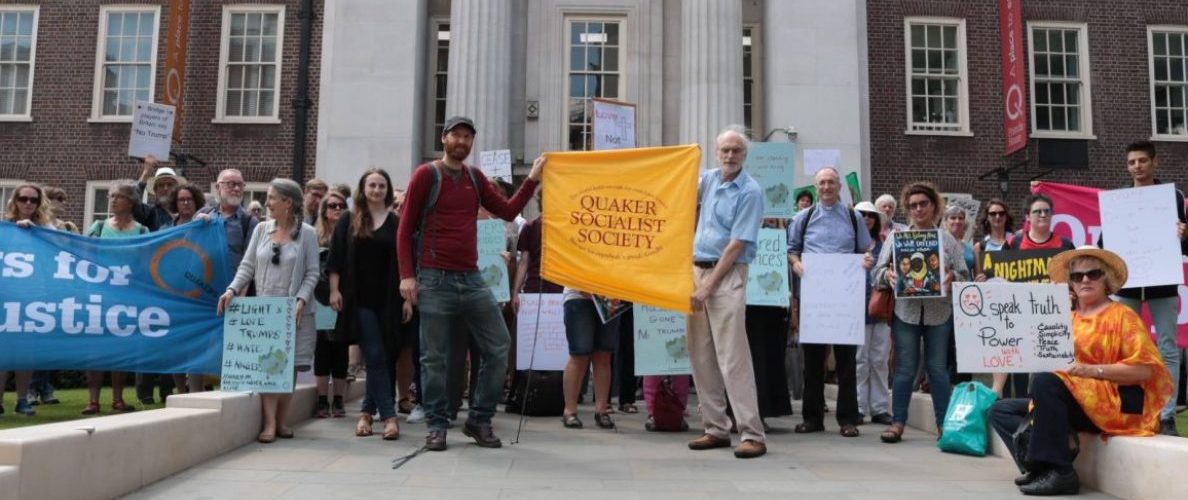

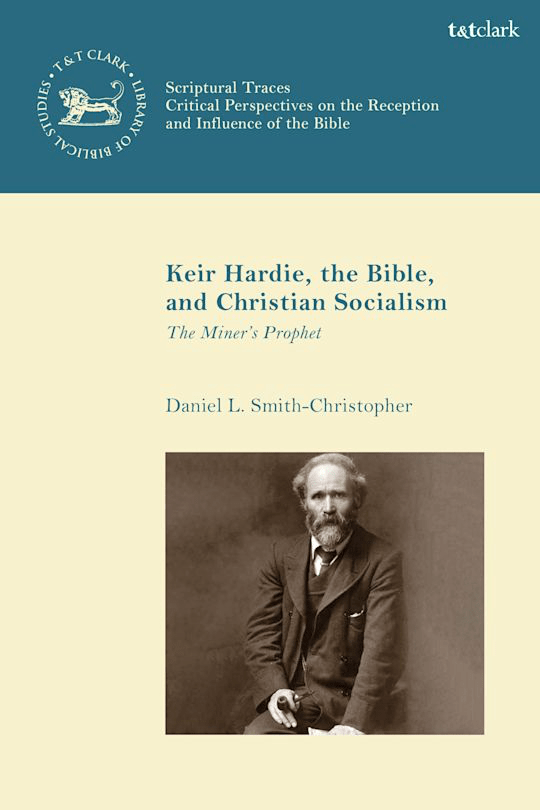


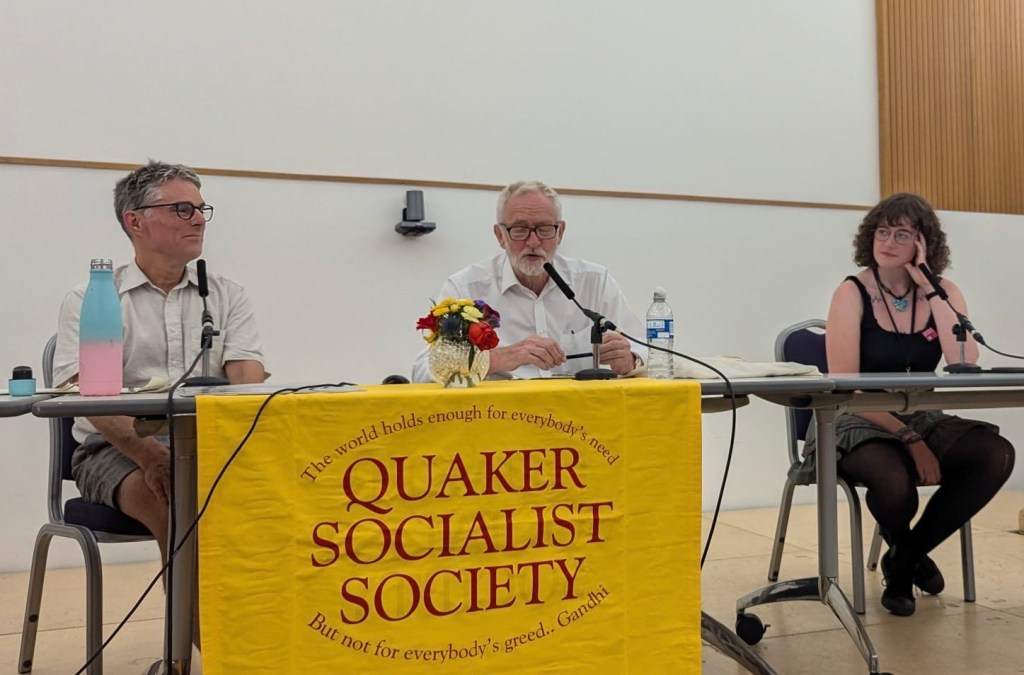



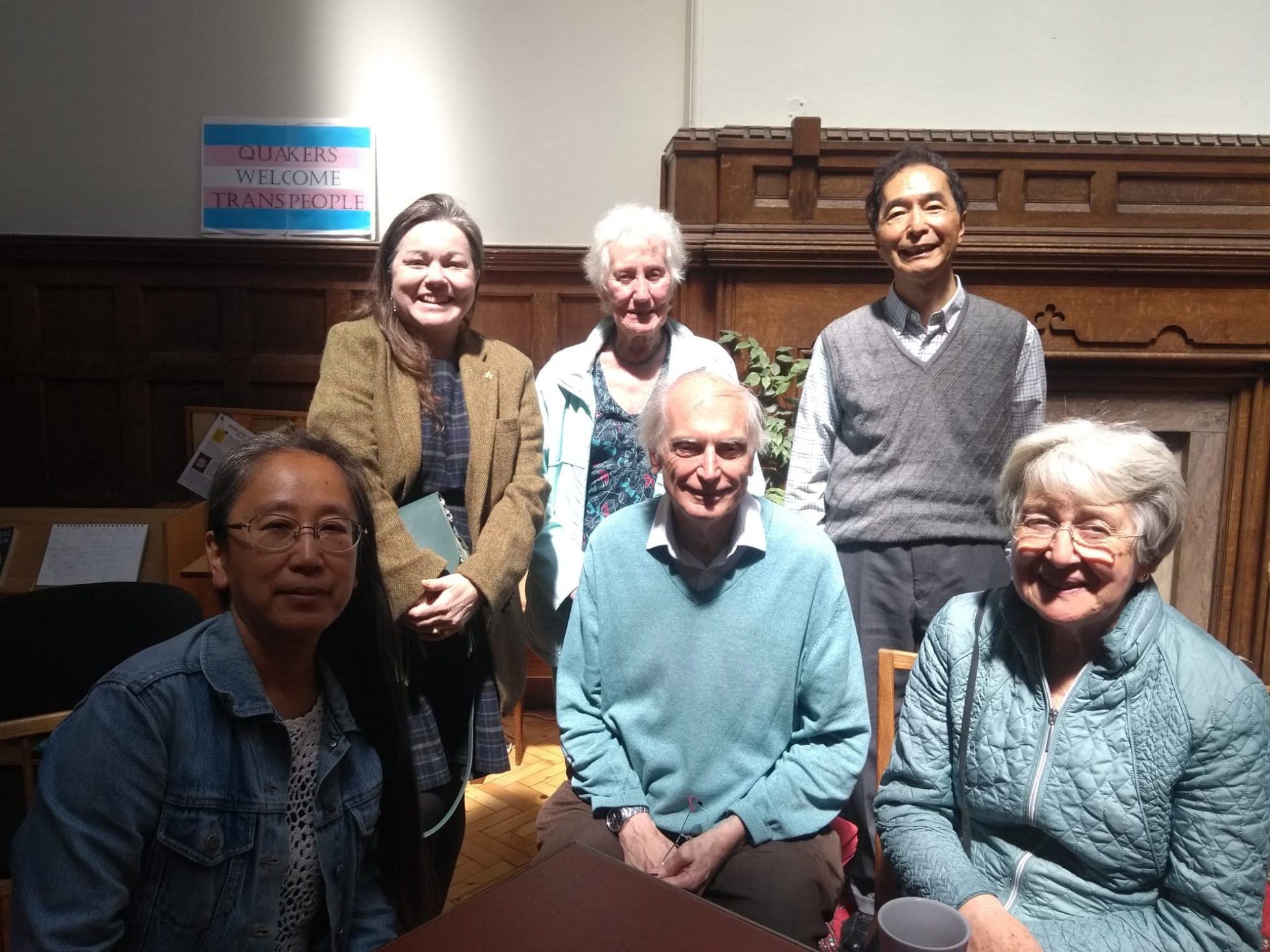





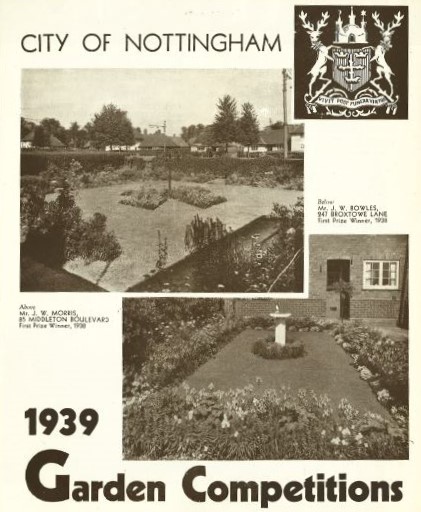
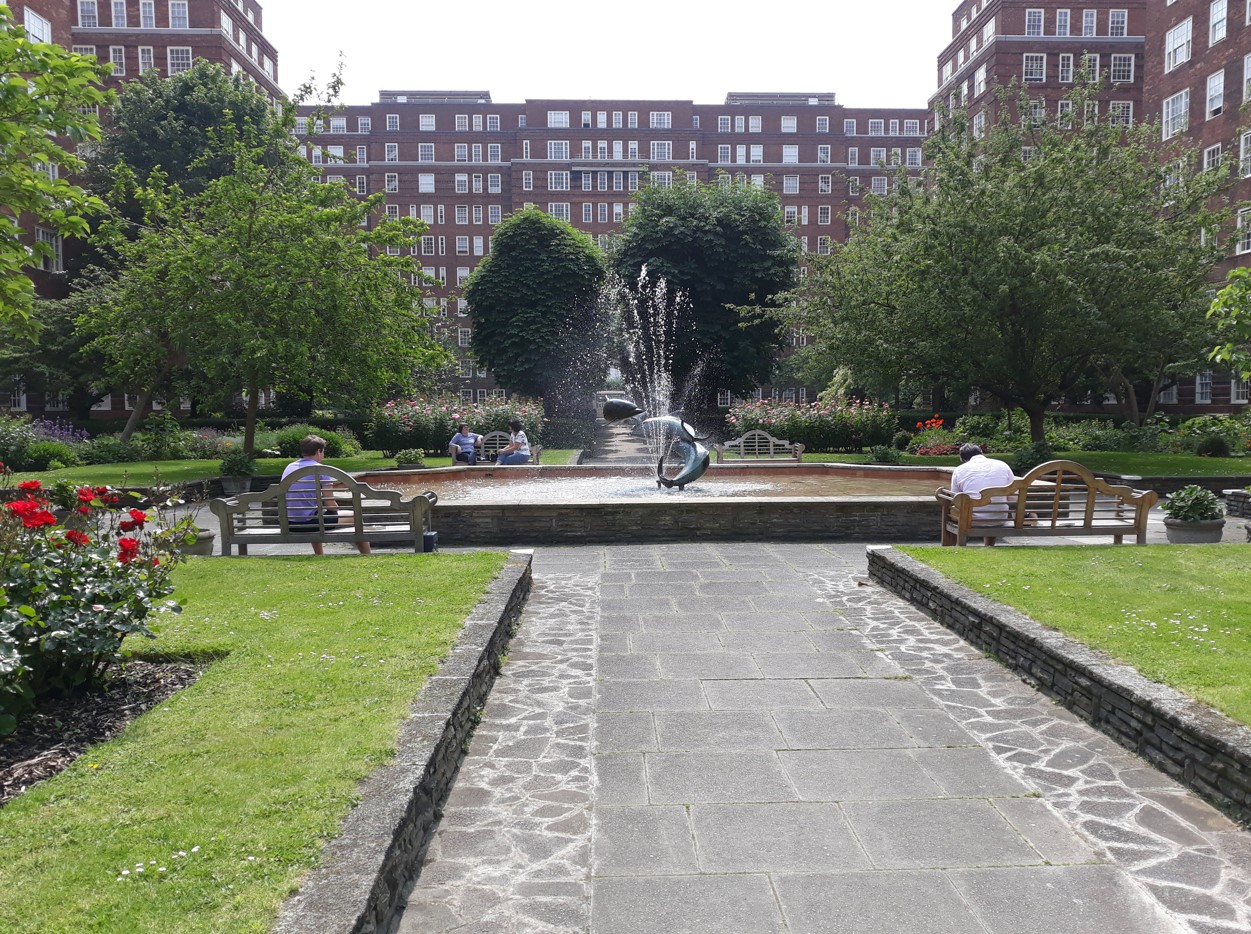


Leave a Reply