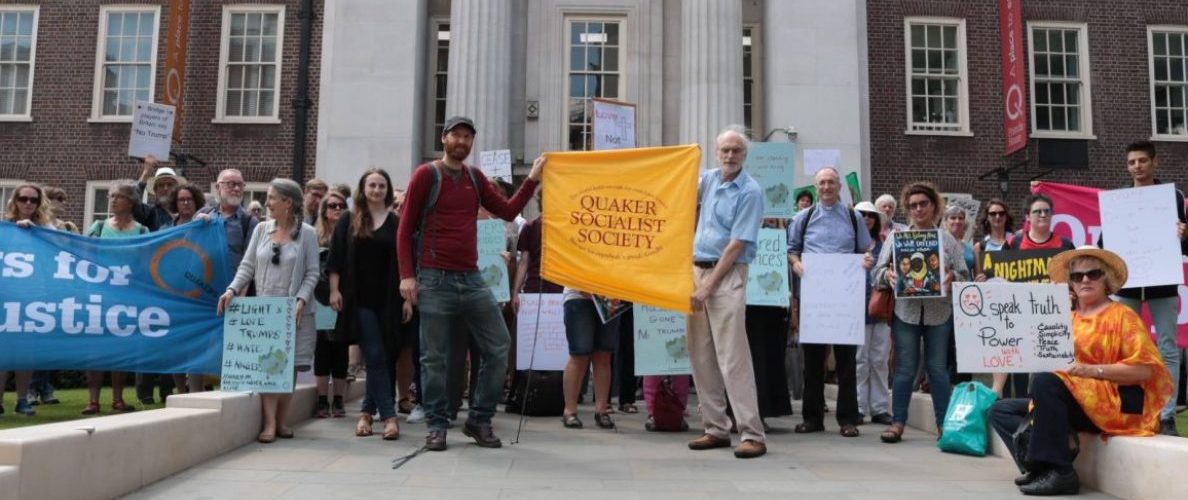
By Michael Gilson. Biographer of little known Richard Sudell.
Quaker suburban garden evangelist Richard Sudell deserves a little time in the spotlight:
“We shall in the future create towns and cities of undreamt beauty and purpose. I foresee a noble architecture arising amidst a landscape fashioned to meet the desires and aspirations of man.”
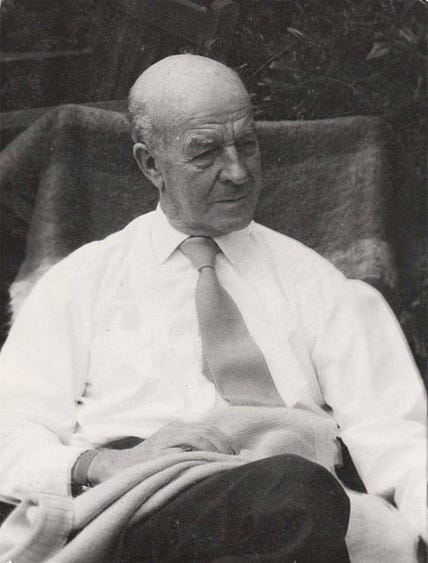
Heroes don’t have to sport chiseled jaws and carry guns on behind-enemy-lines missions. They don’t even have to climb mountains or sail oceans.
Sometimes they can be balding with a winning smile and soft voice. They could even carry flowers as their weapon of choice.
Instead of fighting wars they might even be imprisoned for refusing to do so. The quote above comes from one of my heroes, the balding, gentle, conscientious objector Richard Sudell.
It is fair to say Sudell came armed with flowers, millions of them. As much as anyone else he was responsible for the transformation of millions of acres of post war Britain into a patchwork of beautiful colour.
Among many other things Sudell was the most widely read garden instruction writer of the first half of the 20th Century.
The Daily Record, Ideal Home, 47 (count them) books, and even Wills cigarette cards all carried words of gentle encouragement written by him to inspire a new, peaceful, army.
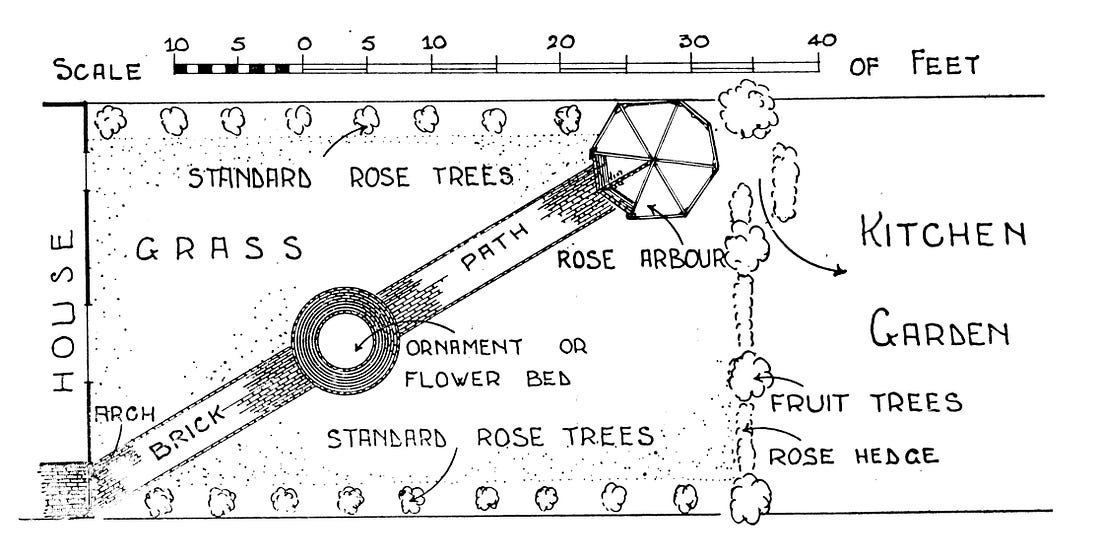
The suburban gardener, millions of them not the stereotype that we think of today, but new council house dwellers and inner city slum escapees handed something they’d never had before.
Namely a small piece of open space outside their front or back doors.
But what to do with this 400 square yard piece of earth? Enter Sudell.
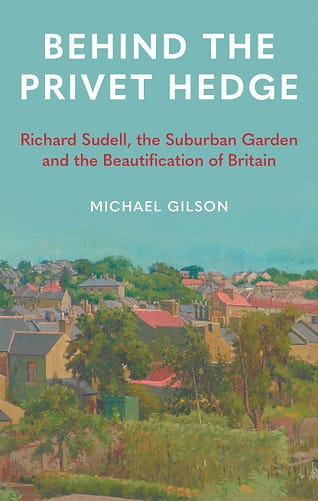
Forgive me for writing about Richard today. Many of you may already know that he is the central character in my book Behind the Privet Hedge: Richard Sudell, the Suburban Garden and the Beautification of Britain (Reaktion Books).This week two years ago it was published and Richard came blinking into a little bit of a spotlight.
The book tells the story of the explosion of gardening that took place in the years after the government launched its Homes Fit For Heroes campaign of house building to ensure those returning from the trenches did not have to return to the inner city deprivation from whence they came.
In those years before and after World War Two more than half a million acres of new garden were created, mainly for those who had never had such a thing before.
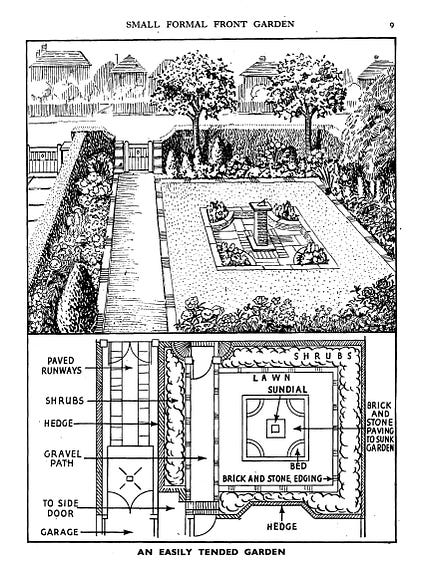
This was the unwritten story of the real birth of the British suburban garden and the root of the nation’s reputation as a land of gardeners. The level of enthusiasm these new residents brought to their gardens could often seem like a collective fever.
Yet they needed guidance, someone to tell them what a start looked like, how to plant, grow and overcome setbacks.
And they needed it given in simple language promoting garden styles that would not guarantee failure. Most had little spare time to create works of art.
So the labour-saving garden was born, with simple delineated straight line borders, tea roses, pansies and small kitchen gardens for growing leeks and potatoes at the back. The patron saint of crazy paving, as I called him, Sudell had found his purpose.
He became a potting shed name, his painfully practical instruction journalism helping turn the war weary grey nation into a kaleidoscope of colour.
I spent more than four years researching the hitherto unwritten garden story using this forgotten man as my conduit. By talking to his grandchildren and diving deep into archives a picture emerged of a man of beautiful manners but steely determination. I developed a lot of affection for him.
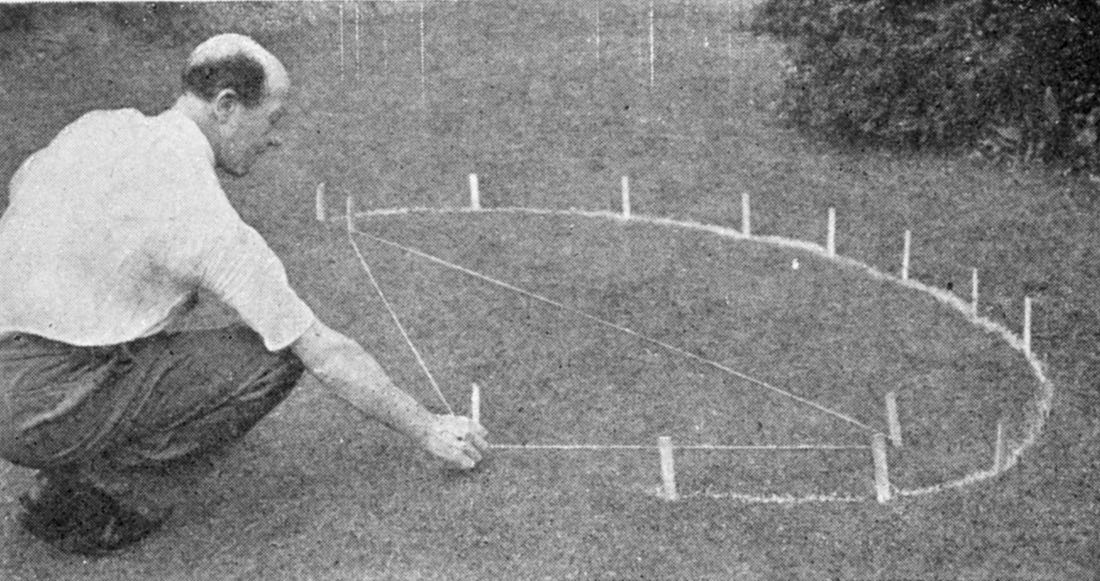
As can be seen from the quote above he really did have a vision of a new Britain arising out of the death and destruction of the wars.
It would become a more egalitarian society in which land and an uplifting environment was available for all.
Humble and modest he may have been but as a Quaker and life-long pacifist he had steadfastly refused to fight in World War One.
His punishment was three spells in prison during which he was allowed only a bed without a mattress to sleep on, bread and water to eat and drink. I thought prisoners having to sew mailbags was a myth, something from the films, but this is what he had to do in solitary confinement day after day.
He saw through his sentences without complaint, even though some COs never recovered from the experience, but it gave him a steely side which often led others to underestimate him.
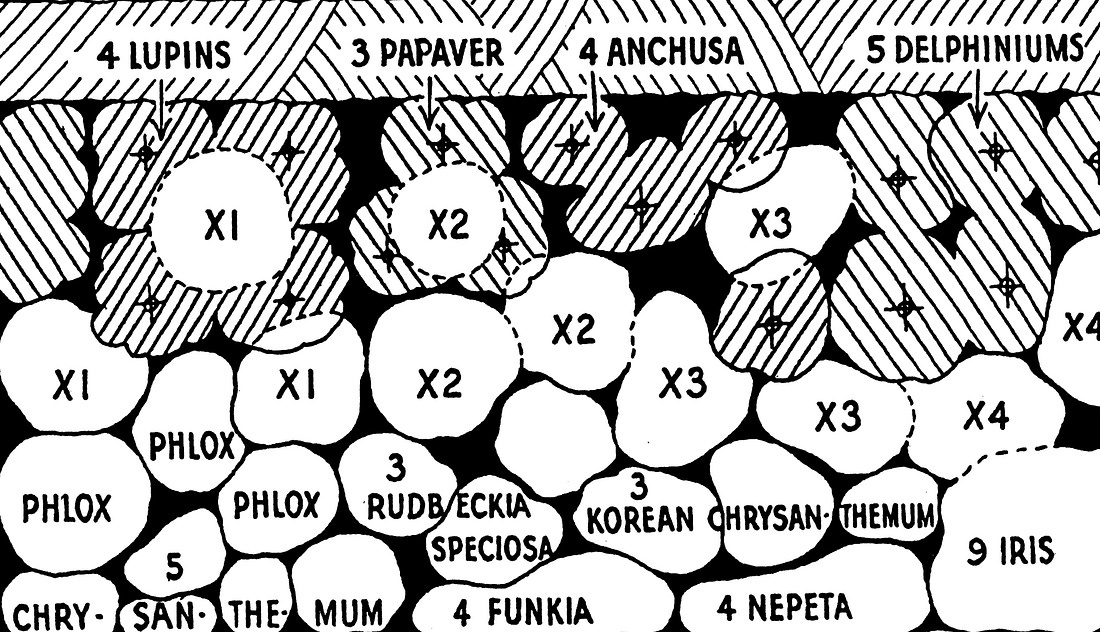
A working class Lancastrian who left school at 14 to become a boy gardener, he survived the snobbishness of the garden cognoscenti to become the founder of the Institute of Landscape Architects (now the Landscape Institute) which hoped to play a leading role in the reimagining of Britain.
In the end though he was, above all, a dreamer.
A century ago he really did believe Britain was capable of change, the lessons of war helping to give birth to something radical but beautiful, great cities, awe-inspiring landscape, a nation understanding the rhythms of the season, using flowers, trees and vegetables to lift the spirits. Hell he even landscaped gas holders.
Sudell died in 1968 but, if he were alive now, it’s certain he would see a country a million miles from the vision articulated above.
It’s tough for us to imagine, as gardens disappear under tarmac for the SUV, that Sudell and others really did view the flower as a weapon in a war of societal transformation, on a level with economics and health promotion.
Beautification was a thing.
But maybe, above all else, the lesson Richard taught me on our long journey together, through the shelves of dusty archives and on the couches of helpful people I had never met before, was that you do have to have that dream. Something to believe in.
Two years ago, to mark the publication of the book, I bought one of Sudell’s favourite blooms, a hybrid tea rose called Betty Uprichard for my garden.
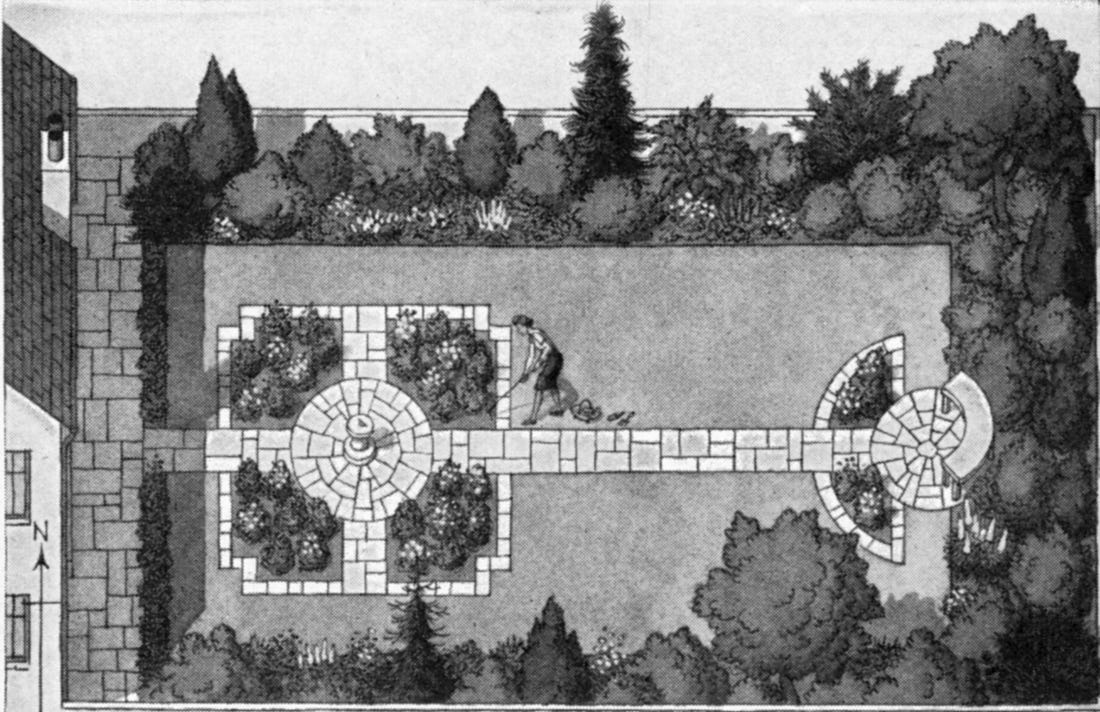
With her wonderfully suburban name Betty is maybe a little blousy, bred back in the 1920s to withstand the pollution that often swept across city-skirting suburbia.
Roses like her were sniffily dismissed by the Francophile Jekyll-inspired gardening classes who favoured the delicate wilder blooms. You won’t find many Bettys in National Trust gardens.
Yet Sudell understood that the new army of gardeners desired beauty but also practicality. Flowers that would thrive with little effort.
His support for working class gardens was one of the reasons he was so easily dismissed, written out of the horticultural history books of the last century.
As I look out of my window while writing I can see Betty’s salmon blush pink petals glittering through the astonishing heat haze. Hopefully when the breeze rises again her perfume will drift wide.
She’s my small tribute to Richard the dreamer.
[Behind the Privet Hedge is a reader-supported publication. To receive new posts and support my work, consider becoming a free or paid subscriber. Upgrade to paid.]
Michael Gilson 2026. See his blog and subscribe.
[Please note that articles on this website represent only the views of their named authors, and not necessarily the views of Quaker Socialists in general, or of the Quaker Socialist Society in particular.]

