By Graham Taylor.
In January of this year Quakers in Britain published a booklet, Challenging antisemitism, a guide for Quakers, which proved to be controversial. Its critics claimed it naively accepted accusations of anti-Semitism at face value when it is well documented that false accusations of anti-Semitism had been systematically deployed against politicians in recent decades in order to undermine opposition to the policies of Israel. They felt the booklet’s attempt to restrict criticism of Jews during an alleged Israeli genocide was at best bad timing. Three of these Quaker critics had articles published on this website; the first by Priscilla Alderson (February), another by Nicola Grove (March), then a third by Jonathan Dale (April). There were robust replies in the Comment boxes, but no article defending the booklet has been submitted.
On the Quakers in Britain website, where the booklet is publicised (though originally it had claimed to be an internal document for Quakers) Oliver Robertson explains that the booklet was necessary because of cases of anti-Semitism among Quakers. On his introductory page he gives two examples of what he believes to be Quaker anti-Semitism: 1) Quakers who treat Holocaust Memorial Day events as suspect on the grounds that they take attention away from other genocides; 2) Quakers who host speakers of the opinion that there had been no serious antisemitism in Britain since the 1950s. To anyone browsing the internet it must seem strange that an official Quaker publication introduced with fanfare on their official website turns out to be a criticism of Quaker members. The examples given are also strange. Neither of them proves that the Quakers concerned were anti-Semitic. It reads as if accusations of anti-Semitism had been taken at face value without much research or reflection. In the first case, gays, gypsies, socialists, communists and Slavs, who died by the million in the Holocaust and wanted their sufferings acknowledged, either on the memorials themselves or at memorial events, have often received acknowledgement and inclusion (most comprehensively by the Holocaust memorial in Boston). The Holocaust was more than the Shoah. In the second case, Orwell wrote that overt anti-Semitism was fast disappearing in his day (1940s) but even in the 1950s the remains of overt anti-Semitism (and other overt racism) is well attested. Nor was this the case just in the UK. James Baldwin recalls outright anti-Semitism in his youth amongst the black population of New York.
It is no accident that the booklet gets both of these examples wrong. Certain Quaker publications are almost proud of distancing themselves from ‘experts’ (especially economists and historians). The booklet does this in the first line. It signals that no attempt will be made in the publication to justify its arguments by use of facts or analysis. This seems to allow religious injunctions to act as guidance (“we believe”), but even that cannot strictly be the case since Quakers are not guided by religious dogmas. Indeed, at present half of Quakers regard themselves as agnostic or atheist. What instead the booklet does allow is a political bias hostile to social context and therefore hostile to social remedies. It is reducing social and political problems to a matter of personal prejudice. The two Quakers under attack were Quakers on the left. What we are told about the first one indicates that they were championing the rights of millions who were also victims of the Holocaust but have often not been included. What we are told about the second one indicates that they distinguish between the overt anti-Semitism of those prejudiced against Jews for centuries and the alleged anti-Semitism of those who criticise the policies of Israel since 1967.
The rest of the booklet also suffers from a bias against the left. It assumes throughout that racism is a question of personal prejudice alone without considering whether it is the result of social, economic or historical circumstances as well. This is very convenient for the establishment, both within Quakers and without. On this basis the fact that 90% of British Quakers are white can be ascribed to personal failings (prejudices), and not to economic class, management structures or traditional practices. Those, therefore, do not need to be changed. That means the booklet is in danger of perpetuating racism by merely teaching those who inherit the racist structures and practices how to use polite words and phrases for external PR effect. The full title, Challenging antisemitism: Reflections for Quakers on recognising and responding to anti-Jewish prejudice, confirms its liberal-conservative reliance on ‘prejudice’, as opposed to analysis of the social and economic forces that generate and underpin racism. In other words the booklet is, from a socialist point of view, politically right-wing.
If a booklet was needed at all in the present circumstances (and its critics claim it was produced only to mitigate the breach between Quakers and the Jewish community that opened up last year), it was a booklet that dealt with both prejudice and structures. Racial prejudice can help the creation of pernicious structures and pernicious structures can embed the racism that exists. As it stands, the booklet concentrates only on correcting subjective ‘prejudice’. Ironically, this is moving in the opposite direction to PM Andy Burnham’s attempt to grapple with Reform UK by addressing the structural cost-of-living crisis and the crisis of deindustrialisation that lie at the root of xenophobia and racism.
The booklet’s focus on personal prejudice alone also carries within it an unfortunate side-effect. Like all philanthropic activity it assumes the inferiority of the deserving subject, and the aim soon becomes to avoid offending blacks, Jews and Muslims, just as Quakers a hundred years ago avoided being rude to the servants. If instead racism is seen as more to do with social and economic circumstances than personal interaction (important though that is), then a sense of superiority (“privilege”) would not arise. It would not matter very much if Quakers slipped up on words and phrases occasionally if they were genuinely following a social and political imperative. In the booklet Quakers are urged to be kind and considerate to ethnic minorities. But when will they treat them as equals?
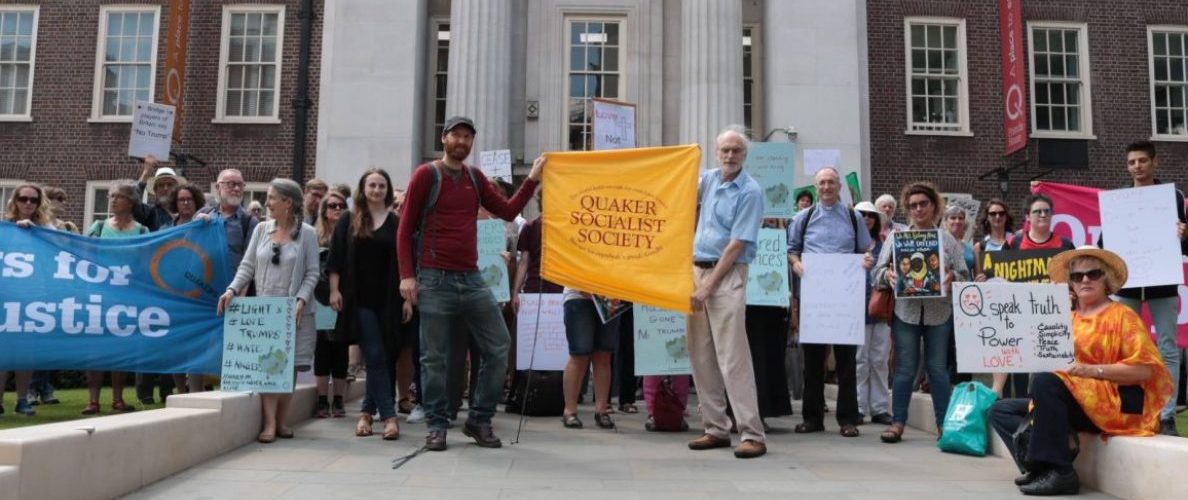
It may surprise those who do not follow Quakers in Britain to discover the prevalence of an internal left-right politics, yet all churches have such divisions. Big battles over decades preceded the choice of Pope Francis and Archbishop Sarah Mullally, and Quakers are not exempt. At the Manchester Conference of 1895, which founded modern Quakerism, the radicals and the socialists of the ILP defeated the traditionalists and conservatives. It was in 1898 that the ‘Socialist Quaker Society’ was established. The Quakers have had a left wing and right wing (‘Commonwealth’, ‘Whig’ and ‘Tory’ ) ever since the theorisations of Robert Barclay in the 17th century. Quaker opposition to the Boer War and the Great War was also along such lines (partisan but not party-political). More recently, some may have heard of the struggle within British Quakers in 2024, when the Quaker Socialist Society chose Jeremy Corbyn to deliver the Salter Lecture (held at the same time as the Quaker Yearly Meeting) and the management at Friends House blocked his appearance on the grounds that it would cause them “reputational damage”. As hosting Corbyn would not have caused any reputational danger in the eyes of the socialist left or CND, only in the eyes of the conservative and liberal right, their decision was clearly a political decision.
Though Quakers have always been subject to internal politics just like other churches, in the case of Quakers there is one important difference that should be highlighted. Quakers from the beginning have always been an egalitarian church: against social hierarchy, against exploitation, and against the privileges of the upper classes. In other words, Quakers have been historically ‘left-wing’ whereas other churches have been, in one way or another, pillars of the establishment. Quakers have campaigned against unjust taxes, against all wars, against the slave trade, against the slums, against capital punishment, against inhuman working conditions, and against environmental despoliation.
This tradition is one of the reasons people become Quakers. Some join because Quakers offer a spiritual solution to personal problems through the method of searching in silence for inward light, rather than relying on external rituals, priests and dogmas, but a second reason is attraction to the Quaker record over many centuries of social and political activism. Right-wing Quakers tend to stress the first (personal) reason to the exclusion of the second, and left-wing Quakers the second to the exclusion of the first, but in fact they are all part of the same Quaker endeavour. In both cases Quakers are seeking an ethical solution that will determine both their personal and their political conduct.
The Challenging antisemitism booklet has had its defenders. In the Friend of 27 February, 2026, Ol Rappaport wrote: “I have read the Quaker Socialist Society’s criticism of the new ‘Challenging antisemitism’ guide. But it misrepresents the booklet, and judges it against expectations it never claimed to meet…… It does not ask to be accepted uncritically, nor does it deny other forms of racism or create a hierarchy of oppression. It simply addresses antisemitism in its own right, recognising that different prejudices have different histories and dynamics. Much of the criticism centres on the booklet’s treatment of Israel and Zionism. In my reading, the booklet is careful and explicit that criticism of Israel is not automatically antisemitic, while also insisting that context matters. This is not about silencing debate, but about ethical attentiveness… I write as a Quaker and a practising Jew. From that position, I believe the booklet handles a complex and sensitive subject with care and restraint, aiming at understanding rather than enforcement.”
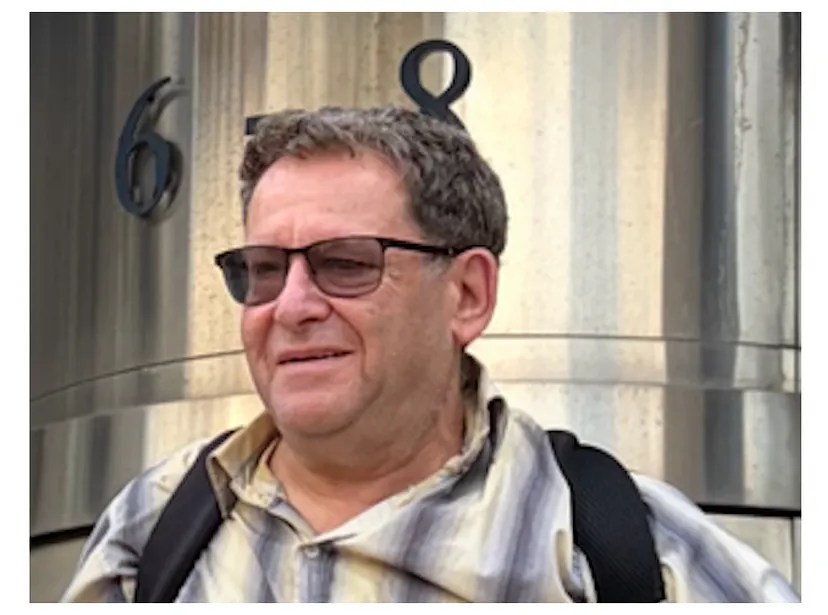
Tony Greenstein (a Jewish socialist expelled from the Green Party this year for alleged anti-Semitism) does not agree with Ol. He has launched a fierce attack on the leadership of British Quakers for publishing the booklet, excoriating them for trying to mute Quaker criticism of Israel in the middle of a genocide. Here you can read his piece and judge for yourself: How British Quakers Became Apologists for Zionism, Ethnic Cleansing & Anti-Palestinian Racism.
It is located within his blog at: https://azvsas.blogspot.com/2026/08/challenging-anti-semitism-or-justifying.html.
The QiB booklet, for comparison, is to be found at: https://www.quaker.org.uk/blog/challenging-antisemitism-a-new-guide-for-quakers
Quaker Socialists are grateful that at the end of his polemic Tony exempts them from his severe condemnation of Quakers, but still his condemnation of Quakers in general is rather unfair. He writes as a hard-hitting journalist, and his language is over the top (‘racists’, ‘idiots’, ‘blockheads’) but British Quakers as a whole are not suddenly ‘Apologists for Ethnic Cleansing’ just because of one ill-judged and ill-timed booklet. The Quakers have a long history of support for the Palestinians (and the Jews). They were the first church to call the Israeli action in Gaza a ‘genocide’ and they did this at their annual conference, which made it official. Yes, the phrasing was quite weak and it took them over two years to get it through, but they did it. Quakers have also been leading lights in the EAPPI programme, which for many years exposed the brutality of the Israeli occupation (e.g. in Hebron). For decades Quakers have for been twinning with Palestinian villages to give them practical support. Quaker support for Palestinian marches and demonstrations has been solid, and several Quakers have been arrested for supporting Palestine Action. They are currently facing long terms of imprisonment.
Quaker socialists also do not endorse Tony’s admiration for the Hamas attack on 07 October 2023. The attack may have been understandable, but Quakers believe violence and war never achieve a permanent solution. War breeds war and violence breeds violence. Nor do Quaker socialists believe that the conflict in Palestine can be resolved in terms of Israelis versus Palestinians or Muslims versus Jews. What socialists see is structural and economic. The leading imperialist power has an interest in controlling the world’s oil supplies and is pitting one ethnic group against another for the purposes of divide and rule. It is the same formula that the British Empire used in Ireland, India and elsewhere. That is the fundamental problem, as Rachel Shabi showed in her Salter Lecture.
Tony has acknowledged in correspondence that his language in the piece was “over the top” and he has reaffirmed his respect for Quaker socialists (though he would like them to be more assertive against the Quaker leadership). Equally, Quaker socialists were pleased to hear the news last Friday that Tony had been cleared of the charges of terrorism levelled unjustly against him. It was a disgrace that the Terrorism Act was passed, and a disgrace that such charges were brought in the first place. Quakers have a keen sense of just how disgraceful this was because the struggle for free speech and toleration in Britain has often (from defence of juries in the 17th century to defence of Conscientious Objectors in the 20th century) been led by Quakers.
On Friday, after a four-day trial, Tony was acquitted of inviting support for a proscribed terrorist organisation [Hamas] under Section 12(1) of the Terrorism Act 2000. He described his swift acquittal as a “victory for freedom of speech”, and so it was. Below are the initial paragraphs of the speech he prepared for the end of his trial at Kingston Crown Court. After they heard this powerful speech it took the jury only two hours to acquit him:
“Ladies and gentlemen of the jury. First, a word about why I have chosen to address you in person rather than through my barrister, Lawrence McNulty. My decision implies no criticism of Lawrence. It is simply this: when my liberty is at stake, I wish to speak to you directly rather than through someone else. It is my words that are on that indictment. When someone is accused of meaning something he never meant, he should be the one to tell you what he meant.
I am not a barrister. I hope you will bear that in mind. However what I will do is speak from the heart. I am seventy-two years old. I have been arguing in public for more than fifty years, and this may be the most important half hour of argument in my life.
The prosecution say that I invited people to support an Islamic group called Hamas while accepting that I didn’t support Hamas myself. Think about that for a moment. Why should I invite people to support a group that I don’t support and never have supported? It is illogical…………..
For the rest of Tony Greenstein’s speech, click on:
https://greghadfield.medium.com/tony-greenstein-the-most-important-half-hour-of-my-life-d03f7877a492
Graham Taylor, August 2026.
[Please note that articles on this website represent only the views of their named authors, and not necessarily the views of Quaker Socialists in general, or of the Quaker Socialist Society in particular.]

